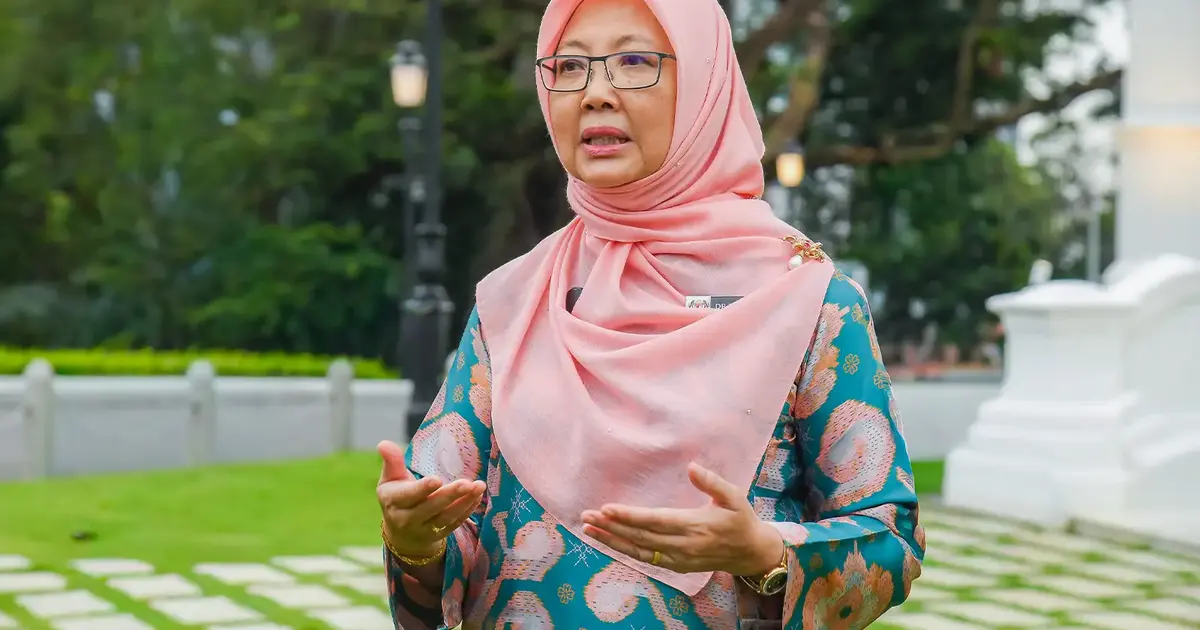
PKR vice-president Zaliha Harun has questioned the logic behind Johor Barisan Nasional chairman Onn Hafiz Ghazi's recent call for Pakatan Harapan to publicly name its frontman contender for the state menteri besar position, given that no party can guarantee electoral victory before votes are counted.
The opposition coalition faces a peculiar demand from the ruling establishment: to anoint a visible candidate who would lead its campaign for control of the Johor administration, despite the inherent uncertainty surrounding any election outcome. Zaliha's bewilderment reflects a fundamental mismatch between what Onn Hafiz appears to expect and the practical realities that govern political campaigning in Malaysia's constitutional monarchy framework.
When a menteri besar designation materialises, it typically emerges through post-election negotiations and the constitutional monarch's judgment about which coalition commands legislative support. This process cannot be reversed or predetermined before voters have spoken. Pakatan Harapan's reluctance to commit publicly to a specific candidate without knowing whether they will actually govern reflects this institutional reality, which BN as the sitting administration should understand intimately.
The timing of Onn Hafiz's request introduces another layer of political theatre. By pressing the opposition to make premature commitments, the BN chairman positions PH in a scenario where naming a candidate creates vulnerabilities—the person becomes a lightning rod for BN attacks, while simultaneously setting up unrealistic expectations if PH loses. Conversely, refusing to name someone allows BN to characterise the opposition as disorganised or evasive. The demand cleverly creates a no-win dynamic for Pakatan strategists.
For Malaysian voters, particularly in Johor, this exchange underscores the continuing sophistication of political gamesmanship that often overshadows substantive policy discussion. Rather than debating economic development, healthcare, education, or infrastructure priorities that affect ordinary constituents' lives, electoral discourse becomes entangled in procedural demands and strategic positioning. Zaliha's questioning of the request's rationale suggests PH recognises this trap and opts to focus messaging elsewhere.
Johor occupies significant strategic importance within both BN and Pakatan calculations. The state has traditionally provided substantial representation to federal government coalitions, and control of the state administration carries symbolic weight beyond its immediate resource allocation. BN's entrenchment there represents one of the party's remaining strongholds in the southern region, making any potential opposition gains particularly consequential for national political recalibration.
From a regional Southeast Asian perspective, Malaysia's electoral dynamics are watched closely by observers tracking democratic participation and power transitions across the region. The interplay between established ruling coalitions and rising opposition blocs reflects broader patterns seen in Thailand, Indonesia, and the Philippines, where traditional power structures face modernised challenges. How Malaysian parties navigate electoral mechanics and public accountability continues to inform regional commentary on democratic maturity and institutional resilience.
Pakatan Harapan's strategic ambiguity regarding its menteri besar choice might frustrate some voters seeking clarity, yet it also represents a pragmatic acknowledgment of political reality. Until ballots are counted and negotiations commence, any premature designation risks becoming hostage to circumstance. The coalition's approach protects its flexibility and prevents a predetermined candidate from being burdened with impossible expectations or becoming a liability if circumstances shift.
Onn Hafiz's intervention also reflects potential internal BN anxieties about Johor's electoral prospects. When ruling coalitions launch pointed challenges toward opposition leadership structures, it sometimes indicates underlying concerns about voter sentiment or demographic shifts. The demand for a poster boy could represent BN's attempt to frame the narrative in advance, rather than confidence in BN's inevitable retention of the state.
Zaliha's public questioning of the demand signals that Pakatan Harapan intends to contest Johor vigorously while maintaining tactical flexibility. Rather than accepting the terms of engagement that BN's chairman proposes, PH is defining its own approach to candidate selection and campaign positioning. This assertion of independence matters symbolically for opposition voters who want to see their representatives confidently challenging, rather than passively responding to, government directives.
Looking ahead, both coalitions will continue calibrating their Johor strategies around multiple variables: urban voter demographics, rural support patterns, economic messaging resonance, and the evolving federal political landscape. Whether Pakatan eventually names a poster boy before the election or reserves that decision for post-electoral negotiations remains uncertain, but Zaliha's response has clarified that the opposition will not be dictated to regarding fundamental campaign architecture. The exchange illustrates how Malaysian electoral competition increasingly involves not just policy contests, but sophisticated gamesmanship around the very mechanisms through which elections are framed and conducted.