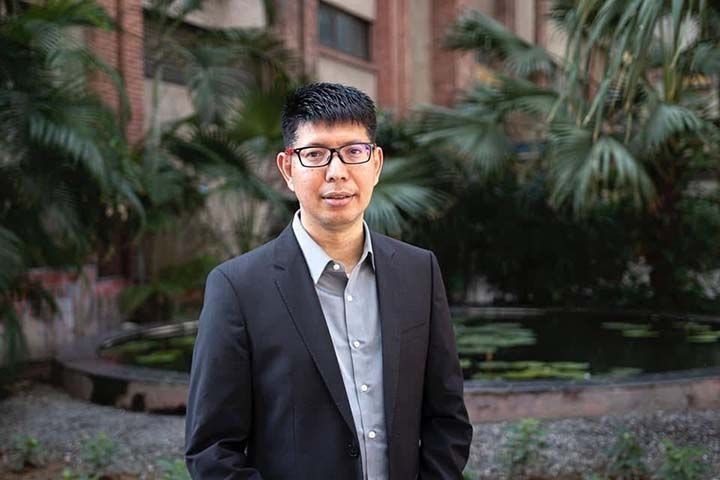
An American scholar of Myanmar detained in China's Yunnan province in early June was on a routine academic visit when he was arrested, his research organisation said this week, urging Beijing to release him without conditions. Min Zin, who heads the Institute for Strategy and Policy (ISP)—Myanmar, travelled to the city of Kunming specifically to participate in a scholarly workshop before his detention on June 3, the think tank stated in a formal statement released on Wednesday. The arrest has escalated tensions between Washington and Beijing over academic freedoms in China, with both the US State Department and Min Zin's organisation flatly denying espionage allegations that Chinese authorities have levelled against him.
China's foreign ministry confirmed last week that Min Zin had been detained on suspicion of engaging in espionage activities and posing a threat to national security. The ministry subsequently maintained that position when questioned about the case, stating that Beijing would handle the matter according to its legal procedures. However, the Institute for Strategy and Policy—Myanmar categorically rejected these accusations as unfounded, calling the detention a violation of academic freedom and demanding his immediate release. A spokesperson for the US State Department similarly dismissed the espionage claims, noting that American consular officers have already visited Min Zin and that Washington is actively engaging with Chinese officials to secure his release while providing all necessary consular support.
The timing of Min Zin's detention carries significant political implications for Myanmar and the broader region. His arrest occurred just weeks before Myanmar's military leader Min Aung Hlaing embarked on a five-day state visit to China, suggesting the incident may be part of wider strategic calculations between Beijing and the Naypyidaw government. China remains one of the most indispensable external partners to Myanmar's military establishment, which consolidated power through a coup d'état in February 2021 that toppled the democratically elected government of Aung San Suu Kyi and set off years of civil unrest.
The 2021 coup triggered massive public demonstrations that eventually transformed into a nationwide armed insurgency. Pro-democracy opposition groups that emerged after the coup have joined forces with established ethnic armed organisations operating in Myanmar's border regions to challenge military control. This internal conflict has destabilised the country, with economic deterioration and humanitarian suffering intensifying across Myanmar. Against this backdrop, China's continued military and economic support for the junta remains critical to its survival, making any diplomatic complications between Beijing and the Myanmar government potentially consequential for regional stability.
Min Zin's background underscores why his detention may trouble observers of Myanmar and civil society advocates. He is a former pro-democracy activist who participated in the historic 1988 uprising that challenged Myanmar's authoritarian system, representing an older generation of reformers who fought for democratic change decades before the recent coup. He completed his political science studies at the University of California, Berkeley, gaining academic credentials and international perspectives that have informed his research career. In the late 2000s, he co-founded the Institute for Strategy and Policy, which initially operated from within Myanmar but relocated overseas following the 2021 military takeover, joining numerous other civil society organisations forced into exile.
The Institute for Strategy and Policy—Myanmar has established itself as a credible voice on Myanmar affairs within international policy circles. The organisation's research agenda has concentrated on several critical issues confronting Myanmar: the ongoing civil war and political transformation, the country's economic deterioration and fiscal challenges, and bilateral relations between Myanmar and China. By publishing analysis on these topics, the think tank has contributed to foreign understanding of Myanmar's trajectory, particularly regarding how great power competition and regional geopolitics intersect with domestic political crises. This scholarly work, while not inherently controversial, places Min Zin at the intersection of academic research and sensitive geopolitical matters that authoritarian governments sometimes view with suspicion.
The detention raises broader questions about academic freedom and the space for independent research on sensitive countries. The Institute for Strategy and Policy—Myanmar's statement emphasised that research organisations must be able to pursue their work without facing intimidation or legal harassment. This principle has become increasingly contested in various authoritarian and semi-authoritarian contexts, where governments have restricted the activities of foreign researchers, academics, and think tanks perceived as critical of official policies. For Southeast Asia specifically, where multiple countries grapple with balancing openness to international scholarship against national security concerns, the case of Min Zin illustrates the tensions that can arise.
The US response has been measured but firm. The State Department's acknowledgement that it maintains consular access to Min Zin and is working through diplomatic channels suggests Washington views the situation as serious enough to warrant high-level engagement with Chinese counterparts. Yet the American response has also been cautious, avoiding the kind of inflammatory rhetoric that could further complicate negotiations for his release. This diplomatic approach reflects the broader reality that the United States, despite its rhetorical commitment to defending academic freedom globally, must balance such principles against strategic interests in its relationship with China, particularly regarding trade, technology, and regional security concerns.
For Malaysian observers and policymakers, the case carries relevance beyond Myanmar itself. Malaysia, like many Southeast Asian nations, hosts exiled activists, civil society groups, and independent researchers from the region who have fled restrictive environments. The detention of Min Zin potentially signals how autocratic governments in the region may treat foreigners engaged in research or advocacy on politically sensitive topics. It also highlights the vulnerability of academics and think tank leaders who operate across borders, particularly when their work touches on issues of governance, military rule, or human rights that governments deem threatening. The broader implication is that academic work, especially scholarship focused on politics and security in sensitive countries, increasingly carries personal and professional risks for researchers, particularly those of Myanmar origin or specialising in Myanmar studies.

