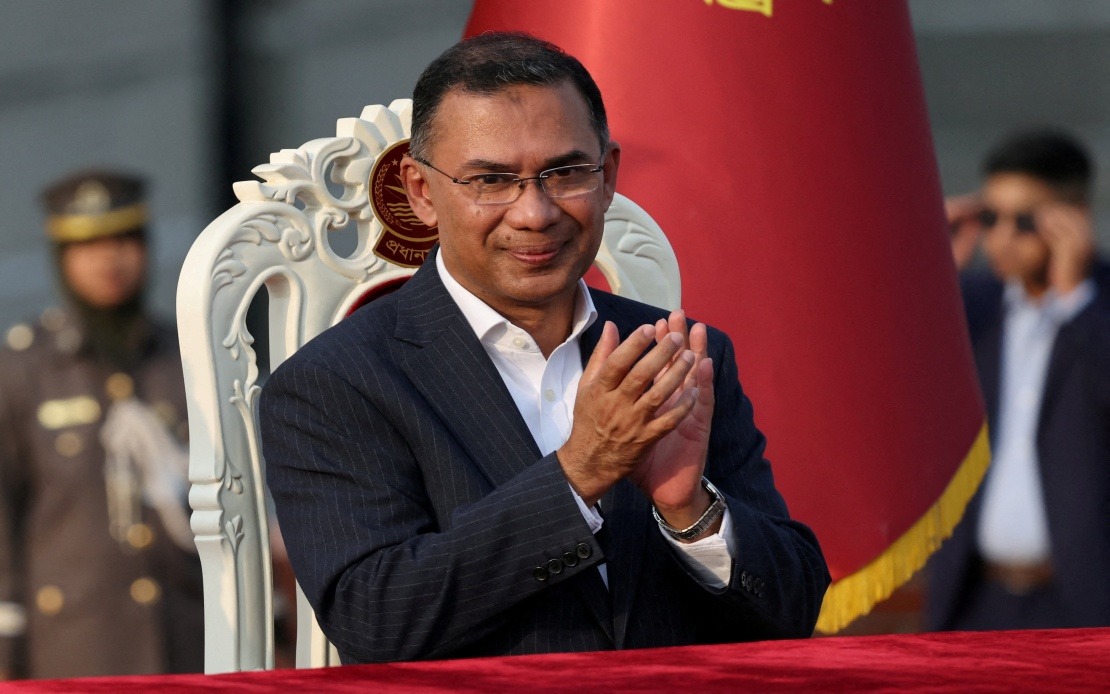
Prime Minister Tarique Rahman of Bangladesh arrived in Malaysia on June 22 for an official state visit that represents a significant diplomatic milestone for the South Asian nation's new leadership. Invited by Malaysian Prime Minister Datuk Seri Anwar Ibrahim, the visit underscores Bangladesh's commitment to deepening partnerships across the region and signals the prioritization of Malaysia as a key diplomatic destination. Rahman's choice to make Malaysia his first official bilateral visit abroad since assuming office in February 2026 reflects the strategic importance both nations place on their relationship and the potential for expanded cooperation in the coming years.
The formal welcome ceremony and bilateral engagement at the Perdana Putra Complex demonstrate Malaysia's recognition of Rahman's leadership transition in Bangladesh. During his meeting with Anwar, the two premiers are expected to conduct a comprehensive review of existing bilateral arrangements and identify new avenues for collaboration. The agenda encompasses a wide spectrum of economic and strategic sectors, ranging from conventional trade partnerships to emerging technology fields. Among the priority areas identified for deeper engagement are semiconductor manufacturing, energy cooperation, and agricultural development—sectors where both nations possess complementary strengths and mutual development interests.
Education and human resource development represent another cornerstone of the proposed expanded cooperation framework. Malaysia has long attracted skilled professionals and students from South Asia, including Bangladesh, and formalizing educational partnerships could deepen people-to-people connections. The semiconductor sector holds particular significance given Malaysia's established position as a regional hub for microelectronics manufacturing, while Bangladesh's growing industrial base and workforce represent potential opportunities for technology transfer and joint ventures. Energy cooperation, encompassing both conventional and renewable sources, aligns with both nations' medium-term sustainability objectives.
The bilateral economic relationship has demonstrated consistent growth and resilience. In 2025, total bilateral trade reached RM12.18 billion (US$2.84 billion), a substantial volume that positions Bangladesh as Malaysia's 28th largest trading partner globally. More tellingly, Bangladesh ranks as Malaysia's second most significant trading partner within South Asia, exceeded only by India. This ranking reflects not only the volume of trade but also the depth of commercial integration between the two economies. Malaysia's export position is particularly pronounced, with shipments to Bangladesh valued at RM10.08 billion (US$2.35 billion), predominantly driven by petroleum products that constitute the largest export category.
Bangladeshi exports to Malaysia, valued at RM2.10 billion (US$500 million) in 2025, comprise primarily textiles, apparel, and footwear—sectors in which Bangladesh maintains competitive advantages rooted in its labor-intensive manufacturing capabilities and established supply chain networks. This import composition reflects the complementary nature of bilateral trade, with Malaysian energy resources flowing southward while Bangladeshi manufactured goods find ready markets in Malaysia. The trade balance favors Malaysian exporters, a dynamic that may feature in discussions about future investment promotion and market access opportunities.
Several formal agreements are expected to be executed during the visit, formalizing cooperation frameworks in strategically important domains. A memorandum of understanding on cultural cooperation will establish mechanisms for artistic exchange, heritage preservation initiatives, and people-to-people engagement programs. Two exchanges of notes will address counter-terrorism research coordination and investment promotion facilitation. The counter-terrorism research collaboration assumes particular importance given regional security challenges and the mutual benefit of intelligence sharing and best-practice coordination between security agencies. Investment facilitation measures aim to reduce bureaucratic barriers and create more conducive environments for business expansion by firms from both nations.
The composition of the Bangladeshi delegation underscores the importance attributed to this visit at the highest levels of government. Prime Minister Rahman is accompanied by his spouse Dr Zubaida Rahman, Foreign Minister Dr Khalilur Rahman, and senior government officials whose portfolios span key economic and foreign policy areas. This senior representation signals Bangladesh's intent to move beyond ceremonial diplomacy toward substantive policy coordination and implementation of agreed frameworks. The inclusion of the foreign minister ensures that diplomatic channels remain engaged for follow-up and that institutional mechanisms for bilateral cooperation are strengthened.
Prime Minister Anwar will host an official luncheon in Rahman's honor, a gesture that extends beyond standard protocol to underscore the warmth and priority Malaysia places on the relationship. Such occasions often provide informal settings for candid discussions between leaders and their delegations, enabling exploration of issues that may not feature prominently in formal bilateral agendas. The luncheon also provides opportunities for the Bangladeshi delegation to engage with Malaysian government officials and business leaders, facilitating networking that often yields concrete commercial outcomes.
From a broader Southeast Asian and South Asian perspective, this visit represents a significant strengthening of Bangladesh's external engagement strategy. Bangladesh's geographic position and economic trajectory make it an increasingly important player in regional affairs, and cultivating strong bilateral relationships with established regional powers like Malaysia enhances its diplomatic influence. For Malaysia, deepening ties with Bangladesh aligns with its broader strategy of maintaining economic and political engagement across South Asia, a region of growing strategic importance given rising geopolitical competition and the increasing economic interdependence of Asian economies.
The timing of this visit also reflects broader regional dynamics. Bangladesh's transition to new leadership under Prime Minister Rahman offers an opportune moment for neighboring countries to establish constructive relationships and explore expanded cooperation frameworks. Malaysia's readiness to host this inaugural bilateral visit demonstrates its diplomatic acuity and its appreciation for Bangladesh's regional significance. As both nations navigate complex regional environments characterized by economic integration, security challenges, and geopolitical transitions, the strengthening of bilateral mechanisms for coordination and cooperation assumes heightened importance.
Looking forward, the outcomes of this visit will likely establish templates for future engagement and create institutional structures through which bilateral cooperation can flourish. The focus on emerging technologies like semiconductors and renewable energy reflects both nations' awareness of future economic trajectories and their determination to position themselves advantageously in regional value chains. Enhanced cooperation in these sectors could yield benefits extending well beyond bilateral trade, potentially catalyzing broader regional technological advancement and sustainable development initiatives.

