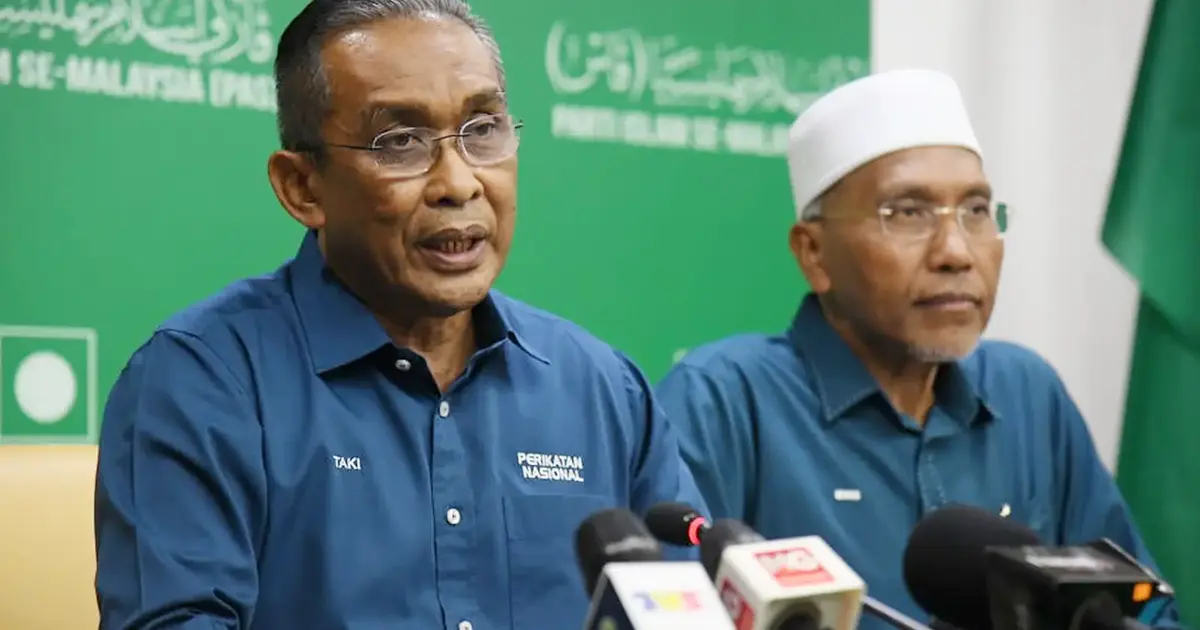
Takiyuddin Hassan, the secretary-general of Perikatan Nasional, has issued a formal clarification establishing that all coalition meetings and organised activities require explicit approval from the chairman before they can take place. The statement comes in response to recent reports suggesting that Bersatu president Muhyiddin Yassin had initiated moves to convene a PN Supreme Council meeting, underscoring underlying tensions within the opposition alliance regarding decision-making authority and procedural compliance.
This pronouncement represents a significant assertion of hierarchical control within the coalition's governance structure. By publicly emphasizing that even high-level council sessions cannot proceed without prior chairmanship consent, Takiyuddin has effectively reinforced the formal chain of command and established a gatekeeping mechanism for the coalition's internal deliberations. The timing and directness of this statement suggest an effort to prevent unilateral action by individual member parties, particularly Bersatu, which remains the largest component of the PN alliance.
The incident reflects deeper fault lines within Perikatan Nasional that have periodically surfaced since the coalition's formation. Bersatu's prominent position as the anchor party has occasionally created friction with other member organisations regarding decision-making processes and the extent of autonomy individual parties retain within the broader alliance structure. Muhyiddin Yassin's reported attempt to call a Supreme Council meeting without apparent prior coordination through official channels suggests frustration with existing procedures or a desire to bypass conventional protocols.
For Malaysian observers, this dispute carries implications that extend beyond internal coalition management. Perikatan Nasional remains the primary organised opposition force in Parliament, with considerable influence over legislative outcomes and the political trajectory of the nation. The clarity and cohesion of its internal decision-making processes directly affect its capacity to present unified positions on major policy questions and to effectively challenge government initiatives. Procedural disputes, therefore, have material consequences for parliamentary dynamics.
Takiyuddin's intervention also establishes written precedent regarding the locus of authority within PN's hierarchy. By insisting on chairmanship approval as a prerequisite for all formal activities, he has created a documentary record that can be invoked in future disputes over procedural legitimacy. This is particularly significant in Malaysian political contexts, where formal procedure often becomes a crucial battleground when substantive political disagreements emerge between factions.
The situation illuminates the structural vulnerabilities that emerge when multiple parties with distinct organisational interests attempt to function as a unified coalition without entirely surrendering individual autonomy. Member parties within PN retain separate leadership structures, membership bases, and strategic objectives. When these diverge, or when leaders perceive that coalition procedures are being manipulated to serve particular interests, tensions inevitably surface. Muhyiddin's apparent move likely reflected concerns about decisions being made within the coalition framework without adequate consultation of Bersatu's leadership.
From a Southeast Asian perspective, this type of coalition management challenge is not uncommon in the region's multi-party parliamentary systems. Indonesia, Thailand, and other neighbouring nations regularly grapple with similar questions about how to maintain coalition discipline while respecting the autonomy of constituent parties. The Malaysian case is instructive because it demonstrates how formal procedural rules become proxies for deeper questions about power distribution and decision-making legitimacy.
Takiyuddin's role as secretary-general positions him as the custodian of formal procedures within PN. His assertion of chairmanship authority implicitly relies on the assumption that formal procedural rules should constrain even senior party leaders. This reflects a broader principle of institutional governance, yet it also concentrates significant discretionary power in the hands of whoever holds the chairmanship position, as they effectively control access to the coalition's highest decision-making body.
The practical implications of this clarification extend to other PN member parties beyond Bersatu. PAS, Gerakan, and other coalition members now operate within a framework where their own internal initiatives concerning coalition matters require prior approval from the chairman's office. This creates a potential bottleneck in coalition decision-making and establishes conditions where the chairman's preferences can significantly shape which issues receive coalition attention and how rapidly decisions proceed through formal channels.
Moving forward, this episode suggests that Perikatan Nasional leadership faces a challenge in balancing procedural rigidity with the operational flexibility that coalitions require to respond effectively to rapidly changing political circumstances. Overly strict gatekeeping mechanisms can frustrate member parties and create incentives for circumventing formal structures through informal channels. Conversely, insufficient coordination can lead to contradictory positions that undermine coalition credibility.
For Malaysian political observers, this development warrants close monitoring of whether the clarification successfully resolves underlying tensions or merely suppresses them temporarily. The coalition's ability to maintain cohesion while accommodating diverse interests among its member parties will significantly influence its effectiveness as a parliamentary force and its viability as an eventual alternative government. The resolution of this procedural dispute will provide early indicators of the coalition's capacity to navigate more substantive disagreements that may emerge in future policy debates.