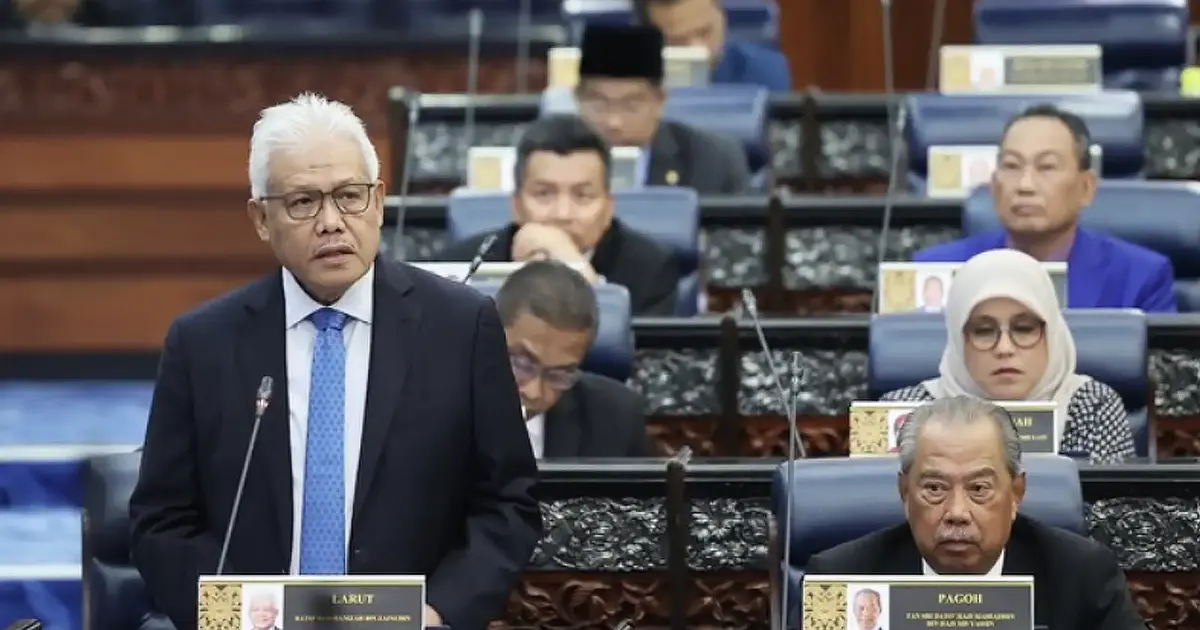
Hamzah Zainudin has regained the prominent front-row seat designated for the opposition leader in the Dewan Rakyat, marking a significant repositioning within Malaysia's parliamentary hierarchy. The seating change reflects shifting political dynamics and factional alignments within the opposition benches, with Bersatu president Muhyiddin Yassin experiencing a notable demotion from his previous privileged placement alongside the opposition leader.
The relocation of Muhyiddin to a position eight seats further back in the front row represents more than a mere administrative adjustment. It underscores the evolving power structures within Malaysia's opposition coalition and signals changes in how parliamentary standing and influence are being recalibrated. Muhyiddin's move from immediate proximity to the opposition leader represents a tangible loss of the symbolic prominence he had previously enjoyed in the chamber.
The opposition leader's position in parliament carries considerable symbolic weight in Malaysia's legislative system. Sitting prominently at the front of the chamber gives holders of this position maximum visibility during debates and proceedings, enhancing their profile and apparent authority within the assembly. The front-row seating arrangement is carefully curated to reflect parliamentary hierarchy, with the opposition leader traditionally positioned to directly challenge government members and lead questioning during key legislative moments.
Muhyiddin's previous positioning next to the opposition leader had granted Bersatu exceptional visibility and suggested a particular configuration of opposition leadership arrangements. His relocation suggests either a formal reassessment of Bersatu's role within the opposition coalition or reflects changing relationships between opposition political parties. The eight-seat gap creates both physical and symbolic distance between Muhyiddin and the opposition leader's position.
For Malaysian political observers, these seating adjustments reveal deeper shifts in coalition politics that may not be immediately apparent from headline announcements. Parliamentary protocol dictates seating arrangements with precision, and such changes typically result from deliberate decisions about party status and leadership recognition. The movement of senior political figures between front and back rows can signal alterations in factional strength, leadership consensus, or evolving priorities within opposition blocs.
Hamzah's return to the opposition leader's seat consolidates his authority and visibility during parliamentary proceedings. As opposition leader, he holds responsibility for coordinating opposition responses to government policies, leading questioning of cabinet ministers, and representing opposition interests during major legislative debates. The front-row positioning enhances his ability to perform these functions effectively and maintains his public prominence as the leading voice of parliamentary opposition.
Bersatu's role within the broader opposition coalition remains complex and sometimes contested. The party, which emerged from a split within the ruling coalition and has undergone various political alignments, occupies an ambiguous position that can shift depending on broader political negotiations and factional arrangements. Muhyiddin's reduced parliamentary prominence may reflect either Bersatu's changing status within opposition coalitions or represent a tactical adjustment in how different opposition parties wish to project their relative strength.
The seating arrangement adjustments occur within the context of Malaysia's fluid political environment, where coalition formations and party alignments have undergone substantial change in recent years. The parliament's composition and the dynamics between government and opposition benches continue to evolve as parties negotiate their positions and roles. Such parliamentary choreography, while appearing superficial to casual observers, serves important functions in signalling political relationships and hierarchy.
For Southeast Asian observers, Malaysian parliamentary arrangements exemplify how detailed procedural rules and physical layouts embed and reflect political power dynamics. The Dewan Rakyat's seating reflects parliamentary traditions while adapting to contemporary coalition configurations. Changes in who sits where represent real alterations in political standing and influence that extend beyond mere ceremonial concerns.
The implications of these shifts may become clearer during upcoming parliamentary sessions, where the reordered seating will be visible during government questioning, legislative debates, and major policy discussions. Opposition members will observe how the repositioning affects parliamentary dynamics, whether it influences speaking order, visibility during televised proceedings, or the apparent coordination between opposition figures during key debates.
For Malaysian voters and political analysts, such parliamentary rearrangements merit attention because they reveal organizational patterns within opposition circles that might not be explicitly announced through press releases. The visible hierarchy of opposition members in the chamber communicates messages about which voices parliamentary procedure prioritises and which parties or individuals exercise leadership functions. Hamzah's restored prominence and Muhyiddin's repositioning thus carry implications for understanding opposition cohesion and strategic direction during a period when parliamentary opposition plays an important role in Malaysia's political balance.

