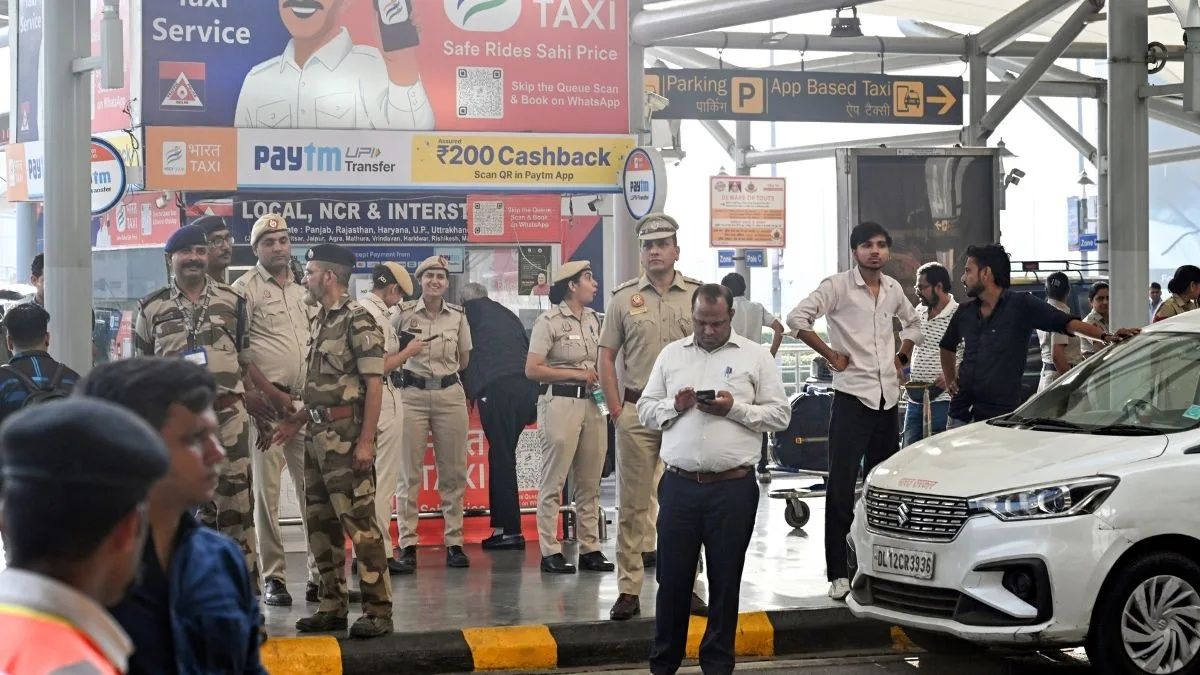
Authorities in India have arrested two men deported from Malaysia in connection with the banned Khalistan Zindabad Force (KZF), marking a significant development in cross-border counter-terrorism cooperation. The Royal Malaysia Police, working alongside India's central security agencies and Punjab Police, facilitated the deportation of Gurvinder Singh from Ambala and Manjit Singh from Patiala, both of whom were apprehended immediately upon arrival at Delhi's Indira Gandhi International Airport. The operation underscores growing regional coordination in tracking and disrupting militant financing networks that extend across South and Southeast Asia.
According to Punjab's Director General of Police Gaurav Yadav, the deportation represents a targeted intelligence-driven action aimed at dismantling the international support infrastructure that sustains militant activities in the state. The investigation has revealed that these individuals were allegedly operating a crucial logistics node from Malaysian territory, coordinating financial transfers and operational planning on behalf of the proscribed outfit. This intelligence breakthrough provides investigators with fresh leads into how banned organisations sustain their activities through carefully constructed networks of operatives positioned in jurisdictions with loose regulatory oversight or sympathetic diaspora communities.
The deportation emerges from an expanding investigation into multiple terror-related incidents across Punjab during the past year. In January, an improvised explosive device detonated near Sirhind in Fatehgarh Sahib district, causing alarm over the operational capabilities of underground cells. This was followed in April by another bombing attempt near Shambhu in Patiala district, incidents that prompted security forces to launch a comprehensive probe into the operational architecture supporting these attacks. The common thread linking both incidents proved to be a coordinated module allegedly backed by KZF elements, suggesting organisational coherence and resource access beyond what ad-hoc militant groups typically command.
Investigations into these bombing attempts yielded significant material evidence that shocked officials. Police recovered an RPG launcher, multiple improvised explosive devices, quantities of RDX explosive compound, hand grenades, sophisticated pistols, and ammunition caches from locations connected to the arrested network. The sophistication and quantity of recovered weapons indicated an operation with substantial financial backing and access to international supply chains. Rather than representing isolated criminal activity, these seizures pointed to a functioning terror module with genuine operational capacity and planning capability.
What particularly alarmed security agencies was the revelation that the financial sinews sustaining this apparatus extended well beyond India's borders. Forensic financial investigation discovered that funds fuelling the module's operations were routed through international banking channels, requiring coordination between individuals positioned across multiple countries. This discovery prompted security agencies to shift their investigative focus outward, initiating inquiries in neighbouring countries about potential coordinating nodes. Malaysia emerged as a critical jurisdiction where financial streams were being organised and disseminated to operatives conducting ground-level activities in Punjab.
The two arrested individuals allegedly played pivotal roles in this transnational financial architecture. Officials characterise their contribution as essential to sustaining KZF's operational presence in Punjab. Through overseas bank accounts and international money transfer mechanisms, they allegedly arranged resources that enabled the procurement of weapons, explosives, and operational necessities required by underground cells. The alleged financial channel they managed appears to have been deliberately structured to obscure the movement of capital between sources abroad and recipients in India, a common tradecraft employed by terrorist organisations seeking to evade detection by banking regulators and intelligence agencies.
DGP Yadav characterised the investigation as exposing a transnational network of handlers and financiers orchestrating disruption from abroad. The implication is that the conspiracy extends beyond the two arrested men to encompass a broader ecosystem of support including international recruitment specialists, weapons suppliers, financial facilitators, and ideological motivators distributed across multiple countries. Malaysia's role in this architecture appears to have been as a hub for coordinating resources and communications, a position it occupies due to its geographic centrality in Southeast Asia, its established diaspora communities, and its historical significance in South Asian migration patterns.
Following their arrival in India, both men were presented before courts in Patiala, which authorised police custody to enable detailed interrogation. Investigators are now systematically reconstructing their operational contacts, financial transactions, and coordination methods to identify other individuals embedded within the network. The questioning phase will likely focus on establishing precise roles within the hierarchy, identifying financial sources that supplied resources, and uncovering the identities of operatives in Punjab who received support through their channels. Each piece of information extracted during interrogation potentially leads investigators to additional nodes within what security agencies believe is a substantially larger conspiracy.
The investigation's trajectory reveals sophisticated counter-terrorism tradecraft. Rather than immediately apprehending suspected operatives after the initial bombing incidents, investigators patiently followed the financial trail, allowing it to lead to international coordinating nodes before making arrests. This methodical approach maximises the intelligence value of each arrest by ensuring that authorities understand the broader network architecture rather than simply disrupting individual cells. It also demonstrates that Indian security agencies possess capability and patience to pursue suspects across borders through international cooperation mechanisms.
For Malaysia, the deportation signals commitment to regional security cooperation despite occasional diplomatic tensions with India over various matters. The Royal Malaysia Police's willingness to coordinate with Indian authorities on counter-terrorism matters reflects recognition that militant financing networks and recruitment drives operate across borders and that bilateral cooperation enhances mutual security. Malaysia hosts significant Sikh and Punjabi diaspora communities, some segments of which maintain emotional and financial connections to separatist movements, making it a strategically important jurisdiction for monitoring terror-support activities.
Looking forward, investigators indicate that the network dismantling operation remains far from complete. Police are actively pursuing leads to identify additional operatives, financial handlers, weapons suppliers, and facilitators connected to the broader conspiracy. The systematic approach suggests authorities will move methodically from the arrested individuals toward their associates and supporters, building an increasingly comprehensive picture of how the organisation functions across borders. Each interrogation session potentially yields information that redirects investigation toward previously unknown nodes, expanding the scope of counter-terrorism operations.
The deportation reflects Malaysia's pivotal role in Southeast Asian security architecture and demonstrates that tacit understanding exists regarding counter-terrorism cooperation despite bilateral relationship complexities. As militant financing networks grow increasingly sophisticated and internationally distributed, regional countries are recognising that isolated national approaches prove insufficient. The Malaysia-India coordination in this case suggests that enforcement agencies, operating beneath the level of high-level diplomatic relations, possess shared professional interest in disrupting organisations that threaten peace and security. This case will likely inform future regional protocols for identifying, investigating, and disrupting transnational terror-support networks extending across South and Southeast Asia.