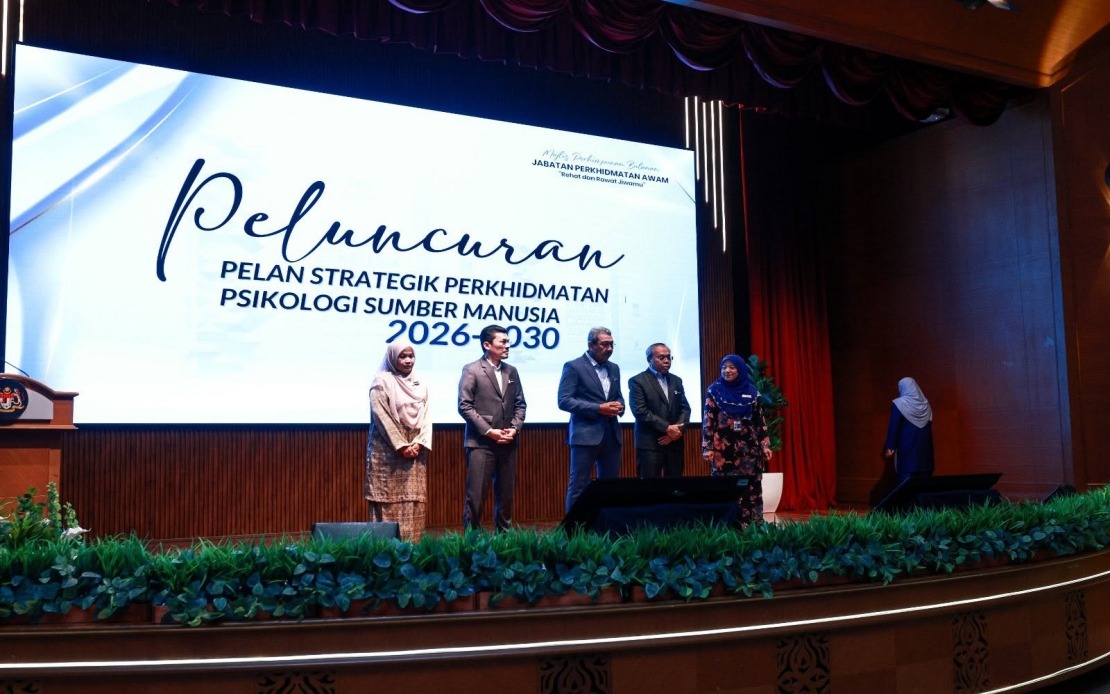
Malaysia's Public Service Department has unveiled a comprehensive framework designed to reshape how the civil service approaches employee mental health, introducing the Human Resources Psychology Services Strategic Plan 2026-2030 at a gathering in Putrajaya on June 19. The initiative, unveiled during the PSD's monthly assembly centred on the theme "R&R (Rest and Treat) Your Soul," represents a deliberate institutional shift toward recognising psychological well-being as fundamental to effective governance. The five-year roadmap encompasses 12 distinct strategies paired with 22 targeted programmes and 48 key performance indicators, reflecting the department's determination to embed mental health considerations throughout the public service apparatus.
Director-General Tan Sri Wan Ahmad Dahlan Abdul Aziz, who officiated the launch, articulated a vision that reframes psychological support as an act of professional responsibility rather than a sign of weakness. His messaging centred on the concept of "Treat," emphasising that civil servants must embrace proactive intervention by summoning the courage to dismantle long-standing taboos surrounding mental health, openly discussing psychological challenges, and accessing specialist support without fear of professional or social repercussions. This framing constitutes a significant departure from traditional bureaucratic culture, where mental health struggles were frequently concealed or minimised. The director-general's assertion that "the well-being of an organisation starts with the well-being of its people" crystallises an emerging recognition within Malaysia's administrative hierarchy that employee mental health directly correlates with institutional effectiveness and service delivery quality.
The strategic plan's emphasis on destigmatisation carries particular significance for Southeast Asia's public sector, where mental health discourse remains nascent compared to Western counterparts. Many Malaysian civil servants operate within hierarchical structures that historically discouraged vulnerability or admission of psychological distress, creating environments where burnout, anxiety, and depression often went unaddressed. By establishing psychological support as a normative component of professional life rather than an exceptional intervention, the PSD is potentially recalibrating expectations around mental wellness across Malaysia's broader government apparatus. The initiative directly acknowledges that creating cultural permission for employees to prioritise mental health requires deliberate institutional messaging and structural reinforcement.
The complementary concept of "Rawat," which translates to care or treatment, represents the operational dimension of this strategy. Rather than positioning mental health support as reactive crisis management, the framework advocates for proactive intervention mechanisms that identify and address psychological challenges before they escalate into serious dysfunction. This preventive approach aligns with contemporary understanding of occupational health, recognising that early intervention through counselling, stress management, and wellness programmes substantially reduces downstream costs associated with sick leave, reduced productivity, and employee turnover. For Malaysian civil servants navigating increasingly complex administrative landscapes, the availability of structured early intervention represents a meaningful resource expansion.
The strategic plan's integration with the existing H.E.M.A.T work culture framework illustrates how the PSD is attempting to weave mental health considerations into broader organisational transformation. H.E.M.A.T—encompassing governance improvements, public empathy, progressive mindset adoption, innovation appreciation, and transparent administration—provides the architectural foundation upon which psychological services are being built. This integrated approach acknowledges that individual well-being cannot be divorced from institutional culture; creating supportive environments for mental health simultaneously requires governance structures that foster trust, communication patterns that encourage honesty, and leadership attitudes that validate employee concerns. By linking mental health initiatives to comprehensive cultural reform, the PSD signals that psychological support represents one dimension of broader modernisation efforts rather than an isolated wellness programme.
The establishment of 48 distinct key performance indicators suggests the department recognises that mental health outcomes require quantifiable measurement and accountability mechanisms. These metrics likely encompass employee satisfaction with psychological services, utilisation rates among eligible staff, changes in help-seeking behaviour, training completion among mental health advocates, and potentially outcomes like reduced stress-related absences. The emphasis on measurable outcomes reflects contemporary public sector management practices increasingly prevalent across Malaysian government, where data-driven decision-making guides resource allocation and programme refinement. By subjecting mental health initiatives to rigorous measurement, the PSD creates mechanisms for identifying which interventions prove most effective and where refinements become necessary.
The timing of this strategic plan coincides with growing regional discourse around mental health in Southeast Asian workplaces, driven partly by youth-led advocacy and increasing recognition of psychological distress's economic impacts. Malaysia's civil service, which employs hundreds of thousands across federal and state levels, represents a substantial population whose mental health status has implications extending beyond individual well-being into broader service delivery quality. When civil servants responsible for education, healthcare, infrastructure, and social services operate under psychological strain, the consequences cascade throughout the populations they serve. By prioritising mental health infrastructure, the PSD acknowledges these systemic connections and positions psychological wellness as a public good rather than merely an employee benefit.
The launch signals awareness within Malaysia's administrative leadership that contemporary workforce expectations increasingly encompass mental health support alongside traditional compensation and benefits. Younger civil servants entering government service increasingly evaluate employers partly based on psychological support provisions, making mental health competitiveness relevant for recruitment and retention. This generational shift mirrors broader trends across professional sectors in Malaysia, where skilled workers possess increasing ability to select employers offering comprehensive well-being provisions. The PSD's strategic positioning of mental health support therefore serves both humanitarian and pragmatic purposes, advancing human dignity while simultaneously enhancing institutional competitiveness in attracting capable administrators.
Implementation success will substantially depend on allocation of adequate funding, training of mental health specialists and advocates throughout government, establishing accessible counselling infrastructure, and perhaps most critically, sustained leadership commitment to modelling vulnerability and normalising help-seeking behaviour. Previous Malaysian government initiatives addressing workplace culture have occasionally faltered when senior leadership failed to embody espoused values or when resource constraints undermined programme delivery. The transition from strategic documents to tangible cultural change requires consistent investment and reinforcement across multiple years. The five-year timeline permits substantial progress if implementation proceeds systematically, though sustainability beyond 2030 will depend on whether psychological support becomes genuinely embedded in civil service identity or remains a programme dependent on champions' enthusiasm.
For Malaysian public sector employees and the populations served by government institutions, this strategic plan represents recognition that mental health constitutes essential infrastructure deserving systematic attention and resources. The framework acknowledges psychological well-being's connection to institutional effectiveness while positioning mental health support as organisational responsibility rather than individual burden. Should implementation proceed as envisioned, the initiative could meaningfully reduce psychological suffering among Malaysia's civil servants while simultaneously improving service quality across government functions. The broader implications extend to normative shifts in how Malaysia's public sector conceptualises employee welfare and organisational excellence in contemporary contexts.