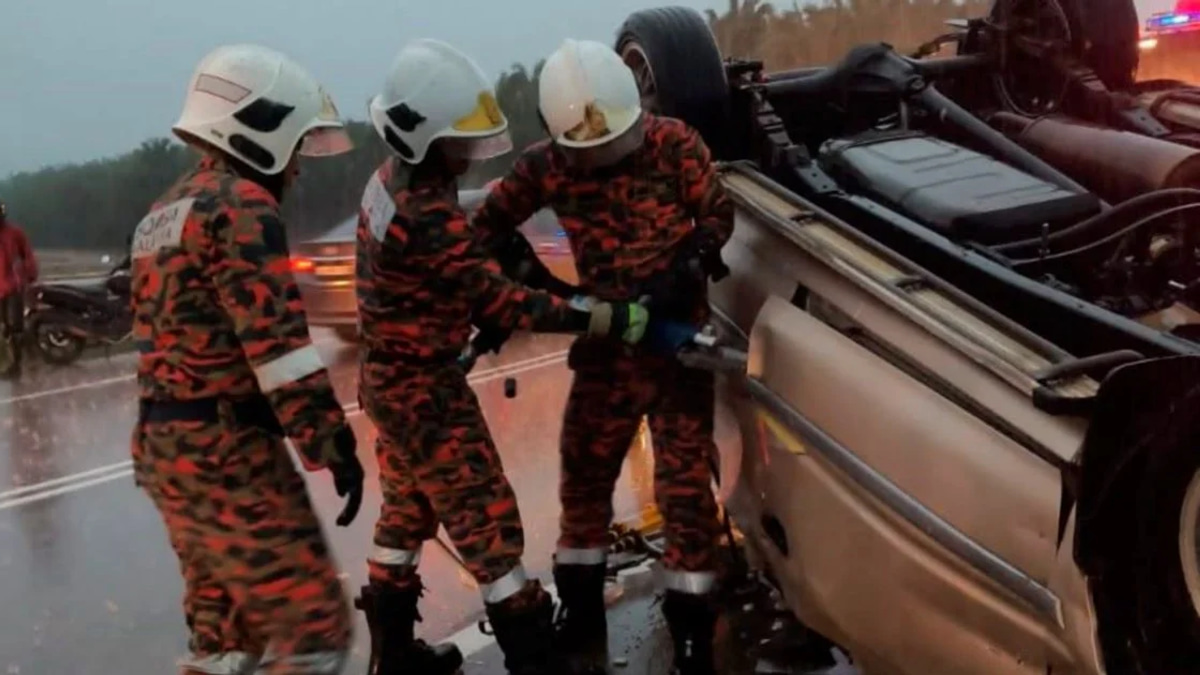
A Tawau magistrates' court has handed down a substantial prison sentence and monetary penalty to a heavy vehicle operator convicted in connection with a fatal collision that claimed the life of a motorcyclist. The five-year custodial term and RM30,000 fine represent a significant enforcement action in the district's traffic safety efforts, following what courts determined was an act of dangerous driving that breached the fundamental responsibility of road users to operate their vehicles with appropriate care.
The conviction underscores the grave consequences of negligent driving behaviour, particularly when such conduct involves large commercial vehicles whose mass and momentum create disproportionate risks to other road users. Motorcyclists, as members of the most vulnerable class of road users in Malaysia, face elevated mortality rates in traffic incidents—a pattern reflected in the serious penalties now being applied to commercial operators whose carelessness contributes to fatal outcomes.
The case emerged from an incident occurring during the previous calendar year, with the judicial process spanning several months before reaching verdict. Such timelines are typical in Malaysian courts handling serious traffic offences, where evidence gathering, witness examination, and the establishment of causality between driver conduct and fatal consequence all demand meticulous legal procedure. The magistrates' court's determination that dangerous driving, rather than merely careless conduct, had occurred reflects findings that the driver's actions fell substantially below the standard expected of a reasonably competent vehicle operator.
Dangerous driving convictions carry weightier penalties than alternative traffic offences precisely because they acknowledge a conscious or reckless disregard for public safety. The distinction matters significantly: whereas careless driving might result from momentary inattention, dangerous driving implies a pattern or severity of behaviour indicating genuine threat to others on the roadway. The five-year sentence places this case firmly within the upper tier of traffic crime severity, signalling judicial recognition of the incident's catastrophic consequence.
The financial component of the sentence—RM30,000—functions both as punishment and as a deterrent mechanism targeting commercial transport operators more broadly. For transport companies and individual drivers operating large vehicles for commercial purposes, such fines represent genuine economic consequences that may incentivise investment in driver training, vehicle maintenance, and safety protocols. The combination of custodial time and financial penalty therefore aims to reshape behaviour across the commercial haulage sector.
Road safety remains a persistent challenge across Malaysia, with heavy vehicle involvement in fatal accidents continuing to generate public concern and regulatory attention. The Sabah region, encompassing Tawau, experiences its own traffic dynamics influenced by geography, commercial activity, and infrastructure development. Fatal incidents involving motorcyclists and commercial vehicles have featured prominently in recent years' accident statistics, making enforcement actions such as this particularly visible to community awareness efforts.
The sentencing carries implications extending beyond the individual defendant to the transport industry operating throughout Sabah and adjacent regions. Insurance costs, licensing considerations, and corporate safety ratings may all be affected by convictions of this magnitude, creating secondary incentives for fleet operators to implement more rigorous driver management systems. Training certification, drug and alcohol testing protocols, and fatigue management procedures have all become focal points for responsible transport companies seeking to avoid both the human tragedy and financial consequences of serious accidents.
For the families of fatal accident victims, criminal sentencing provides a measure of justice through the legal system, though it cannot restore what has been lost. The motorcyclist's death represents not merely a statistical traffic fatality but a profound loss to those connected to that individual. The conviction process, extending over months and culminating in this sentence, reflects the legal system's engagement with that loss, even as criminal proceedings cannot fully address the private grief.
The case also illuminates the ongoing tension in Malaysian road safety between preventive measures and post-incident accountability. While criminal penalties serve important deterrent and expressive functions—declaring societal condemnation of dangerous driving and its consequences—they operate necessarily after harm has already occurred. This reality maintains the relevance of complementary approaches including infrastructure improvements, vehicle safety standards, driver education initiatives, and traffic enforcement activities designed to identify and correct dangerous behaviour before it culminates in fatal collision.
Looking forward, this conviction may influence how transport operators across Sabah and peninsular Malaysia approach driver management and vehicle safety investment. The precedent established by the five-year sentence and substantial fine sends a clear market signal that dangerous driving resulting in fatality carries profound consequences, potentially motivating companies to exceed minimum regulatory requirements in pursuit of genuine safety cultures.
For road users throughout Malaysia, particularly the vulnerable motorcyclist community, incidents and their legal resolutions serve as reminders of the asymmetrical risks they face in sharing road space with far heavier vehicles. The Tawau case exemplifies both the potential for the legal system to hold operators accountable for negligent conduct and the tragic reality that such accountability operates only after lives have already been lost.