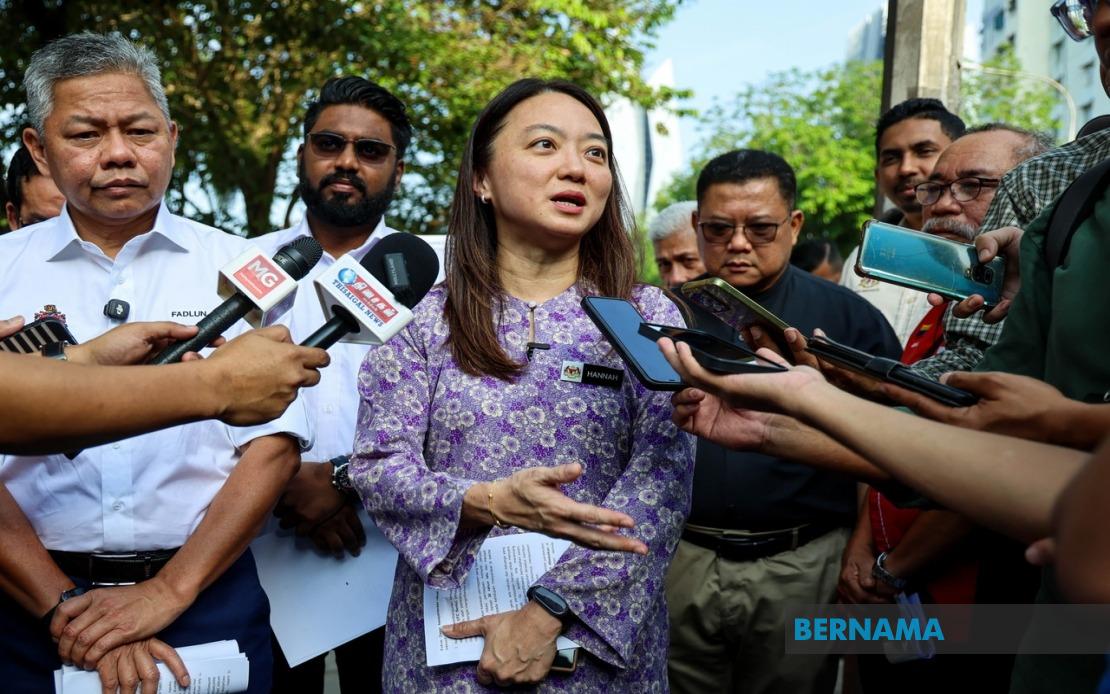
Minister in the Prime Minister's Department (Federal Territories) Hannah Yeoh has issued a clear directive to Malaysia's local authorities to take greater ownership of public facility maintenance, emphasizing that basic upkeep cannot be deferred until problems gain traction on social media platforms. Speaking after visiting a hawker facilities project near the Urban Transformation Centre (UTC) Sentul in Kuala Lumpur on June 19, Yeoh stressed that tourism destinations such as Putrajaya face particular scrutiny and should maintain higher standards of cleanliness and safety without making excuses for lapses.
The minister's remarks come in response to recent complaints that circulated online regarding deteriorating conditions at public amenities in Putrajaya, including non-functional lifts and escalators. Rather than waiting for viral social media posts to trigger government action, Yeoh argued that local authorities must implement continuous maintenance schedules as a matter of routine operations. She drew a distinction between minor maintenance tasks, which demand no additional funding justification, and larger capital projects that may require separate budget allocations. This distinction is particularly relevant for Malaysian local councils struggling with chronic underfunding, as it clarifies where operational efficiency should compensate for budgetary constraints.
Yeoh indicated that her ministry has already taken corrective steps following the public complaints, noting that Putrajaya Corporation management had been contacted and repair work had commenced. This intervention underscores the reality that Malaysian governance often responds reactively to social media pressure rather than through planned preventive maintenance cycles. The minister's frustration with this pattern reflects a broader challenge facing urban administration across Southeast Asia, where social media has become the de facto reporting mechanism for infrastructure failures that formal complaint channels might otherwise address more discretely.
The call for more frequent site visits by local authority leadership represents a structural recommendation aimed at closing the gap between bureaucratic oversight and ground-level conditions. By emphasizing regular inspections, Yeoh is essentially proposing that senior management in local councils must shift from desk-bound roles to field-based accountability. This approach aligns with international best practices in municipal management, where senior officials maintain direct visibility of asset conditions. For Malaysian city councils and municipal corporations, implementing such protocols could reduce the lag time between problem identification and resolution.
Yeoh's broader message also addresses a tension between democratic transparency and informed decision-making. She cautioned social media users to be more discerning consumers of online content, arguing that viral videos often present incomplete narratives that fail to capture the full context of public facility challenges. The minister's observation that a single video might represent only 10 per cent of the actual situation reflects legitimate concerns about information distortion in digital spaces. However, her advice to social media users to question viral content could equally apply to government communications, which themselves may lack full transparency about resource constraints or competing priorities.
The emphasis on Putrajaya as a tourism hub carries implicit significance for Malaysia's international reputation. As the administrative capital and a destination attracting both domestic and international visitors, Putrajaya's public facilities serve as a visible representation of Malaysian governance capability. Deteriorating lifts and escalators in public spaces undermine the carefully crafted image of federal territory management and potentially impact visitor experiences and investment confidence. This stakes the maintenance issue beyond mere local administration—it touches upon Malaysia's competitive positioning in regional tourism markets.
For local authorities across Malaysia, Yeoh's directive implies a reallocation of operational priorities rather than necessarily increased expenditure. Many councils struggle with aging infrastructure inherited from previous administrations, and proactive maintenance requires discipline in budget cycles that often prioritize new projects over preventive care. The implicit challenge is whether local councils can reorganize spending patterns to front-load maintenance costs, thereby extending asset lifecycles and reducing the frequency of dramatic failures that generate social media outrage.
The minister's comments also reflect evolving expectations about governance communication in the social media era. Rather than accepting that viral complaints are an inevitable feature of modern administration, she suggests that robust preventive systems should minimize such escalations. This frames maintenance not merely as a technical function but as a component of public relations and reputation management. Local authorities that achieve this standard will attract less negative coverage and preserve public confidence in their stewardship.
Yeoh's broader point about media literacy and social discernment carries implications for how Malaysian society evaluates institutional performance. The emphasis on looking beyond single videos to appreciate multiple perspectives could strengthen civic discourse if applied consistently by both officials and citizens. Yet it also raises questions about power asymmetries in information environments—government agencies possess resources to provide their own narrative, while individual citizens documenting facility failures typically lack equivalent platforms.
Moving forward, the effectiveness of this ministerial directive will depend on whether local authorities translate the message into sustained operational changes. Rhetoric about maintenance commitment is common in government statements; implementation through altered staffing patterns, budget allocations, and accountability mechanisms is considerably rarer. The next critical indicator will be whether Putrajaya and other tourism hubs demonstrate measurably improved facility conditions over subsequent quarters, or whether the cycle of social media complaints and reactive interventions continues.