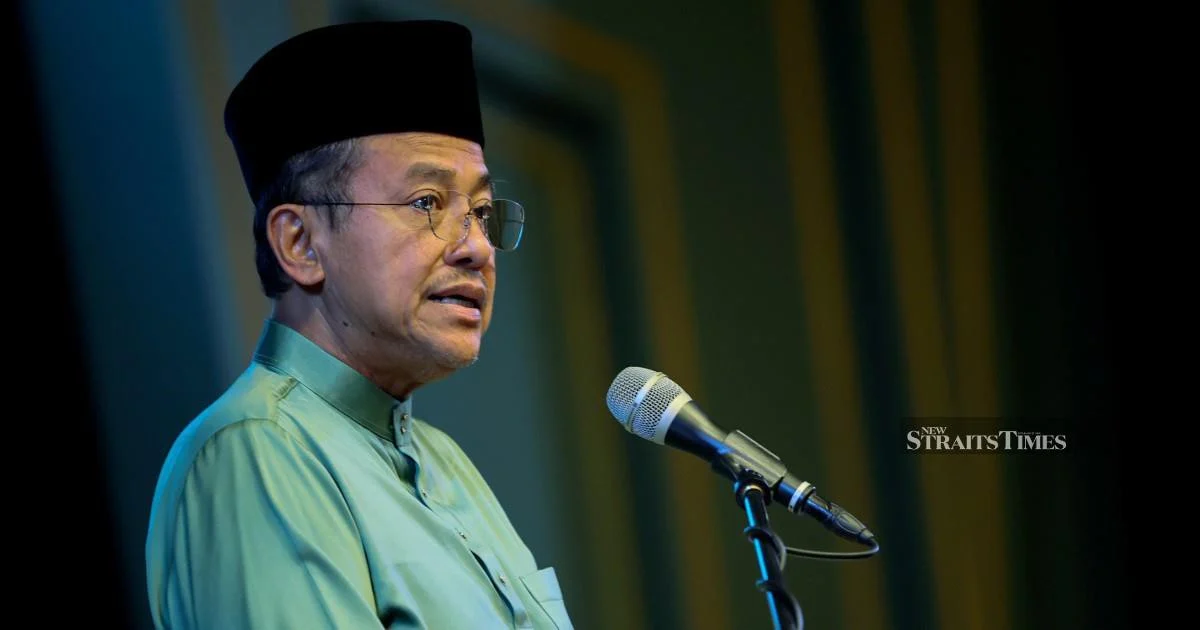
The Perikatan Nasional coalition is preparing to hold substantive discussions about Bersatu's standing and future role within its ranks, with senior leadership set to gather at a crucial council meeting scheduled for tomorrow. Datuk Seri Dr Ahmad Samsuri Mokhtar, who holds the position of vice-president in PAS, the dominant Islamist component of the opposition alliance, confirmed the agenda item during remarks in Temerloh, signalling that the matter has risen to the level of formal coalition deliberation.
The announcement comes amid persistent questions about the durability and coherence of PN as a unified political force. Since its formation as a counterweight to the ruling coalition, PN has experienced periodic tensions between its member parties, each harbouring distinct political objectives and regional strongholds. The specific focus on Bersatu's position suggests internal dynamics that warrant senior attention, though the precise nature of the deliberations remains opaque at this juncture.
Bersatu, the party founded by former Prime Minister Mahathir Mohamad and currently led by Tan Sri Muhyiddin Yassin, has been a contentious element within PN's structure. The party's influence on coalition strategy, its commitment to joint campaign efforts, and its relationship with other opposition components have periodically generated friction among PN's leadership cadre. By bringing this matter to the full leadership council, PN is signalling that questions about Bersatu's role cannot be resolved through bilateral negotiations between party heads alone.
The timing of this discussion carries weight in Malaysia's broader political landscape. PN has been positioning itself as a serious challenger to the Pakatan Harapan-led federal government, and any perceived disunity within the coalition could undermine its electoral prospects and policy credibility. A strengthened or clarified arrangement regarding Bersatu's position could either solidify the coalition or expose underlying fractures that have been managed through informal agreements rather than explicit structural reform.
For Malaysian readers monitoring opposition politics, this development reflects a pattern familiar in the country's multi-party system: coalition partners must periodically renegotiate their relationships as political circumstances shift and party fortunes fluctuate. Unlike the more rigid structures of formal government coalitions, opposition alliances operate with fewer institutional constraints, making them vulnerable to centrifugal forces when member parties perceive unequal benefit from cooperation.
The leadership council meeting represents a formal mechanism through which PN can address such tensions transparently, or at minimum, can document decisions about coalition management. The involvement of senior figures like Ahmad Samsuri, whose PAS represents the largest Muslim constituency within PN, underscores the seriousness with which this coalition values consensus-building among its principal stakeholders. Yet the very need for such a meeting suggests that informal channels have proven insufficient for resolving the underlying issues.
From a governance perspective, how PN resolves internal coalitional questions will influence perceptions of its readiness for office. Voters across the political spectrum scrutinize opposition coalitions for signs of stability and unified purpose. An opposition alliance that struggles with internal discipline and coherent messaging finds it difficult to present a compelling alternative vision to the electorate. Conversely, a coalition that manages internal differences through transparent processes and reaches substantive agreements can project strength and organisational capacity.
The Malaysian political context adds additional layers of complexity to such discussions. Regional state governments controlled by different coalition partners, the distribution of ministerial portfolios across party lines in hypothetical future scenarios, and competition for candidate nominations in upcoming elections all generate pressure within opposition coalitions. These structural incentives can either strengthen cooperation by creating mutual dependencies or exacerbate tensions when partners perceive inequitable arrangements.
Bersatu's specific position warrants attention given its historical trajectory. The party has experienced significant membership fluctuations, electoral performance variations across different states, and shifting alliances with other parties seeking opposition credentials. Its position within PN thus carries implications not merely for internal coalition mechanics, but for the broader question of how opposition politics will organise itself ahead of the next general election.
Observers will watch closely for the council's outcomes and any subsequent public statements clarifying Bersatu's role, resource allocation within PN's structures, and any adjustments to coalition governance arrangements. The willingness of PN leadership to address such matters formally suggests a mature approach to coalition management, though the specific decisions reached will ultimately determine whether this meeting resolves underlying tensions or merely postpones more fundamental reckoning about PN's future coherence and viability as a unified political entity.