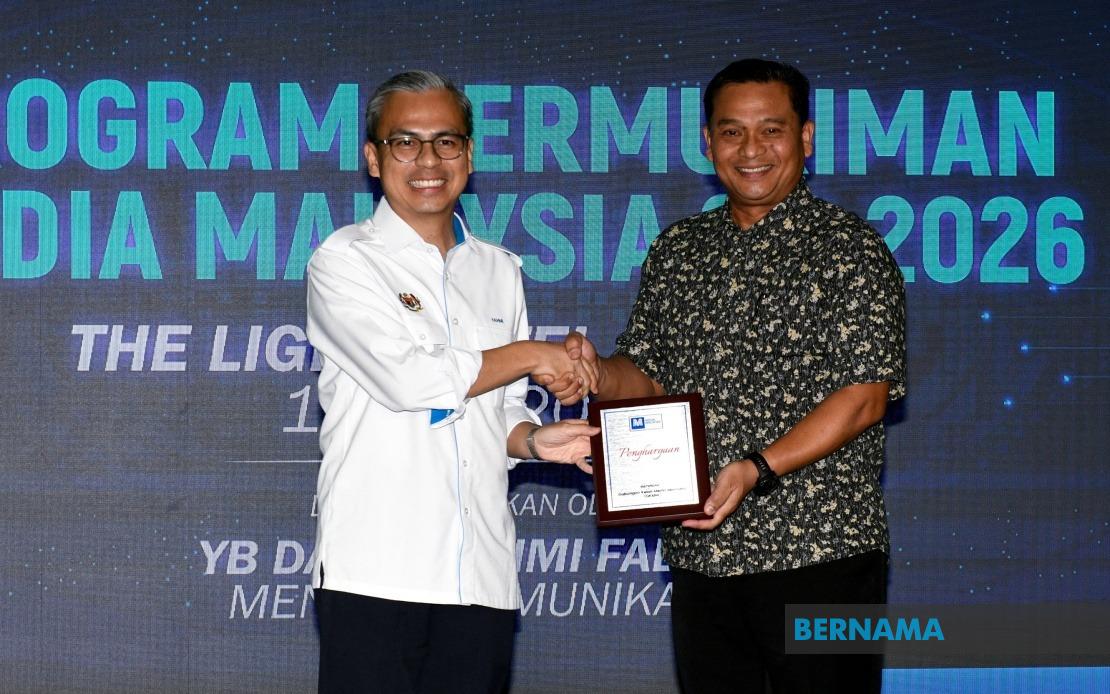
Communications Minister Datuk Fahmi Fadzil unveiled a funding package aimed at strengthening Malaysia's media infrastructure and supporting journalism practitioners during the Malaysia Media Retreat Programme 2.0 in Butterworth on June 19. The Ministry of Communications is channelling RM10,000 to each state media club that maintains membership with the Malaysian Media Clubs Association (GKMM), while providing an additional RM30,000 directly to GKMM for programmes and activities centred on journalist welfare.
The allocation reflects the government's broader commitment to sustaining the journalism profession during a period of significant transformation in global media landscapes. Fahmi urged the recipient organisations to deploy these resources strategically, emphasising that the funds should directly benefit media practitioners through targeted activities and developmental programmes. His announcement signals recognition of the structural role that media clubs play in aggregating professional concerns and fostering community among journalists across different states.
Fahmi articulated a vision of journalism as irreplaceable within democratic societies, particularly in an era of rapid technological advancement. He stressed that artificial intelligence and algorithmic news systems cannot replicate the investigative rigour, ethical judgment, and contextual understanding that trained journalists bring to information gathering and verification. This positioning of human journalism as a public good worth protecting represents a deliberate policy stance, suggesting the government views press freedom and professional standards as integral to national stability.
The role of GKMM as a conduit for industry concerns emerged as a central theme in Fahmi's remarks. Although GKMM functions as an association rather than a formal trade union, Fahmi acknowledged its capacity to channel grievances and suggestions from media practitioners upward to government bodies capable of formulating supportive policies. This recognition implicitly validates the association's advocacy function while maintaining clear boundaries between organised labour representation and industry-government dialogue.
The minister made explicit reference to journalist protection and job preservation as priorities for his ministry, framing these commitments as interconnected with national developmental goals. The emphasis on preserving journalistic employment contrasts with global trends where newsroom reductions and freelance casualisation have reshaped the profession. Malaysia's approach suggests policymakers recognise that sustainable journalism requires institutional investment alongside protective frameworks.
Fahmi's comments on the Malaysian Media Council Act illustrated how government policy development increasingly incorporates industry feedback. He indicated that the legislative framework governing media conduct and standards was substantially shaped by suggestions originating from journalists and media organisations themselves, implying a collaborative model of governance rather than top-down regulation. This consultative approach potentially creates space for industry voices in future legislative discussions affecting press operations.
The event itself, attended by senior officials including Communications Ministry secretary-general Datuk Abdul Halim Hamzah and Malaysian National News Agency leadership, underscored the prominence assigned to media sector engagement within government circles. The presence of Bernama's chief executive officer Datin Paduka Nur-ul Afida Kamaludin and editor-in-chief Arul Rajoo Durar Raj reflected the centrality of the national news agency in government communications strategy.
For Malaysian media practitioners and state-based media clubs, the funding represents tangible financial support for professional development, welfare assistance schemes, and collective activities that strengthen professional cohesion. The allocation per state club, though modest in absolute terms, acknowledges the geographic distribution of media practice across Malaysia's federated structure and recognises that professional support infrastructure must operate at multiple administrative levels.
The broader context encompasses Southeast Asian media landscapes where government-press relations vary considerably. Malaysia's approach through financial support and consultative policymaking differs from purely restrictive models, yet simultaneously maintains government influence over media sector development. The funding mechanism allows the state to shape industry priorities indirectly while supporting professional standards that benefit overall information quality.
Journalism in Malaysia faces multifaceted pressures including digital disruption, advertising revenue challenges, and evolving audience consumption patterns. Government support for professional associations and welfare programmes partly compensates for structural economic challenges affecting media sustainability. However, such support also creates dependencies that require careful navigation to preserve editorial independence.
The announcement arrives amid global conversations about preserving quality journalism against technological displacement and market failures. By explicitly rejecting the notion that artificial intelligence can replace human journalists, Fahmi positioned Malaysia within a broader international discourse asserting journalism's irreducible value to informed citizenship. This ideological stance carries implications for media policy trajectories across Southeast Asia.
Moving forward, the effectiveness of these allocations will depend on how GKMM and state media clubs utilise funds to address practical challenges facing journalists, whether through professional training, health and insurance programmes, or advocacy initiatives. The success of this funding approach may also influence whether similar mechanisms are extended or expanded in future budget cycles, potentially establishing precedent for recurring government support to media sector institutions.