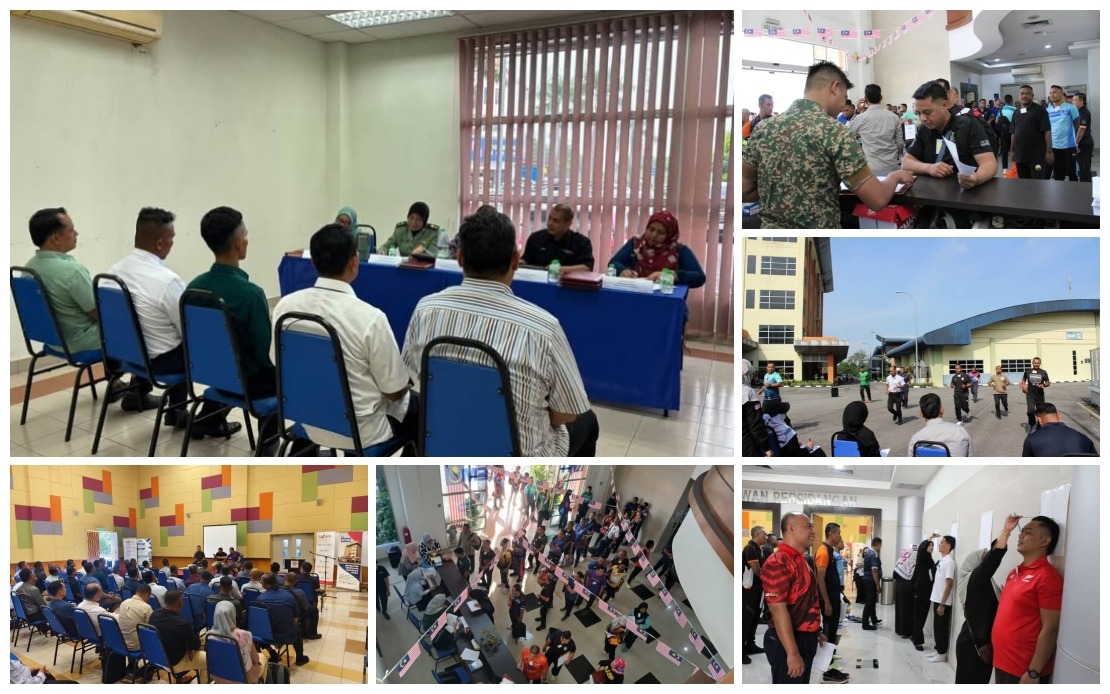
MARA has advanced its recruitment process for Full-Time External Wardens across MARA Junior Science Colleges (MRSM) with 147 former military personnel completing physical interview sessions at the MARA Food Technology Incubator in Kepong on consecutive days last week. According to MARA Chairman Datuk Dr Asyraf Wajdi Dusuki, the candidates had navigated a two-stage online screening process before securing positions in this competitive selection round, underscoring the organisation's commitment to identifying individuals best suited for the demanding role.
The selection framework employed by MARA reflects the rigorous standards expected for wardens entrusted with residential college populations. Candidates underwent evaluation across three distinct assessment components: Body Mass Index screening to establish baseline fitness levels, the Bleep Test to measure cardiovascular endurance and physical capacity, and structured face-to-face interviews designed to assess character, experience, and suitability for the position. This multifaceted approach extends beyond traditional credential-checking to ensure wardens possess both the physical capability and personal qualities necessary for the demanding responsibilities ahead.
The timing of appointments carries particular significance within Malaysia's boarding school ecosystem. Selected candidates are scheduled to assume their duties beginning July 1, aligning with the academic calendar and allowing institutions sufficient preparation time before the new intake of students arrives. This coordinated transition reflects MARA's systematic approach to institutional planning and demonstrates awareness of the critical role wardens play during the crucial transition period when students first enter residential college environments.
Datuk Dr Asyraf Wajdi articulated a broader vision extending beyond conventional discipline enforcement. The role encompasses responsibility for embodying MARA's Education Philosophy while serving as mentors, guides, and parental figures within the college community. This positioning reframes the warden position from a purely disciplinary function to a holistic developmental role, recognising that residential college experiences shape students' formative years and social development. The emphasis on wardens functioning as "second mothers and fathers" reflects understanding that adolescents in boarding situations require emotional support and guidance alongside institutional oversight.
Curbing negative behavioural trends represents a core operational objective for the enhanced warden programme. Bullying, disciplinary misconduct, and broader social ills have attracted increasing institutional attention across Malaysia's educational sector in recent years. By strengthening the warden cadre with carefully selected individuals possessing both military discipline backgrounds and measured interpersonal capacity, MARA seeks to create college environments where safety, psychological wellbeing, and constructive peer relationships can flourish. This preventative approach acknowledges that strong residential leadership directly influences student conduct and campus culture.
The gender-inclusive nature of the recruitment drive warrants separate mention. In parallel with the 147 male candidates who completed their interviews, MARA has scheduled physical interview sessions for 162 female former military personnel in the week following this initial cohort's assessments. This substantial female candidate pool suggests MARA recognises the importance of gender representation within warden structures, potentially reflecting institutional understanding that female students benefit from access to female mentors and role models, while mixed-gender warden teams better reflect contemporary approaches to residential college management.
The reliance on former military personnel as the recruitment pool carries both symbolic and practical implications. Military backgrounds provide candidates with established experience in hierarchical structures, discipline implementation, physical conditioning, and crisis management protocols. However, this focus also raises questions about whether military training alone adequately prepares individuals for the nuanced emotional and developmental responsibilities outlined. The interview component presumably evaluates candidates' capacity to balance structured discipline with empathy and modern approaches to student welfare.
From a Malaysian educational policy perspective, this initiative reflects MARA's effort to address documented challenges within residential college systems. Previous years have witnessed institutional reviews following incidents of bullying, hazing, and disciplinary breakdowns across Malaysia's boarding schools. By proactively recruiting individuals meeting both physical fitness benchmarks and interpersonal standards, MARA positions itself as responsive to evolving expectations regarding student safety and institutional accountability. The approach aligns with broader government emphasis on student welfare as central to educational quality.
The scale of this recruitment operation—over 300 candidates across both male and female cohorts—indicates MARA's substantial expansion of its warden infrastructure. This suggests either significant shortfalls in existing warden numbers, planned growth in MRSM student intake, or systematic replacement of the warden cadre. Understanding the precise motivations behind such comprehensive recruitment remains relevant for assessing broader institutional challenges and strategic directions within MARA's residential college system.
For prospective wardens and institutions, the structured assessment methodology establishes clear performance benchmarks. The combination of fitness testing and interview evaluation sends explicit signals about expectations: successful candidates must demonstrate genuine capacity for the role, not merely military credentials or paper qualifications. This approach potentially improves selection quality and reduces risk of placements in unsuitable individuals who might otherwise have relied on military service records alone to secure positions.
The July 1 implementation timeline creates an immediate transition period for institutions preparing to welcome these new wardens. Institutions must simultaneously manage existing operations while integrating fresh personnel whose effectiveness will depend partly on institutional onboarding and support structures. MARA's readiness in this regard will partially determine whether the recruitment initiative delivers anticipated improvements in college safety and student welfare outcomes.
Looking forward, the outcomes of this enhanced warden cohort will merit evaluation. Success would be evidenced through documented improvements in college safety metrics, reduced disciplinary incidents, and enhanced student wellbeing indicators. Challenges would suggest need for refinement in selection criteria or ongoing professional development support. The initiative represents MARA's substantive investment in addressing residential college dynamics—a commitment that extends well beyond simple recruitment mechanics into questions of institutional culture and student experience across Malaysia's MRSM network.