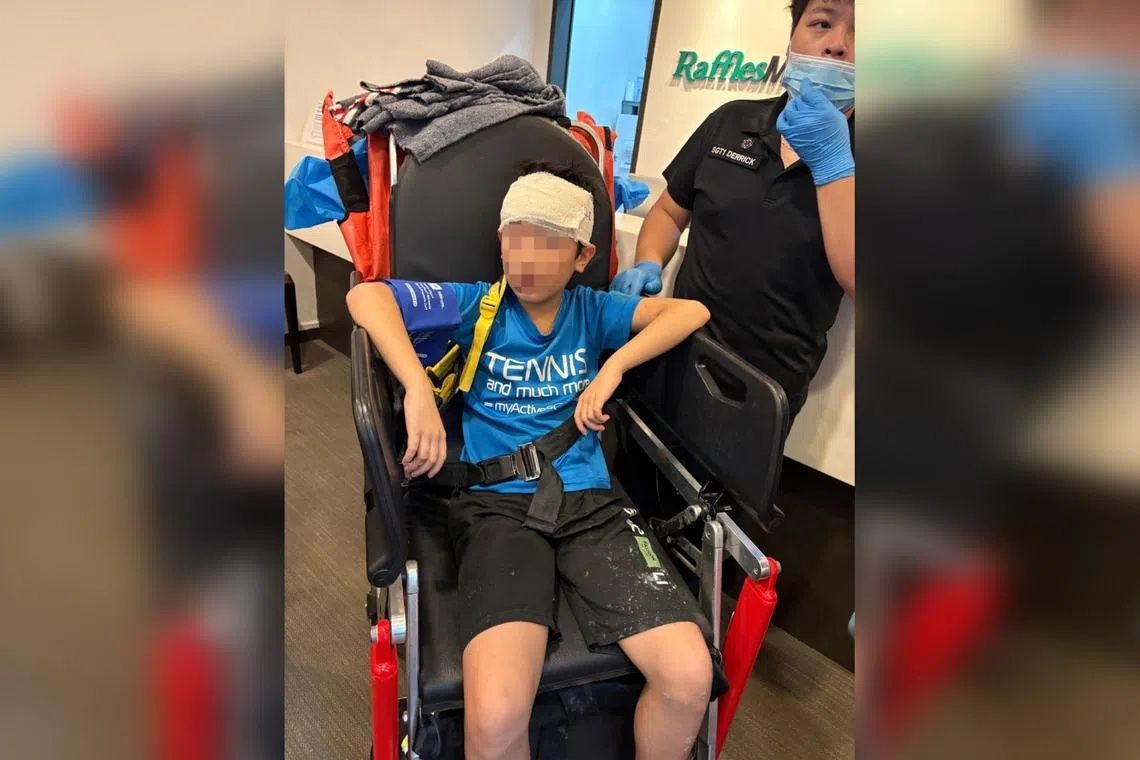
A young customer was hospitalized following an unexpected structural failure at a popular foodcourt chain in a busy Singapore shopping mall. The incident, which occurred on Saturday morning at a Food Junction outlet in Rivervale Mall's Sengkang location, prompted an immediate emergency response and raised fresh questions about safety standards in public dining spaces across the region.
The Singapore Civil Defence Force responded to a distress call at approximately 10:30am on June 20, attending to the injured child and transporting the patient to KK Women's and Children's hospital for medical evaluation and treatment. Bystanders captured video footage of the incident on TikTok, showing the collapsed signboard strewn across the foodcourt entrance, with other ceiling sections still partially intact and crowds maintaining distance from the debris field. The ground floor location of the outlet made the incident all the more concerning given the footfall typically experienced at such venues during peak hours.
Food Junction, which operates multiple locations throughout Singapore, moved quickly to contain the situation and address public concern. A company spokeswoman confirmed awareness of the incident and described how staff immediately mobilized to work alongside mall management and emergency personnel. The response prioritized victim assistance and cooperation with authorities investigating the cause of the collapse. The injured customer received medical assessment and was subsequently allowed to rest at home, indicating the injuries, while serious enough to warrant hospitalization, were not life-threatening.
The foodcourt chain has since commissioned a comprehensive investigation to establish the underlying cause of the structural failure. Safety protocols across all affected areas have been reinforced in consultation with relevant regulatory bodies. This systematic approach reflects growing corporate accountability in the hospitality sector, particularly where public safety is at stake. The operator's acknowledgment of responsibility and swift corrective action may serve as a benchmark for how businesses respond to such incidents across Southeast Asia, where aging infrastructure in some establishments remains a persistent concern.
Operations at the outlet have resumed following the incident, though this decision raises implicit questions about the thoroughness of structural assessments undertaken in the immediate aftermath. Food Junction's management issued a formal apology for the incident, signaling recognition of the disruption and concern caused to customers and the broader public. The resumption of service suggests that authorities have granted clearance, though the sequence and timing of such clearance typically remains opaque to casual observers.
The collapse at Rivervale Mall reflects broader infrastructure challenges in high-traffic commercial spaces. Signboards and overhead structures in foodcourts and malls are subject to constant stress from vibrations, temperature fluctuations, and aging materials. Regular maintenance protocols are essential but sometimes inadequately funded or monitored, particularly in aging facilities that have served for many years. The incident underscores why facility managers must balance operational efficiency with rigorous safety inspection schedules.
For Malaysian readers and business operators, this incident carries instructive implications. Foodcourts and shared dining spaces in shopping malls throughout Malaysia operate under similar conditions, with overhead signage, fixtures, and structural elements exposed to comparable wear patterns. The Rivervale incident serves as a reminder that even in Singapore, with its robust regulatory environment, structural failures can occur—a sobering message for establishments operating under less stringent oversight.
The involvement of Singapore's Building and Construction Authority in subsequent investigations indicates that public authorities are treating the matter seriously. Such scrutiny typically results in updated guidelines and heightened inspection frequency for comparable facilities. The regulatory response in Singapore often sets precedent across the region, and property owners and foodcourt operators in Malaysia and other Southeast Asian nations may find themselves subject to similar pressures from insurers and local authorities seeking to prevent comparable incidents.
The incident also highlights the importance of public documentation and transparency. Social media footage and news coverage ensure that stakeholders remain informed and accountable, creating informal but powerful oversight mechanisms. Customers in the region increasingly expect operators to maintain rigorous safety standards, and incidents like this shape public perception of brand reliability and institutional competence.
Moving forward, foodcourt operators across Southeast Asia should view the Rivervale incident as a catalyst for proactive risk management. Structural audits, maintenance logs, and compliance documentation become critical not only for regulatory adherence but for brand reputation and customer confidence. The child injured at Food Junction did not choose to be part of this cautionary tale, yet the incident's silver lining lies in the heightened awareness it generates about the necessity of infrastructure investment and safety culture in public dining spaces throughout the region.