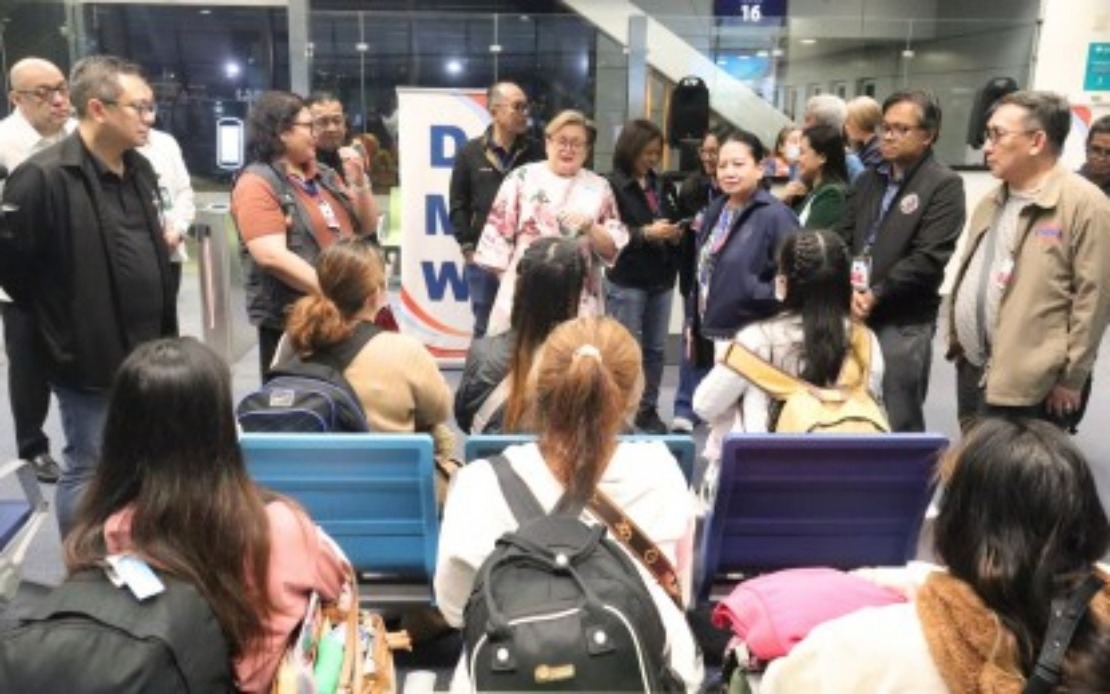
The arrival of 24 Filipino detainees at Manila's Ninoy Aquino International Airport on Sunday morning marked the conclusion of a diplomatic effort that saw President Ferdinand R. Marcos Jr take direct action with his Russian counterpart Vladimir Putin to secure their release. The group, which had spent approximately nine months in custody in the Russian city of Irkutsk, touched down in two separate flights from Bangkok, with six arriving shortly after midnight and the remaining 18 landing in the early hours of Sunday morning. The swift repatriation demonstrated the effectiveness of high-level diplomatic engagement, with Marcos having raised the issue during a bilateral meeting with Putin held on the sidelines of the ASEAN-Russia Commemorative Summit in Kazan earlier in the week.
The return of these nationals represents a significant diplomatic achievement for the Philippine government, particularly given the complexities often involved in negotiating the release of citizens detained abroad, especially in countries with which diplomatic relations can be delicate. Marcos publicly acknowledged the cooperation of the Russian government and Putin personally for facilitating the resolution of what had become an increasingly sensitive issue for Manila. The repatriation operation itself was executed through coordinated efforts among multiple Philippine government agencies, including the Department of Foreign Affairs, the Department of Migrant Workers, and the Overseas Workers Welfare Administration, reflecting the inter-agency approach typically required for such complex operations.
Investigations into the circumstances surrounding the detention suggest a troubling pattern of vulnerability among overseas Filipino workers. Philippine officials indicated that the group may have fallen victim to illegal recruitment schemes, a recurring problem that affects thousands of Filipinos seeking employment abroad. The detainees were subsequently taken into custody by Russian authorities for suspected immigration-related violations, though they had been held without formal charges throughout their nine-month detention. This extended period in custody without explicit legal proceedings underscores the precarious situation many migrant workers face when attempting to enter foreign labour markets through unauthorised channels or fraudulent recruiters.
The circumstances surrounding how these workers ended up in Irkutsk, a remote southeastern Siberian city, remain under investigation by Philippine authorities. The case exemplifies the broader regional challenge of labour trafficking and irregular migration networks that continue to exploit Filipino workers despite repeated warnings from government agencies and civil society organisations. The Department of Migrant Workers and other officials have emphasised that the workers appear to have been misled about employment opportunities, a common tactic used by unscrupulous recruitment operations that prey on Filipinos desperate for higher-paying overseas employment.
The diplomatic intervention by Marcos with Putin signals an important commitment to the protection of overseas Filipino workers, a constituency representing millions of individuals and their families who depend on remittances for their livelihoods. For Southeast Asia more broadly, the case highlights how labour mobility across borders, while economically significant, remains fraught with risks when proper regulatory frameworks and enforcement mechanisms are absent or weakly implemented. The recovery of these workers through diplomatic channels demonstrates that even in challenging geopolitical contexts, direct presidential engagement can yield tangible results when the issue is prioritised at the highest levels of government.
The returnees are now expected to receive comprehensive assistance and reintegration support from Philippine government agencies. This encompasses not merely immediate material support but also psychological counselling and occupational rehabilitation, as many of those detained may have experienced trauma during their nine months away from home. The OWWA, which typically manages support programmes for overseas workers, will play a central role in facilitating their transition back to civilian life and helping them navigate potential employment opportunities that do not expose them to the risks they previously encountered.
The investigation into the recruitment networks and individuals responsible for placing these workers will proceed concurrently with reintegration efforts. Philippine authorities have identified that illegal recruitment schemes were likely instrumental in this case, making it essential that law enforcement agencies identify and pursue those operating such networks. The Philippine Bureau of Labor and Employment, along with the National Bureau of Investigation and other relevant agencies, typically coordinate on such cases to dismantle recruitment operations and prosecute the recruiters responsible for defrauding workers and facilitating their irregular migration.
For Malaysian readers, this case carries particular relevance given the significant number of workers from both countries involved in cross-border employment throughout Southeast Asia. Malaysia itself hosts substantial Filipino, Indonesian, and other Southeast Asian migrant worker populations, and the vulnerabilities highlighted in this case apply equally across the region. The prevalence of illegal recruitment networks that target workers seeking opportunities in Malaysia, the Gulf States, and further afield remains a persistent challenge requiring coordinated regional responses and strengthened enforcement of labour laws.
The recovery of these workers also underscores the value of maintaining functional diplomatic channels and goodwill between nations, particularly regarding matters affecting ordinary citizens. While Russia and the Philippines may not share extensive bilateral relations compared to other regional partnerships, Putin's willingness to accommodate Marcos's request demonstrates that humanitarian concerns can transcend geopolitical considerations. This approach offers a model for how nations can cooperate on labour and migration issues that affect vulnerable populations, suggesting that similar diplomatic efforts might yield positive outcomes in other contentious cases involving migrant workers across Asia.

