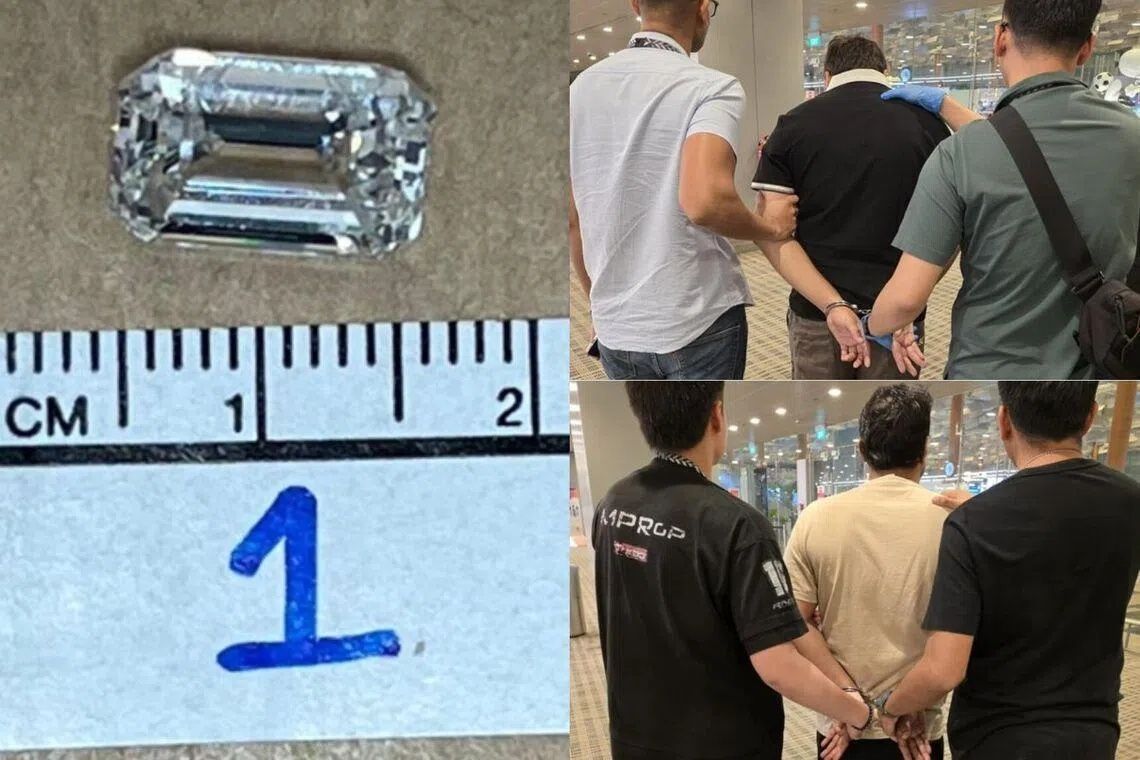
A pair of men, aged 30 and 42, have been arrested following the theft of a high-value diamond from a jewellery store in Singapore's Chinatown district. The incident unfolded on June 19 when police responded to a call for assistance at a premises on Kreta Ayer Road at 3.40pm, just hours before the suspects were apprehended at Changi Airport Terminal 3 the same afternoon. The recovered diamond, valued at more than S$235,000, has been seized as evidence in what authorities are treating as a sophisticated retail theft.
The investigation moved swiftly from initial report to arrest, with officers from the Central Police Division and Police Operations Command Centre deploying a multi-pronged approach to identify and locate the two men. Ground enquiries, combined with analysis of closed-circuit television footage from the jewellery store and police camera networks across the airport precinct, proved instrumental in tracking the suspects' movements. This rapid response reflects Singapore's extensive surveillance infrastructure and the coordination between police units that has become characteristic of the city-state's law enforcement apparatus.
Police preliminary investigations reveal a carefully orchestrated scheme. The two men initially presented themselves as legitimate customers with genuine interest in purchasing the diamond in question. While they had the stone in their possession, examining it ostensibly as part of a potential transaction, they executed a sleight-of-hand manoeuvre that replaced the authentic diamond with a counterfeit replica. The deception might have succeeded entirely were it not for the shop assistant's diligence. Upon conducting a routine check after the men departed without completing any purchase—a detail that immediately aroused suspicion—the staff member discovered the substitution.
The modus operandi employed in this case is neither new nor particularly rare in the jewellery retail sector. What distinguishes this incident is the value of the target and the operational efficiency of the alleged perpetrators. The fact that the suspects proceeded directly to the airport following the theft suggests either advance planning or opportunistic flight, but either way indicates a level of coordination and familiarity with Singapore's transport infrastructure that law enforcement now must assess.
The police have not disclosed the nationalities of the two men, though their rapid movement toward the airport raises questions about their origins and potential international dimensions to the alleged crime. For jewellery retailers across Southeast Asia, particularly those in Singapore's tourist-heavy Chinatown district, this case underscores a vulnerability that has long been recognized within the luxury goods sector. The switch technique relies on human observation lapses and the momentary distraction inherent in high-value transactions where customers and staff must simultaneously assess quality, authenticity, and value.
Facing charges of theft in dwelling with common intention, both men confront potentially severe consequences if convicted. The relevant Singapore statute carries a maximum penalty of seven years' imprisonment and a monetary fine, reflecting the seriousness with which the jurisdiction treats organized retail theft. The fact that authorities are pursuing common intention charges rather than individual liability suggests they view this as a coordinated partnership rather than opportunistic theft, strengthening the prosecution's position significantly.
The Singapore Police Force has seized on this case as an opportunity to reinforce its commitment to tackling luxury goods theft. In an official statement, authorities emphasized their "zero tolerance" stance on such crimes and vowed to continue deploying investigative resources to apprehend offenders and prosecute them according to the law. This public messaging serves both as reassurance to the retail sector and as a deterrent to would-be offenders who might contemplate similar schemes in the jurisdiction.
Equally important is the formal alert issued to shop owners dealing in luxury items throughout Singapore. The police warning specifically highlights the switch technique and urges heightened vigilance against sleight-of-hand theft tactics. For retailers managing high-value inventory, this guidance translates to practical security considerations: closer staff supervision of customers handling expensive pieces, enhanced lighting and camera placement, limiting the number of high-value items on display simultaneously, and implementing protocols requiring management verification before customers depart with merchandise.
The incident also carries implications for the broader Southeast Asian retail environment. While Singapore maintains sophisticated security and law enforcement frameworks, luxury goods retailers across Malaysia, Thailand, Indonesia, and other regional hubs operate with varying levels of surveillance and security infrastructure. Organized retail theft rings operating across borders represent an emerging concern for customs and law enforcement agencies throughout the region, particularly when they target high-value jewellery and precious stones. The ease with which the suspects reached the airport after the theft highlights how porous borders and efficient transport networks can facilitate rapid movement of both perpetrators and stolen goods across jurisdictions.
The recovery of the diamond itself is noteworthy. In many such cases, stolen precious stones disappear into the black market or are quickly transported out of jurisdictions where they cannot be easily recovered. The rapid police response and effective airport security protocols in this instance ensured the property could be retrieved and returned to its rightful owner. This outcome provides some reassurance to the jewellery trade in Singapore that law enforcement capabilities remain robust and responsive to organized retail crime.
Looking forward, this case will likely influence security protocols not only in Singapore but across the region's jewellery retail sector. Insurance companies, trade associations, and individual retailers will study the incident details to identify vulnerabilities in their own operations. For Southeast Asian law enforcement, the case reinforces the necessity of international cooperation on retail crime and the importance of systematic intelligence-sharing regarding suspected organized theft rings that may operate across multiple jurisdictions and countries.