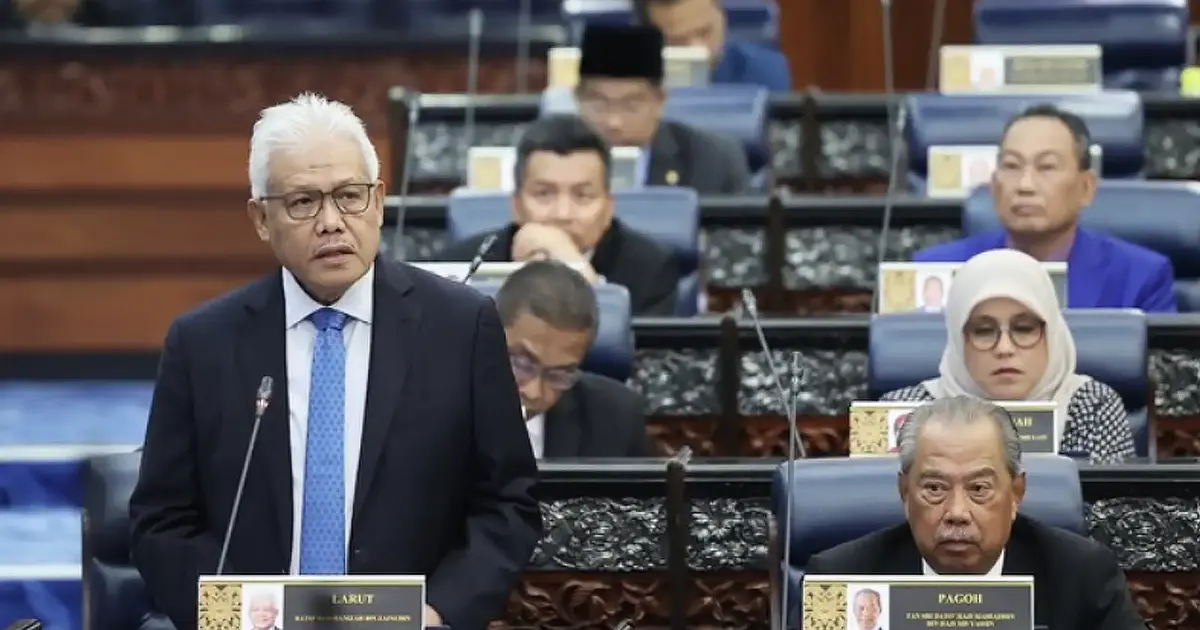
The Dewan Rakyat Speaker Johari Abdul has disclosed that Muhyiddin Yassin approached him with a request to alter his seating arrangement within the chamber, a procedural matter that underscores the ongoing dynamics within Parliament's opposition benches. The speaker's revelation comes as Malaysian lawmakers continue to navigate the political landscape following recent parliamentary developments and coalition realignments.
The seating request itself reflects the fluid nature of parliamentary groupings, where MPs occasionally seek changes to their positions on the opposition benches based on evolving political alliances or personal preferences. In Westminster-style parliaments such as Malaysia's, where physical proximity on the benches carries symbolic weight and operational significance, such adjustments are not uncommon as the political landscape shifts. The nature of Muhyiddin's specific request remains unclear from the speaker's statement, though such modifications typically occur when MPs change parties, join different opposition coalitions, or seek to position themselves strategically within their respective groupings.
Parallel to this procedural matter, Johari Abdul confirmed that he has formally received written notification establishing Hamzah Zainudin, the Member of Parliament for Larut, as the opposition leader. This official confirmation carries considerable constitutional and parliamentary weight, as the opposition leader serves as the primary spokesperson and strategic figurehead for the non-governing parties in Parliament. The formal recognition of this position typically occurs through a letter submitted to the speaker's office, providing the parliamentary institution with clarity regarding which individual holds this critical role.
Hamzah Zainudin's appointment as opposition leader represents a significant political development, as the role entails substantial responsibilities including parliamentary accountability questioning, policy articulation, and representation of opposition interests during debates and proceedings. For Malaysian observers, the confirmation of this position highlights the structured nature of parliamentary opposition, even as the opposition coalition itself may undergo transformations. The Larut MP's elevation to this leadership position reflects the current configuration of opposition forces and the political calculations underpinning their organisational structure.
The timing of these disclosures provides insight into the contemporary parliamentary situation in Malaysia, where the composition of the opposition has remained subject to periodic shifts as individual MPs or groups reassess their political affiliations and strategies. The formal confirmation of Hamzah Zainudin's opposition leadership creates a clear line of parliamentary authority and accountability within the non-governing parties, establishing a defined channel for opposition engagement with the government and facilitating parliamentary procedures that depend on clearly identified leadership.
For Malaysian political observers and Southeast Asian analysts tracking parliamentary developments in the region, these procedural matters carry significance beyond their surface appearance. They demonstrate the ongoing process of political consolidation and reorganisation that characterises contemporary Malaysian politics, where parliamentary groupings remain relatively fluid compared to more rigid multi-party systems elsewhere. The interaction between the speaker and opposition figures regarding both seating arrangements and leadership recognition illustrates the administrative infrastructure that supports parliamentary function even amid political turbulence.
The speaker's role in facilitating these matters—confirming leadership positions and accommodating procedural requests—underscores the institutional neutrality expected of the presiding officer, who must balance administrative efficiency with equitable treatment of all parliamentary parties. Johari Abdul's public confirmation of these developments serves the transparency principles essential to parliamentary governance, ensuring that all stakeholders, including media observers and the public, maintain accurate understanding of parliamentary structure and representation.
The broader context of opposition leadership in Malaysia has experienced considerable volatility in recent years, with various coalitions rising and reorganising as political circumstances evolve. The establishment of a clearly identified opposition leader through formal notification represents a stabilising mechanism, providing Parliament and the electorate with an unambiguous point of reference for opposition strategy and messaging. This clarity becomes particularly important during periods of coalition negotiation or parliamentary tension, when clearly delineated leadership becomes essential for political communication.
From the perspective of Malaysian governance and parliamentary practice, these administrative confirmations reflect the maturation of democratic institutions and the adherence to procedural protocols that distinguish functioning parliaments. Despite the fluid nature of coalition politics in Malaysia, the fundamental institutions—the speaker's office, the formal recognition of opposition leadership, and the parliamentary record-keeping—continue to operate according to established conventions and constitutional requirements. As Malaysia's political landscape continues evolving, these institutional anchors provide continuity and predictability to parliamentary function.

