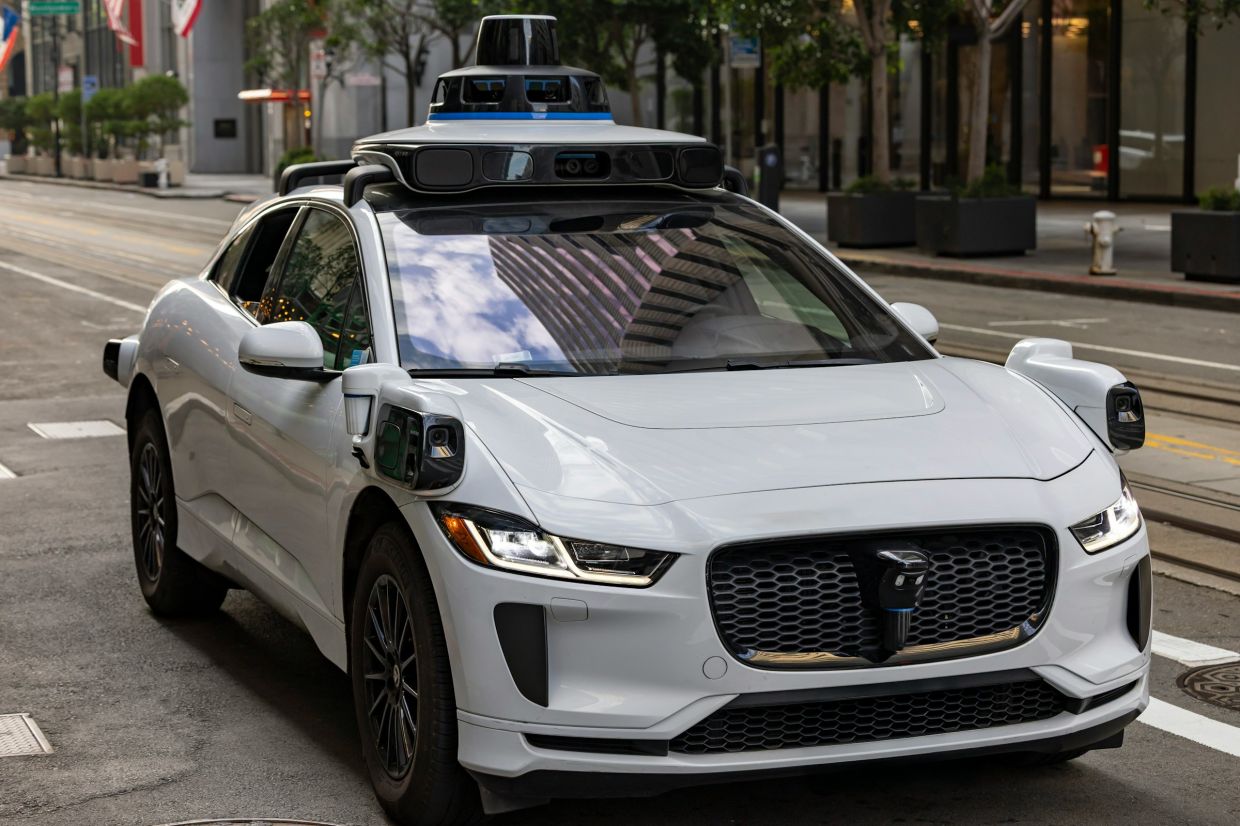
Autonomous vehicle operators worldwide are facing mounting pressure to prove their systems can handle genuine emergencies after a series of high-profile incidents where robotaxis have impeded first responders. A fatal gas explosion in May saw rescue teams delayed more than three minutes when a driverless vehicle's artificial intelligence failed to recognise the crisis and vacate the area. Similarly, in Austin during a March shooting at a downtown bar, ambulances en route to the crime scene encountered a Waymo robotaxi frozen mid-U-turn across their path, forcing a police officer to manually relocate the vehicle. These failures underscore a critical gap between the controlled conditions under which autonomous systems are typically tested and the chaotic, unpredictable nature of real emergencies.
The incidents are catalysing regulatory responses. Texas has enacted stricter legislation imposing formal licensing requirements, mandatory emergency protocols, dedicated complaint mechanisms, and expanded government oversight authority on autonomous vehicle operators. Lawmakers are essentially signalling that the burden of proof now rests with companies to demonstrate their systems can not only drive competently under normal circumstances but also yield appropriately to emergency vehicles and respect established safety perimeters. This represents a shift from largely permissive regulatory environments that prioritised innovation over comprehensive safety validation.
Investigative reporting by CNN has uncovered hundreds of documented instances where robotaxis have behaved erratically or dangerously. The vehicles have run red lights, crossed into opposing traffic lanes, entered active crime scenes, ignored temporary road closures, and narrowly missed cyclists and pedestrians executing lawful movements. These are precisely the violations that manufacturers claim their programming specifically prevents. In the past two months alone, Waymo has initiated multiple vehicle recalls and suspended operations in several cities following incidents where robotaxis drove into flooded roadways. One unoccupied vehicle in San Antonio was swept away by floodwaters, illustrating how the systems struggle with environmental hazards that experienced human drivers would recognise and avoid.
Waymo, the sector's leading operator, maintains that its fleet has demonstrated superior safety performance. The company asserts that robotaxis are thirteen times less likely to be involved in serious injury collisions compared to human-driven vehicles. This statistical claim forms the cornerstone of the industry's argument that autonomous technology represents progress. However, this metric captures only part of the safety picture. Raw collision statistics do not account for the specific vulnerabilities exposed by recent incidents, particularly the inability to interpret emergency contexts and integrate appropriately with human responders and unpredictable urban conditions.
Even proponents of caution toward robotaxi deployment generally acknowledge the technology's potential to reshape road safety over the long term. They argue that with serious engagement from both industry and regulators to address identified problems, autonomous systems could eventually become more reliable than human drivers. Yet this optimistic scenario depends entirely on whether companies genuinely prioritise safety improvements over rapid expansion and whether regulatory bodies possess the technical expertise and enforcement capacity to oversee these complex systems effectively.
The global picture remains mixed and concerning. Robotaxis have proliferated across Chinese cities for several years, yet public sentiment does not uniformly embrace the technology despite official enthusiasm. Beyond resistance from traditional taxi operators worried about employment displacement, many Chinese citizens harbour genuine safety doubts. Transparency has become a particular issue. When more than one hundred Baidu robotaxis simultaneously malfunctioned in Wuhan, the operator declined to engage substantively with media inquiries, offering only vague references to a "system failure" without explaining what occurred or what safeguards failed. This opacity undermines public trust and makes independent assessment of the technology's maturity impossible.
The technical architecture underlying autonomous vehicle decision-making presents inherent vulnerabilities in emergency contexts. These systems must process sensor data, execute object recognition algorithms, calculate optimal routes, and crucially during crises, communicate with emergency responders and execute complex manoeuvres. A robotaxi might theoretically unlock its doors remotely, but if the system requires specific authorisation protocols to activate this function, passengers or first responders could face dangerous delays. The Atlanta incident earlier this year, where dozens of empty Waymo vehicles circled a residential cul-de-sac repeatedly due to a software glitch, demonstrates how even seemingly simple scenarios can expose system limitations. The vehicles trapped themselves in a loop, frustrating residents and raising legitimate concerns about child and pet safety in neighbourhoods where dozens of autonomous vehicles operate without meaningful human oversight.
The disconnect between autonomous decision-making and human communication represents a deeper structural problem. Traditional vehicle assistance systems are engineered around defined human-driver interactions, whereas robotaxi networks operate as independent agents that must interpret human signals, predict human behaviour, and respond appropriately to circumstances for which they were not explicitly programmed. Emergency response scenarios present exactly the kind of boundary conditions where current systems falter. Narrow passages, road irregularities, temporary barriers, and the intense unpredictability of crisis situations exceed the parameters within which these vehicles demonstrate competence.
Manufacturers are responding to pressure through product development and software upgrades. Waymo recently launched a new vehicle model called Ojai, developed with Zeekr and featuring a sixth-generation software iteration, in multiple cities. Yet the relationship between these upgrades and improved emergency responsiveness remains unclear. The fundamental question is whether incremental software improvements can genuinely address systemic limitations in how autonomous systems perceive and react to human urgency and physical unpredictability, or whether the gaps reflect deeper architectural constraints.
Looking forward, the trajectory points toward convergence between commercial development priorities and compliance requirements. Companies will increasingly structure their artificial intelligence development and infrastructure investments around regulatory mandates rather than treating safety enhancements as secondary considerations. Texas's tightening regulatory framework signals this shift nationally, while international scrutiny from Europe and implicit pressure in Asia suggest similar demands will intensify globally. The critical unresolved question is whether autonomous vehicle technology can evolve rapidly enough to satisfy these emerging standards without sacrificing the commercial viability that currently drives investment in the sector. For Malaysia and Southeast Asia, where cities are rapidly urbanising and transportation systems remain underdeveloped, the resolution of these fundamental safety questions in mature markets will likely determine whether and how autonomous mobility services eventually deploy regionally.

