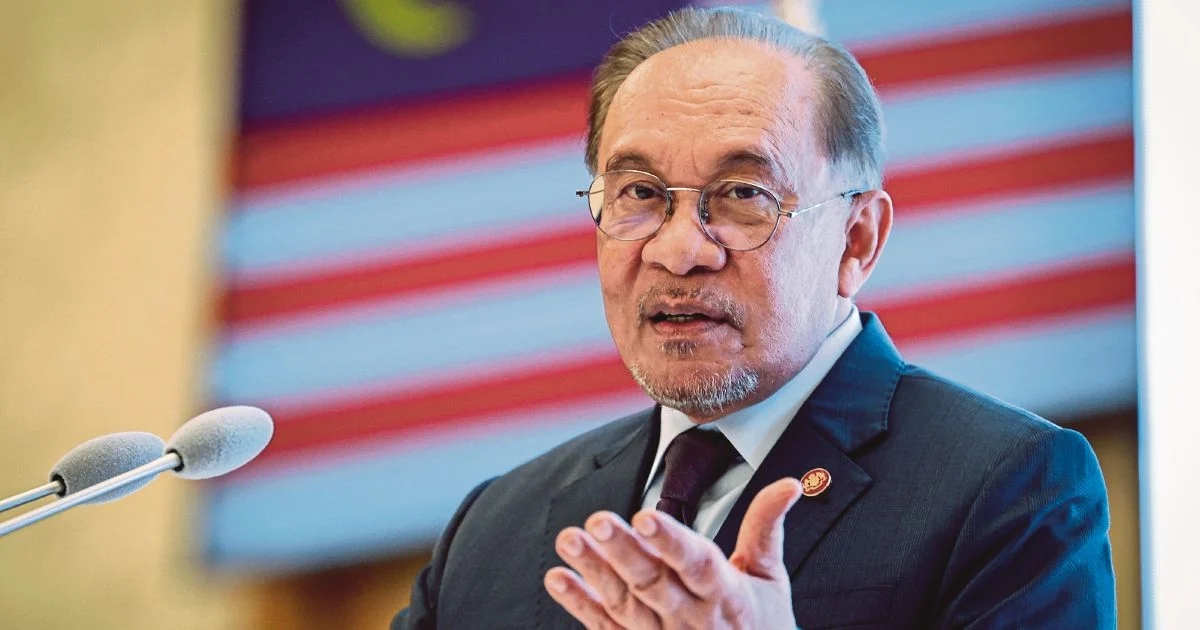
Prime Minister Datuk Seri Anwar Ibrahim views the recent development in Turkmenistan's energy sector as a telling signal of how the world increasingly perceives Malaysia's standing on the global stage. Speaking at Batu Kawan, Anwar pointed to Petronas's successful entry into one of the planet's most substantial gas fields as evidence that foreign investors and governments trust Malaysia's institutional resilience, social cohesion, and capacity to deliver returns on major infrastructure ventures.
The significance of this move extends beyond mere corporate expansion. For Malaysia, securing stakes in world-class energy assets abroad amplifies the nation's strategic importance in Asia's energy security matrix. As demand for natural gas continues rising across East and Southeast Asia—driven by power generation needs, industrial growth, and the gradual transition away from coal—having reliable access to premium resources becomes increasingly valuable. Turkmenistan's selection of Petronas over competing international operators underscores the company's technical expertise and financial strength, attributes that reflect favourably on Malaysia's broader economic management.
Anwar's framing of the arrangement as a confidence vote in Malaysia touches on a deeper narrative that successive governments have sought to cultivate: portraying the nation as a stable, forward-looking investment destination amid regional geopolitical uncertainty. The Prime Minister's emphasis on unity and stability appears deliberate, potentially addressing international perceptions shaped by Malaysia's political turbulence in recent years. By highlighting this energy partnership as tangible proof of restored investor confidence, Anwar positions his administration as having successfully restored Malaysia's reputation after earlier periods of institutional strain and political volatility.
For Petronas specifically, the Turkmenistan opportunity represents a critical diversification play. The national oil and gas company has long sought to expand upstream reserves globally, particularly in gas-rich regions where long-term contracts can lock in production revenue. Central Asian deposits offer geological advantages—large volumes with declining production costs—that complement Petronas's existing portfolio in Southeast Asia, the Middle East, and Africa. This geographic and asset diversification reduces the company's exposure to any single regional market and strengthens its negotiating position with international buyers.
The energy sector implications for Malaysia merit careful consideration. Natural gas exports remain a significant foreign exchange earner and source of government revenue through Petronas dividends. Yet Malaysia's domestic gas reserves have faced declining production trends over the past decade, making overseas investment essential for sustaining the company's growth trajectory and maintaining its status as a major regional energy player. By securing footholds in countries like Turkmenistan, Petronas ensures its continued relevance in global energy markets even as domestic reserves inevitably become exhausted.
Central Asia's energy landscape has undergone substantial reorientation in recent years, largely because of geopolitical realignment. Traditional Western operators have reduced their presence, creating openings for Asian energy companies willing to navigate political and sanctions-related complexities. Petronas's entry into Turkmenistan suggests Malaysian policymakers view Central Asian energy partnerships as increasingly compatible with Malaysia's strategic interests and international relationships, positioning the nation as an alternative power broker in resource-rich regions where Western capital has retreated.
The economic multiplier effects of major energy projects should not be understated. Stakes in large gas fields typically involve not only production operations but also associated employment, technology transfer, and supply chain opportunities. For Malaysian companies, engineers, and service providers, such ventures abroad create export markets for expertise and create career pathways in high-value industries. Over time, accumulated experience in challenging operating environments builds institutional knowledge that raises Malaysia's standing in the global energy sector.
Investor sentiment toward Malaysia's energy sector remains sensitive to both commodity prices and policy consistency. The Turkmenistan arrangement demonstrates that despite fluctuating crude and gas markets, international partners still regard Petronas and Malaysia as credible, professionally managed counterparts. This perception—whether or not it aligns with every domestic stakeholder's assessment—matters enormously for future deal flow and Petronas's ability to attract partnership capital and financing at competitive rates.
However, the sustainability and profitability of such overseas ventures depend on execution. Turkmenistan, despite its vast hydrocarbon wealth, presents operational and commercial risks that Malaysian companies must carefully manage. Regulatory predictability, currency stability, and contractual enforcement all require attention. Success here will likely boost Malaysia's reputation in similar emerging-market energy contexts, whereas difficulties could dampen investor appetite for future overseas expansion by Malaysian firms.
Anwar's comments also reflect a government strategy of leveraging major corporate achievements as indicators of national progress. By publicly celebrating Petronas's international success, the Prime Minister reinforces a narrative of Malaysia as a nation capable of competing and winning in challenging global contexts. This messaging carries importance for domestic audiences, particularly amid economic pressures and global uncertainty, by projecting an image of competent leadership and institutional strength.
Looking forward, the Turkmenistan partnership may catalyse deeper Malaysian engagement across Central Asia. Energy cooperation often serves as a gateway to broader bilateral relations encompassing trade, investment, and diplomatic ties. If Petronas delivers value from this venture, the company may find itself better positioned to pursue additional projects in the region, potentially enhancing Malaysia's geopolitical profile and economic footprint in areas historically dominated by other players.