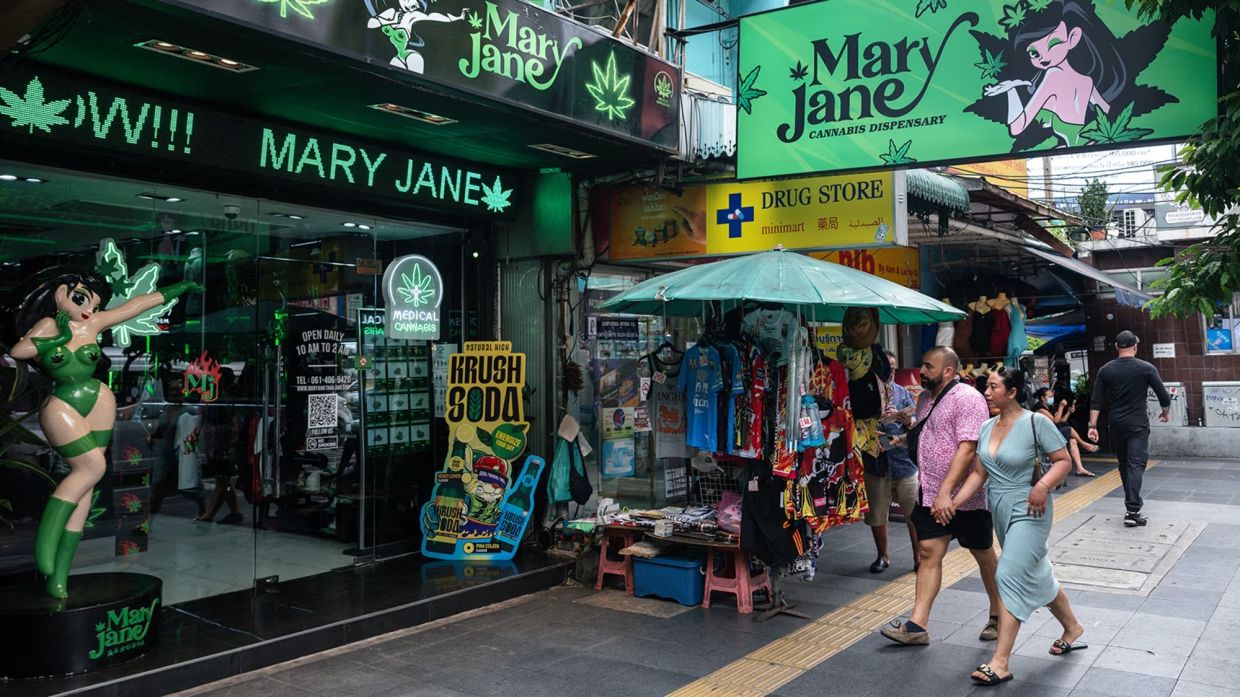
Thailand's regulatory approach to cannabis has become increasingly contentious, with the House Public Health Committee convening in June to examine fundamental questions about how the country should manage a substance that has created significant grey-market opportunities and enforcement challenges since its partial liberalisation three years ago. The closed-door session, overseen by committee chairman Sakoltee Phattiyakul, brought together an unusually broad coalition of stakeholders—from government health agencies and pharmaceutical regulators to medical associations, academics, and advocacy networks—underscoring the depth of disagreement over a policy that has left Thailand's legal and medical communities deeply divided.
The core tension animating the debate reflects Thailand's incomplete transition from criminalisation to regulation. When cannabis was removed from strict narcotics control in June 2022, the move was intended as a progressive step toward acknowledging the plant's medicinal value and supporting farmers through legalised cultivation. However, the intervening years have revealed that this partial liberalisation created unintended consequences: a bifurcated market where legitimate operators struggle to compete with informal sellers, unregistered growers proliferate with minimal oversight, and regulatory gaps allow products to circulate without proper quality controls. The Department of Thai Traditional and Alternative Medicine currently classifies cannabis as a controlled herb under older legislation designed for traditional remedies, an arrangement that many officials now acknowledge was never intended to accommodate a high-value commercial commodity with psychoactive properties.
Dr Tewan Thaneerat, the deputy director-general overseeing cannabis at the Department of Thai Traditional and Alternative Medicine, outlined the government's existing framework and its limitations. The department manages cannabis under the Protection and Promotion of Thai Traditional Medicine Wisdom Act 1999, a statute predating modern cannabis commerce by two decades. In a bid to modernise controls, the Public Health Ministry issued three fresh regulations in June 2025 addressing research protocols, sales channels, processing standards, and export procedures aligned with international conventions. Yet officials acknowledge that these regulations represent temporary measures while a comprehensive cannabis and hemp bill moves through the legislative pipeline. The proposed law, drafted collaboratively with the Food and Drug Administration, the Department of Health Service Support, and other relevant agencies, remains stalled in the Cabinet review process following Parliament's recent dissolution. Current expectations suggest the bill will complete public consultation hearings by late July before resubmission, meaning Thailand remains in regulatory limbo for at least several additional months.
Medical professionals and public health advocates have grown increasingly vocal about returning cannabis to narcotics classification, at least temporarily, until a permanent regulatory framework is enacted. Ekkapop Sittiwantana, a deputy committee chairman representing the People's Party, articulated this position clearly: the proliferation of unregistered cannabis cultivation and ad-hoc informal sales networks has created precisely the sort of legal vacuum that opportunistic businesses exploit. He proposed that mandatory plant registration would close these loopholes, bringing cultivation into a traceable system analogous to those used in jurisdictions where cannabis has been properly regulated. Associate Professor Dr Smith Srisont, speaking for a coalition of physicians, researchers, and harm-reduction organisations, reinforced this argument by pointing to observable public health consequences already emerging from cannabis availability. Although cannabis flowers technically remain classified as a controlled herb while extracts exceeding 0.2 per cent tetrahydrocannabinol (THC) retain narcotics status, this distinction has proven inadequate in practice. Srisont emphasised that returning cannabis to the narcotics schedule pending enactment of a dedicated regulatory law would represent a more methodologically sound approach than the current piecemeal classification.
The Food and Drug Administration presented data on its efforts to police cannabis-based products through its existing licensing regime, which encompasses manufacturing facilities, import authorisations, and retail certifications for approved shops and finished goods. Initial compliance inspections showed that most tested products met labelling standards and contained appropriate ingredient profiles. However, agency representatives acknowledged that the regulatory system's Achilles heel remains uncontrolled sales channels—informal vendors, unlicensed retailers, and online marketplaces operating entirely outside the formal legal infrastructure. This acknowledgment effectively conceded that enforcement capacity lags far behind market expansion, a recurring problem in emerging cannabis markets where demand outpaces administrative resources.
Cannabis industry operators and business-oriented civil society groups presented a starkly different analysis. The Thai Cannabis Future Network and allied organisations contended that legitimate businesses are being squeezed between black-market competitors, illegal imports flooding the market, and legal instability that discourages investment. Representatives raised allegations of corruption within the licensing process—unofficial demands for payments or favours accompanying licence approvals—and cited barriers preventing farmers from accessing medical prescriptions required for legal cultivation, with evidence suggesting some prescriptions are being diverted or traded outside legitimate healthcare settings. The network further argued that cannabis holds cultural, agricultural, and economic significance extending beyond pharmaceutical applications, making a narrowly medicalised regulatory framework inappropriate for Thailand's circumstances. They called for inclusive lawmaking processes that would balance farmer welfare with public health, explicitly rejecting what they characterised as approaches designed primarily to benefit large corporations.
The complexity of Thailand's cannabis situation mirrors broader regulatory challenges facing Southeast Asian nations navigating the tension between traditional plant use, modern commercial interests, and public health protection. Unlike countries with longer histories of cannabis prohibition, Thailand's sudden shift from criminalisation to partial liberalisation compressed what might normally be a gradual transition into an abrupt policy reversal, leaving administrative systems unprepared. The rapid emergence of a substantial cannabis industry—encompassing cultivation, extraction, retail, and export—occurred without corresponding institutional capacity or public education. Schools have reported increased student cannabis use, particularly in forms marketed as harmless herbal products, creating parental concern that has intensified political pressure for tighter restrictions.
Sakoltee's concluding directives indicated the committee's intention to move beyond abstract debate toward concrete fact-finding. He ordered officials to compile comprehensive inventories of all licensed cannabis retailers operating in Bangkok alongside FDA-certified cannabis products, establishing a baseline against which future sales growth could be measured. He also flagged that any new cannabis legislation must include spatial restrictions preventing shops from locating near educational institutions—a public health measure that numerous jurisdictions implementing cannabis legalisation have adopted. The committee further mandated a broader epidemiological survey examining cannabis-related harms and identifying populations most vulnerable to adverse effects, an effort that would create an evidence base for policy refinement.
The trajectory of Thailand's cannabis regulation will likely depend on whether policymakers can craft legislation that acknowledges legitimate competing interests without sacrificing public health. The immediate question confronting Parliament concerns sequencing: whether cannabis should revert to narcotics status before new regulatory legislation takes effect, a step that would temporarily constrain the market but might restore public confidence in government authority. The longer-term challenge involves designing a regulatory framework comprehensive enough to address cultivation, processing, retail, medical prescription protocols, export standards, and consumer protection while remaining flexible enough to accommodate Thailand's substantial agricultural sector. For Malaysian observers, Thailand's regulatory dilemma offers cautionary lessons about the importance of coordinated institutional preparation before major policy shifts affecting controlled substances. The current debate suggests that partial legalisation without corresponding enforcement infrastructure and clear statutory frameworks can create more governance problems than it solves.