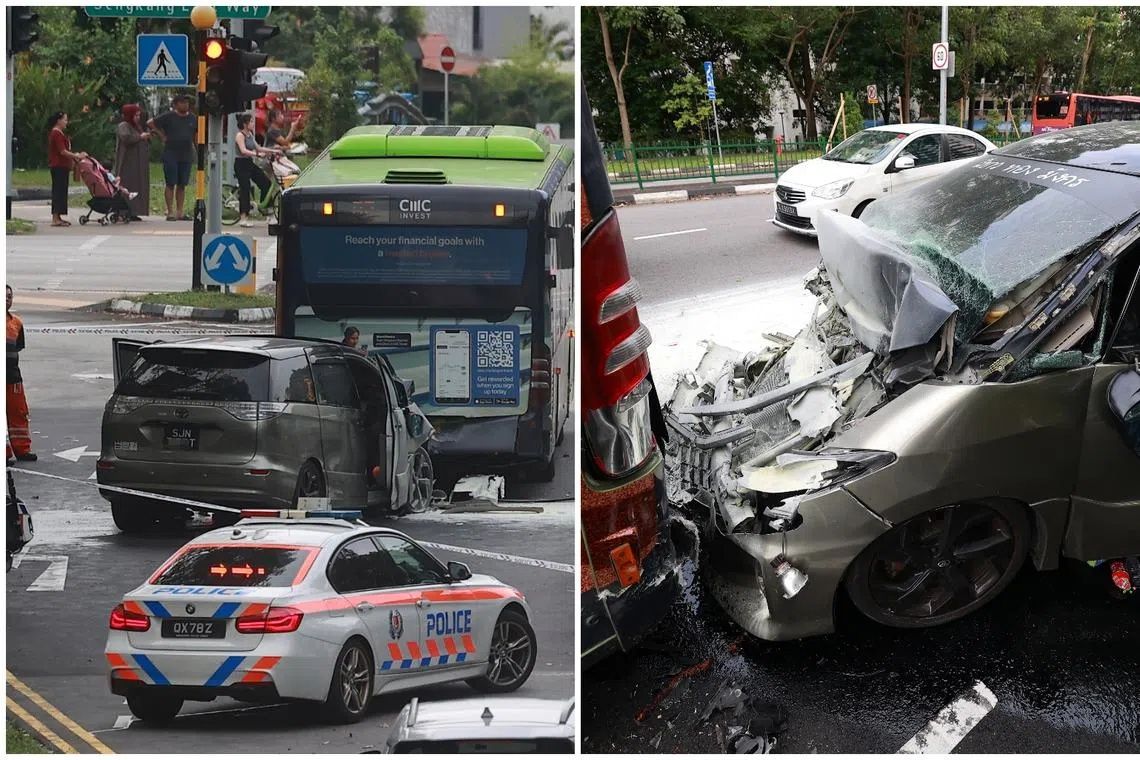
Singapore's emergency departments are encountering a troubling surge in trauma patients injured by road accidents involving substance-impaired drivers, prompting urgent warnings from medical professionals about the intersection of recreational drug use and vehicular safety. In a compressed timeframe during June alone, authorities charged three separate drivers with operating vehicles under the influence of controlled substances—a pattern that reflects a broader public health crisis emerging across the city-state's roads. The cases highlight how the emergence of novel forms of drug delivery, particularly etomidate-infused vaping pods colloquially known as Kpods, has created new dangers that traditional enforcement mechanisms are struggling to address.
Etomidate, an intravenous anaesthetic medication not typically associated with recreational consumption, has become embedded in the island nation's illicit vaping market, creating a particularly insidious threat to road users. Jonathan Tang, a clinical toxicologist based at the National University Hospital's Emergency Medicine Department, has personally treated multiple victims of accidents where drivers had consumed etomidate-laden vapes, and his clinical observations paint a sobering picture of the drug's impact on cognitive and motor functions essential for safe driving. The substance impairs fundamental driving competencies—reaction time slows, hazard recognition deteriorates, and vehicle control becomes compromised—effects that Tang characterises as functionally equivalent to alcohol intoxication in their road safety implications.
The statistical trajectory presents an alarming escalation that policymakers have only recently begun acknowledging. Between 2023 and mid-2025, police records identified 38 traffic accidents linked to drug and etomidate use, a figure that bifurcates into 10 fatal cases involving traditional drugs and nine involving etomidate specifically. What renders these numbers more concerning is the concentration in recent months: of the 38 incidents documented across roughly two years, 29 occurred in 2025 alone, with etomidate implicated in 18 of those cases and an additional seven involving combinations of multiple substances. This acceleration suggests either increased consumption of these substances, enhanced detection capabilities, or most likely, both factors operating simultaneously.
The human cost of this trend manifested tragically in May 2025 when a Punggol collision claimed the life of a 28-year-old woman whose companion was driving under etomidate's influence. Police discovered the vehicle contained 42 separate vaping devices and over 1,200 pods, with laboratory testing confirming etomidate presence in both the driver's and the deceased woman's bloodstreams. The incident underscores how a single impaired driving episode can shatter families and communities, transforming casual substance use into irreversible tragedy. For Malaysian readers, the case serves as a cautionary indicator, as cross-border substance trafficking and consumption patterns often exhibit regional coherence, and Singapore's emerging drug trends occasionally presage similar developments elsewhere in Southeast Asia.
Beyond the immediate neurological impairment, Tang has documented that etomidate consumption can trigger psychiatric manifestations including depressed mood, heightened aggression, and impulsive behaviour, with documented instances of users subsequently attempting suicide. These psychological effects compound the already-dangerous neurological impairment, creating a double-layered threat to safe vehicle operation. A driver experiencing paranoia or emotional dysregulation whilst controlling a vehicle poses risks not merely from degraded attention and reaction capability, but from potentially erratic decision-making that might manifest as aggressive manoeuvres or deliberate traffic violations.
Singapore's broader traffic safety landscape deteriorated markedly in 2025, with fatalities reaching a decade-high of 149 deaths compared with 141 in 2016 and 142 in 2024. The corresponding injury count also worsened, climbing from 9,342 injured persons in 2024 to 9,955 in 2025. When considered against the surge in drug-related incidents, these aggregate statistics suggest that substance-impaired driving represents a material contributor to Singapore's traffic casualty crisis, rather than an isolated phenomenon affecting a negligible portion of incidents. The temporal clustering of charges in June—Mohamed Firdouz Mohamed Akram on June 19 after methamphetamine consumption led to collisions injuring two persons; Puah Zhe Cong on June 10 facing dangerous driving causing death charges after etomidate use; and Sivakandesh on June 8 following a methamphetamine-fuelled Mercedes crash—demonstrates how enforcement activity occasionally concentrates during specific periods, suggesting either intelligence-led policing operations or natural clustering of offences.
The legal framework Singapore has established prescribes substantial penalties for first-time offenders convicted of driving under intoxicating substance influence: imprisonment up to one year, fines reaching S$10,000, or both, with repeat offenders facing doubled maximum imprisonment and doubled maximum fines. Despite these deterrents, the acceleration in incidents suggests that either potential drivers lack awareness of consequences, discount the risk, or are cognitively compromised in their risk assessment even before entering vehicles. When parliamentary member Valerie Lee raised the issue in February, Coordinating Minister for National Security K. Shanmugam clarified that Traffic Police employ impairment assessments at accident scenes and conduct mandatory blood testing when drug or etomidate use is suspected, demonstrating that institutional machinery exists for detection even if penetration rates may remain incomplete.
The detection methodology itself represents a critical bottleneck in prevention strategy. Traditional roadside impairment detection protocols developed for alcohol intoxication may not adequately identify etomidate-influenced drivers, particularly given the substance's relatively recent emergence in recreational consumption markets. Blood testing, whilst authoritative, occurs only after accidents have transpired and injuries sustained. This reactive posture contrasts with proactive prevention frameworks that might identify and remove substance-impaired drivers before collisions occur. For Malaysia, where similar vaping product markets exist and where cross-border traffic between Singapore and Johor Bahru involves hundreds of thousands of daily movements, Singapore's experience suggests that regulatory frameworks focused on detection after accidents occur may prove insufficient for public health protection.
The cases processed through Singapore courts in June reveal how substance-impaired driving intersects with other dangerous behaviours and criminal patterns. Firdouz abandoned his vehicle and fled the scene after his collision, suggesting consciousness of guilt or panic-driven decision-making. Sivakandesh removed his vehicle's registration plates following the crash, indicating deliberate concealment efforts potentially motivated by awareness of unlawful substance possession. These ancillary offences suggest that substance-impaired drivers frequently compound their initial danger through additional criminal acts, creating cumulative hazards that extend beyond mere impairment effects on driving performance.
The emergence of etomidate in recreational vaping markets represents a qualitative shift in Singapore's drug landscape, introducing a substance with anaesthetic properties into a delivery mechanism (vaping) that has proliferated across youth demographics. Unlike heroin or traditional stimulants, etomidate occupies a medicinal grey zone, potentially obscuring its dangers from naive users unfamiliar with pharmaceutical literature. The portability and social acceptability of vaping devices facilitate inconspicuous consumption, enabling users to self-administer doses in vehicles without the visibility that might accompany traditional drug consumption. This combination of factors—pharmaceutical disguise, convenient delivery mechanism, and social normalisation of vaping—creates a uniquely dangerous convergence for road safety.
For Malaysian authorities and road safety advocates, Singapore's situation offers both cautionary insights and potential intervention lessons. The concentration of incidents in 2025 may reflect emergence of new drug production or distribution networks, suggesting that monitoring substance market developments regionally could provide early warning of dangers. The severity of etomidate-related incidents—notably the fatal Punggol collision and the psychiatric effects documented by medical professionals—warrants discussion of whether Malaysian traffic enforcement protocols adequately screen for emerging substance threats beyond traditional narcotics. Regional cooperation through ASEAN frameworks on drug enforcement and road safety monitoring could facilitate information exchange that prevents local authorities from discovering novel threats only after casualties accumulate.