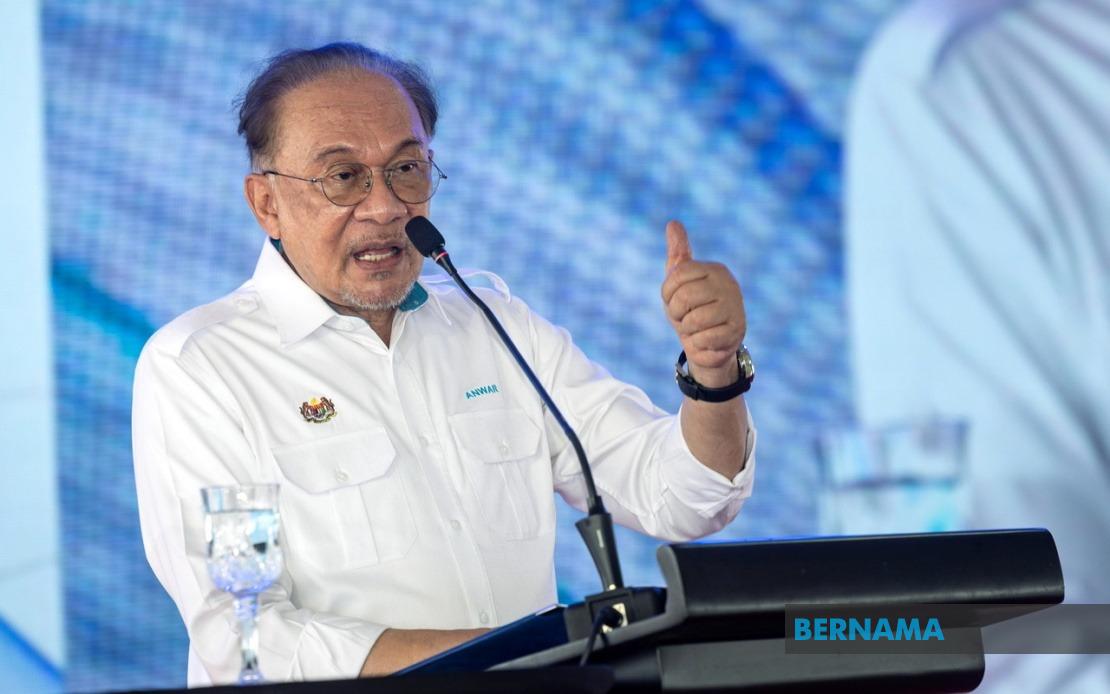
Malaysia has moved to fortify its energy security landscape through landmark agreements with Russia and Turkmenistan, according to Prime Minister Datuk Seri Anwar Ibrahim. Speaking at an industrial park groundbreaking ceremony in Kepala Batas, the premier disclosed that Russian President Vladimir Putin has pledged a two-decade commitment to supplying crude oil, natural gas, and diesel to the nation. These assurances were communicated during Anwar's recent visit to Kazan, underscoring the deepening energy partnership between Kuala Lumpur and Moscow and reflecting the strengthening diplomatic ties between the two capitals.
The Russian commitment represents a critical stabilisation mechanism for Malaysia's energy imports, a sector fundamental to the country's industrial output and economic growth. By locking in supply arrangements extending to 2044 or beyond, Malaysia insulates itself against the volatility and uncertainty that typically characterise global energy markets. The long-term character of this agreement reflects mutual strategic interests: Russia seeks reliable, committed customers for its hydrocarbon exports, while Malaysia gains predictable access to resources essential for power generation, transportation, and manufacturing.
Equally significant is the expansion of Malaysia's relationship with Turkmenistan, which Anwar characterised as yielding even more substantial gains. During his official visit to the Central Asian nation, Turkmenistan granted Malaysia fresh access to its oil and gas sectors, a development with profound implications for the country's resource portfolio. Turkmenistan possesses some of the world's most substantial proven natural gas reserves, positioning it as a potential cornerstone of Malaysia's long-term energy strategy. The strategic value of this access cannot be overstated, particularly given the region's geopolitical importance and the relatively untapped nature of Turkmenistan's hydrocarbon resources.
These diplomatic achievements build upon momentum established when Turkmenistan President Serdar Berdimuhamedov visited Malaysia in December 2024, demonstrating how sustained diplomatic engagement translates into concrete commercial benefits. The bilateral negotiations that followed the presidential visit have culminated in tangible market access that positions Malaysia as a favoured partner in Central Asia's energy sector. This progression illustrates the importance of high-level political engagement in securing national energy interests, a lesson increasingly relevant as competition for resources intensifies among regional powers.
The implications of guaranteed access to Turkmenistan's gas reserves extend well beyond Malaysia's domestic consumption. Anwar emphasised that Malaysia can leverage these resources to expand exports to major Asian energy importers, particularly China, Japan, and South Korea, all facing insatiable demand for fossil fuels and increasingly renewable energy sources. This export orientation transforms the Turkmenistan agreement from a mere security measure into a potential revenue-generation engine, enabling Malaysia to capitalise on price differentials and establishing the nation as an energy transit hub within Asia. The ability to supply high-demand markets creates opportunities for value-added processing and energy-intensive manufacturing within Malaysia.
For China specifically, these energy arrangements carry strategic weight in the context of Beijing's Belt and Road Initiative and its broader energy security concerns. Japan and South Korea, both heavily reliant on imported energy with limited domestic hydrocarbon reserves, represent premium markets willing to pay competitive prices for reliable supplies. Malaysia's role as an intermediary supplier positions the country advantageously within Asia's energy geopolitics and potentially enhances its diplomatic leverage with these critical trading partners.
Prime Minister Anwar's framing of these agreements within a broader philosophy of leveraging international relations to advance national interests reflects a sophisticated understanding of contemporary geopolitical economics. Beyond the immediate energy dimension, these partnerships serve multiple strategic objectives: they create employment opportunities through energy infrastructure development, attract investment in downstream industries, and strengthen Malaysia's positioning as a credible and stable partner for major global powers. The diversification of energy sources away from traditional suppliers reduces vulnerability to supply disruptions or politically motivated price manipulation.
The timing of these agreements merits consideration within the context of global energy transition discussions. While Malaysia is increasingly incorporating renewable energy into its mix, the realistic timeline for complete decarbonisation extends several decades. Securing hydrocarbons through long-term contracts does not contradict climate commitments but rather acknowledges the practical reality that fossil fuels will remain central to the energy mix throughout the 2020s and 2030s. Malaysia can simultaneously pursue renewable expansion while maintaining energy security through conventional sources.
From a regional perspective, Malaysia's energy diplomacy demonstrates the continued relevance of non-aligned positioning and strategic flexibility. Rather than remaining dependent on any single supplier or geopolitical bloc, Malaysia has cultivated relationships across multiple regions—Europe through partnerships with various suppliers, Asia through existing arrangements, and now Central Asia through these Turkmenistan agreements. This portfolio approach mitigates risk and prevents any single supplier from exercising excessive leverage over Malaysian energy policy.
The broader economic implications include potential cost stabilisation for energy-intensive Malaysian industries, from petrochemicals to steel production to semiconductor manufacturing. Predictable, long-term energy costs enable businesses to make confident capital investments and maintain competitive advantages in regional and global markets. Industries reliant on stable energy inputs can plan expansions with greater certainty, potentially attracting additional foreign direct investment to Malaysia.
Implementation of these agreements will require substantial infrastructure investment, from pipeline expansion to liquefaction and storage facilities. These developments present opportunities for local engineering firms, construction companies, and technology providers. The technical and logistical challenges of importing and processing gas from Turkmenistan will likely catalyse innovation within Malaysia's energy sector and support employment across multiple industries.
Looking forward, these partnerships establish a foundation for energy cooperation that may expand into related domains such as technology transfer, joint research initiatives, and collaborative investment in renewable energy projects. Russia and Turkmenistan increasingly recognise that energy partnerships often evolve into broader economic relationships, creating opportunities for Malaysian companies across sectors. The relationships established through these energy agreements may generate spillover benefits in trade, investment, and technology sharing.
The two-decade timeframe attached to these arrangements positions Malaysia to navigate the energy transition period with significantly reduced uncertainty. By the time these agreements mature, the global energy landscape may have transformed substantially through technological advancement and policy evolution. Securing adequate supplies during this transitional period allows Malaysia to manage the pace of energy transformation according to national circumstances rather than being forced into rapid changes by supply constraints.