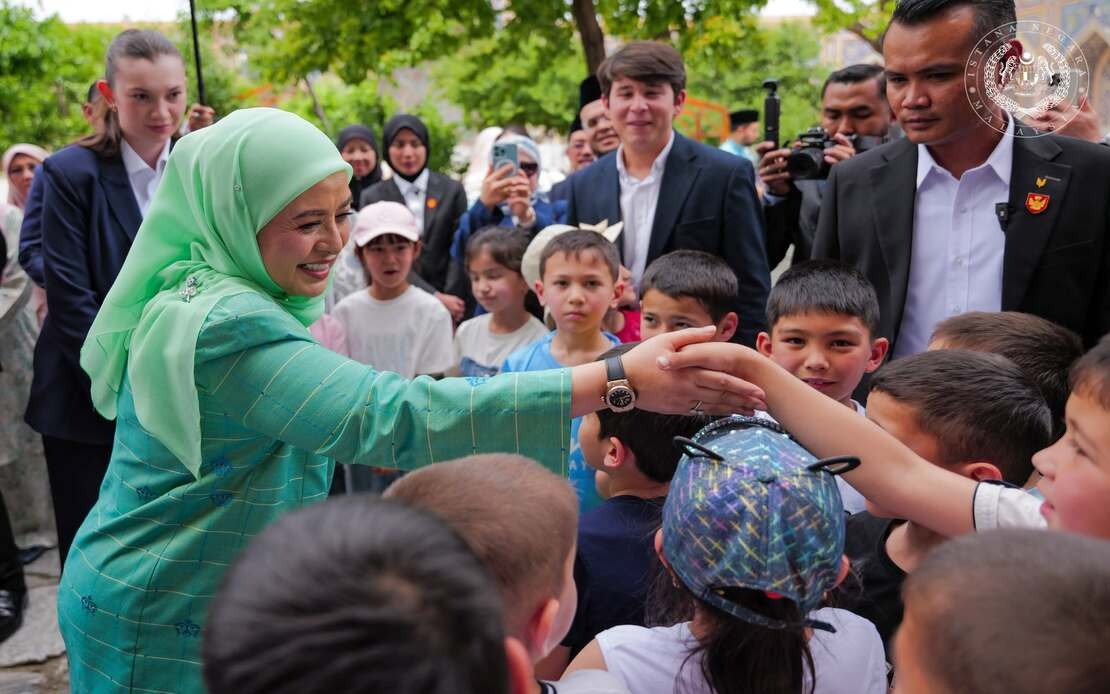
Queen Raja Zarith Sofiah of Malaysia has underscored the critical role that mutual respect plays in sustaining the harmony that defines Malaysian society. Speaking through a post on Sultan Ibrahim Sultan Iskandar's official Facebook page, Her Majesty reflected on the values that have long anchored national cohesion, identifying courtesy and consideration for others as indispensable elements of a functioning multi-faith, multicultural nation.
The Queen's remarks arrived at a moment when Malaysia continues to navigate the complexities of maintaining social unity across diverse religious, ethnic, and cultural communities. Her emphasis on mutual respect resonates beyond mere platitudes—it speaks to the practical mechanisms through which Malaysians from different backgrounds have historically managed to coexist and prosper together. By tying this contemporary message to both Islamic teaching and lived Malaysian experience, the Queen connected spiritual principles to everyday civic conduct.
Central to Her Majesty's address was a reference to an authentic hadith recorded by Al-Bukhari and transmitted through the companion Abu Hurairah RA. In this prophetic teaching, Prophet Muhammad outlined a comprehensive framework for respectful conduct: believers should refrain from harming their neighbours, should treat guests with honour, and should exercise restraint in speech by either offering beneficial words or maintaining silence. This particular hadith serves as a bridge between Islamic ethics and the secular principles of mutual respect that underpin Malaysia's constitutional framework.
The specific invocation of Islamic sources carries particular significance in Malaysia's context. As a nation where Islam holds constitutional status and the majority population is Muslim, royal endorsements of Islamic teachings carry both spiritual weight and practical influence on public discourse. By highlighting this particular hadith, the Queen drew attention to teachings within Islam itself that emphasise consideration for others regardless of their faith—a message especially pertinent given ongoing discussions about interfaith relations in Malaysia.
The broader implications of the Queen's statement extend to questions about how Malaysia sustains its delicate social balance. The country has experienced periodic tensions along religious and communal lines, making public reinforcement of unity-focused values from the highest levels crucial. Royal institutions in Malaysia carry ceremonial significance but also wield considerable soft power in shaping national narratives about identity and values. When the Queen speaks on harmony, her words carry the authority and respect accorded to the institution of monarchy in Malaysian culture.
Her Majesty's message also reflected on a personal encounter that embodied her commitment to these principles. In February, the Queen spent time with more than 100 tourists from various nations at the entrance to Istana Negara, Malaysia's royal palace. This deliberate engagement with international visitors demonstrated how mutual respect and hospitality function in practice—a living example complementing the theoretical framework outlined in her public statement. Such interactions represent Malaysia's attempt to project itself as a welcoming destination while simultaneously demonstrating the values upon which the nation claims to stand.
This aspect of the Queen's conduct proved particularly illustrative for Malaysian audiences and observers. While statements about harmony and respect are common in official circles, tangible demonstrations of these values through personal interaction carry greater persuasive power. The Queen's graciousness toward foreign visitors embodied the principle that respect transcends national boundaries—a message increasingly important as Malaysia seeks to strengthen its tourism sector and international relationships amid global uncertainties.
The timing of these remarks also warrants consideration. Malaysia faces contemporary challenges that test social cohesion, from economic pressures affecting different communities differently to evolving discussions about religious expression and minority rights. Amid such tensions, institutional voices—particularly those of the monarchy—become important counterbalances to more divisive rhetoric that sometimes circulates in public discourse. By publicly advocating for mutual respect and courtesy, the Queen positioned herself and the institution she represents as custodians of shared national values.
Moreover, Her Majesty's emphasis on respect "at home and abroad" acknowledged that Malaysian harmony operates at multiple levels. Domestic mutual respect among citizens forms the foundation, but Malaysia's international reputation and diplomatic relationships similarly depend on respectful engagement with other nations and cultures. This broader framing suggests that harmony is not merely an internal Malaysian concern but part of the nation's identity in regional and global contexts.
The Queen's invocation of Islamic teaching to advocate for universal values of respect also addressed a potential criticism sometimes levelled at Malaysia's multi-faith society—that religious and secular frameworks might be in tension. By demonstrating harmony between Islamic principles and the values of courtesy and non-harm essential to multiculturalism, Her Majesty offered a theological and ethical foundation for Malaysia's constitutional framework that accommodates Islam while protecting minority rights and freedoms.
For Southeast Asian observers, Malaysia's royal family articulating these values holds broader regional significance. As other nations in the region grapple with communal tensions and questions about managing diversity, Malaysia's institutional commitment to harmony—however imperfectly executed—provides a reference point for how traditional authority structures might contribute to social cohesion in diverse societies.
%22%2F%3E%3C%2Fpattern%3E%3C%2Fdefs%3E%3Crect%20width%3D%22100%25%22%20height%3D%22100%25%22%20fill%3D%22url(%23phq81g)%22%2F%3E%3Crect%20width%3D%22100%25%22%20height%3D%22100%25%22%20fill%3D%22url(%23phq81p)%22%2F%3E%3Ctext%20x%3D%2250%25%22%20y%3D%2250%25%22%20text-anchor%3D%22middle%22%20dominant-baseline%3D%22central%22%20fill%3D%22rgba(255%2C255%2C255%2C0.95)%22%20font-family%3D%22Georgia%2C%20'Times%20New%20Roman'%2C%20serif%22%20font-weight%3D%22700%22%20font-size%3D%22320%22%20letter-spacing%3D%22-0.02em%22%3EPAS%3C%2Ftext%3E%3C%2Fsvg%3E)
%22%2F%3E%3C%2Fpattern%3E%3C%2Fdefs%3E%3Crect%20width%3D%22100%25%22%20height%3D%22100%25%22%20fill%3D%22url(%23ph1xbg6g)%22%2F%3E%3Crect%20width%3D%22100%25%22%20height%3D%22100%25%22%20fill%3D%22url(%23ph1xbg6p)%22%2F%3E%3Ctext%20x%3D%2250%25%22%20y%3D%2250%25%22%20text-anchor%3D%22middle%22%20dominant-baseline%3D%22central%22%20fill%3D%22rgba(255%2C255%2C255%2C0.95)%22%20font-family%3D%22Georgia%2C%20'Times%20New%20Roman'%2C%20serif%22%20font-weight%3D%22700%22%20font-size%3D%22151%22%20letter-spacing%3D%22-0.02em%22%3EPerikatan%3C%2Ftext%3E%3C%2Fsvg%3E)