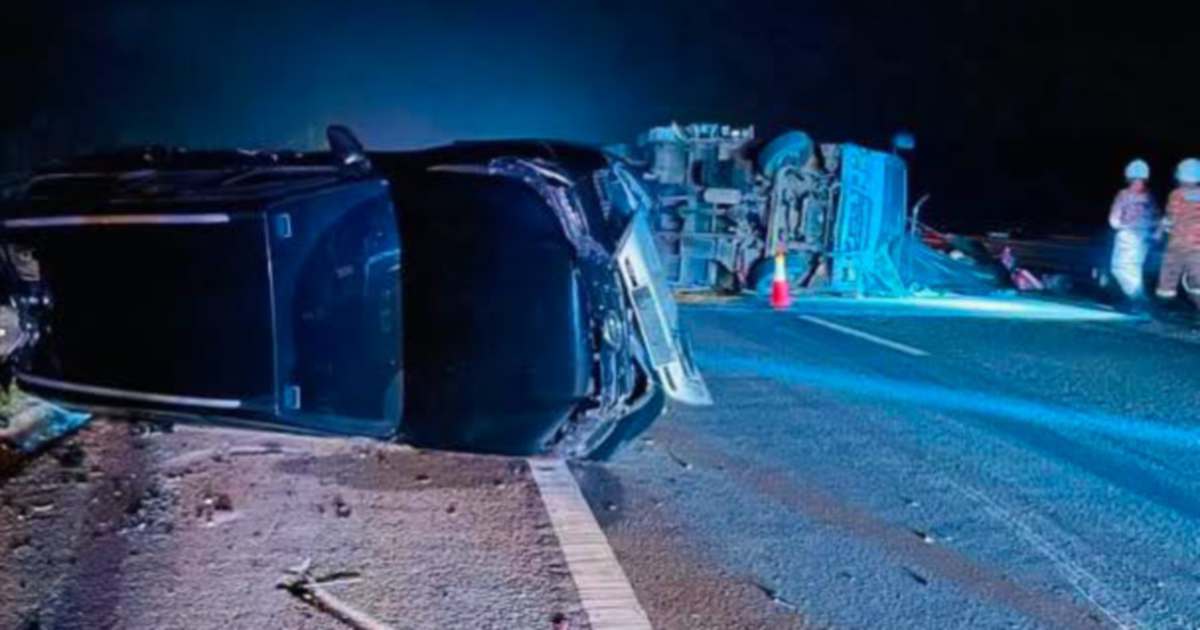
A multi-vehicle collision on the East Coast Expressway early this morning left seven people with injuries, including three media officers who were travelling with Deputy Prime Minister Datuk Seri Dr Ahmad Zahid Hamidi. The accident occurred at the 144-kilometre mark near Maran, causing disruption along one of Malaysia's busiest expressway routes connecting the east and central regions.
The incident unfolded when at least three vehicles were involved in what appears to have been a serious traffic accident along the corridor that links Kuantan, Pahang with the Klang Valley. The media personnel, who form part of the official communication team supporting the high-ranking government official, were travelling in one of the affected vehicles when the collision took place. Emergency responders moved quickly to the scene to provide medical assistance to all those injured in the crash.
Among the casualties, the three journalists and media officers attached to the Deputy Prime Minister's office fortunately avoided the most severe outcomes that could result from such a high-speed expressway collision. While all seven injured persons required medical attention, authorities confirmed that none of the injuries sustained were classified as life-threatening or critical. This outcome provided some reassurance given the inherent dangers of vehicle accidents on highways where traffic typically moves at considerable speed.
The East Coast Expressway serves as a vital transportation artery for Malaysia's east coast region, handling substantial daily traffic volumes as vehicles move between Pahang, Terengganu, and other states to the more developed Klang Valley industrial and commercial centres. Accidents at any location along this corridor can create significant ripple effects, potentially affecting travel times for thousands of commuters and commercial transport operators. The collision at Km144, positioned in the Maran area of Pahang, is a particularly busy section of the route.
Maran, situated in the interior regions of Pahang, has seen increasing traffic flow in recent years as infrastructure development and economic activity have expanded across the state. The expressway passing through this locality has become increasingly critical for connectivity, yet also brings heightened accident risks when vehicles travel at speed in areas where road conditions or visibility might present challenges. The specific location of the collision suggests investigators will examine factors such as road surface conditions, weather at the time of impact, and vehicle speeds.
Official traffic management teams moved to control the situation following the crash, implementing temporary traffic diversions and clearance operations to restore normal flow along the expressway. Such incidents typically trigger detailed investigations by the road transport department and highway authorities to determine the precise cause and circumstances of the collision. These investigations become even more significant when they involve government officials and their staff, as they carry both public safety and administrative importance.
The presence of media officers in the convoy highlights the security and logistics complexity involved in organising high-level government movements across Malaysia. Deputy Prime Ministers maintain regular schedules requiring travel to various constituencies and regions, necessitating accompanying staff for communications, documentation, and media coordination purposes. Such accidents serve as reminders of the occupational hazards that extend beyond traditional office environments for those working in government service.
Highway safety remains a persistent concern for Malaysian authorities, with expressway systems like the East Coast Expressway requiring continuous monitoring and maintenance to minimise accident risks. The country has invested significantly in expressway infrastructure, yet human factors—including driver fatigue, speed, and attention—remain primary causes of collisions. Multiple-vehicle accidents such as this one often involve cascading events where initial impact between two vehicles triggers collision with a third, multiplying the number of people at risk.
Recovery and follow-up for those injured in expressway accidents can extend beyond immediate medical treatment. Passengers and staff involved in such incidents frequently experience psychological impacts alongside physical injuries, requiring support services beyond hospital care. For media professionals, such accidents also raise questions about the safety protocols and vehicle conditions associated with official government transport arrangements.
Authorities have not yet released comprehensive details regarding the specific cause of the three-vehicle collision, vehicle types involved, or the identities of all injured persons beyond confirming the three media officers. Further investigation findings and official statements from the Deputy Prime Minister's office or the expressway operating authority may provide additional context regarding the circumstances. The incident underscores ongoing challenges in highway safety that affect all Malaysian road users, regardless of their occupation or status.

