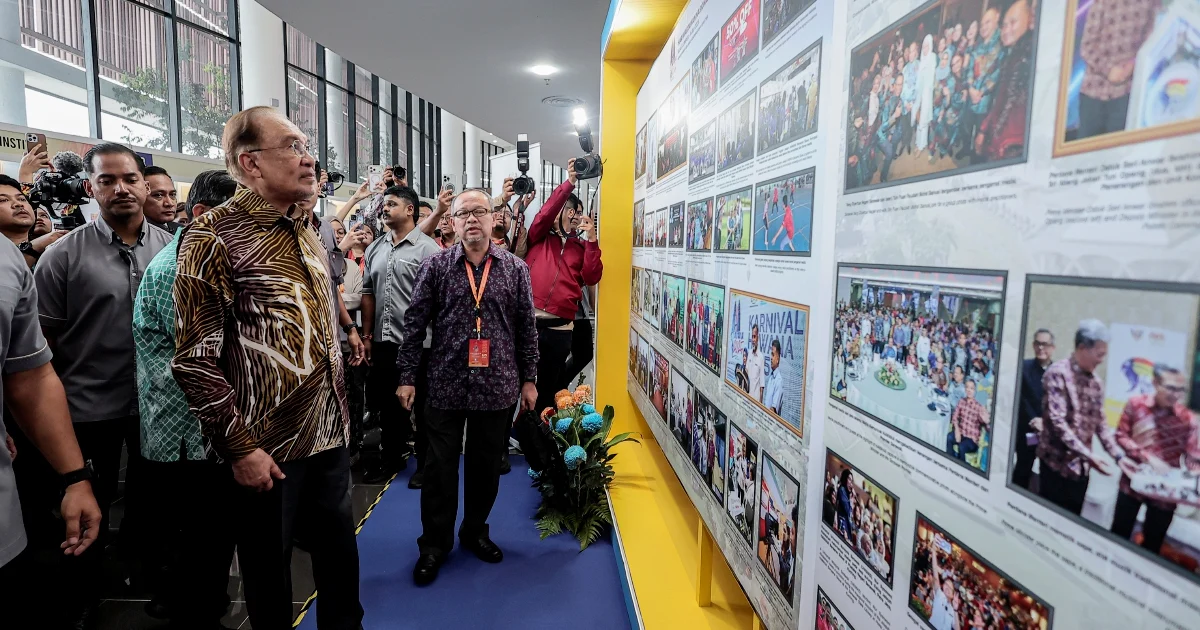
Prime Minister Datuk Seri Anwar Ibrahim has announced a RM1 million allocation for Tabung Kasih@Hawana 2026 during an event in Permatang Pauh, signalling the government's intention to place media welfare and industry transformation at the centre of its policy agenda. The commitment reflects growing recognition within Malaysia's political establishment that the journalism sector requires sustained financial and institutional support to navigate the digital transition and maintain standards of professional practice.
The welfare fund initiative comes at a critical juncture for the Malaysian media landscape. The industry has faced mounting pressures over the past decade as circulation revenue declined, advertising models fractured, and audience behaviour shifted decisively toward digital platforms. Traditional media organisations have responded through workforce reductions and structural consolidation, creating genuine hardship for many practitioners. By establishing dedicated welfare provisions, the government appears to be acknowledging that market forces alone cannot absorb the social costs of industry disruption, and that state intervention in this context serves broader public interest objectives.
Anwar's announcement demonstrates a departure from earlier approaches that treated media challenges primarily as business sector issues. The framing of journalism welfare as a government priority reflects emerging consensus across Southeast Asia that professional news media constitutes essential infrastructure for democratic governance and informed citizenry. Countries including Thailand and Indonesia have similarly explored welfare mechanisms, though Malaysia's explicit commitment through a named fund suggests more structured, ongoing engagement with this principle.
The RM1 million allocation represents a substantial though not unlimited investment. For context, the amount could support emergency assistance payments, professional development programmes, or health insurance supplements for journalists experiencing financial distress. The quantum signals genuine commitment while avoiding expectations of comprehensive, universal coverage of all industry welfare needs. Strategic deployment of these funds could yield significant impact if directed toward capacity-building initiatives that equip journalists with digital skills and business acumen.
Hawana 2026, the host event for this announcement, appears to be an industry convention or conference centred on media sector development. The selection of this venue emphasises that the government's initiatives are not paternalistic gestures imposed from above, but rather policy measures developed through engagement with industry stakeholders. This collaborative framing matters for legitimacy, particularly in an industry that cherishes editorial independence and views government involvement with inherent suspicion. Journalists are more likely to embrace welfare schemes framed as industry-wide support emerging from sectoral dialogue than those perceived as government intrusion into media affairs.
The government's stated commitment to continue supporting industry transformation initiatives extends beyond this single financial gesture. Anwar's language indicates that multiple policy streams and funding mechanisms are under consideration or already operational. These might include tax incentives for media companies investing in digital infrastructure, grants for investigative journalism projects, regulatory reforms that lighten compliance burdens on news organisations, or training programmes administered through industry bodies or educational institutions. The breadth of this stated commitment suggests the government recognises that no single intervention can address the multifaceted challenges confronting journalism.
For Malaysian journalists, the practical implications of this fund depend entirely on distribution mechanisms. If accessible to individuals through transparent application processes, the welfare fund could provide genuine relief to practitioners facing redundancy, retraining, or temporary income loss. If channelled exclusively through established media organisations, benefits may accrue unevenly, potentially reinforcing existing institutional hierarchies within the industry. Clear communication about eligibility criteria, application procedures, and fund deployment timelines will be essential for maximising the initiative's real-world impact.
The timing of this announcement also warrants consideration. Occurring at a named industry event, the disclosure appears choreographed for media consumption and industry visibility. This raises questions about whether the commitment was recently formed or previously developed, merely formalised at this venue. Either interpretation suggests the government recognised sufficient political and policy momentum to justify public announcement. The absence of controversy or competing policy claims around this initiative indicates broad stakeholder acceptance for welfare-oriented media support, a notable achievement given Malaysia's complex media governance landscape.
Regionally, Malaysia's approach may influence policy conversations in other Southeast Asian countries grappling with similar media challenges. Thailand and Indonesia have stronger official media councils with welfare components, while Singapore's approach remains more laissez-faire. The Malaysian model—government-directed funding administered through industry frameworks—occupies a distinct position in the regional spectrum. Depending on outcomes, it could become a template others reference when developing their own support structures.
Longer-term sustainability questions surrounding Tabung Kasih@Hawana 2026 remain unclear from available information. Whether this represents annual funding, a one-time allocation, or a multi-year commitment affects how meaningfully the initiative can address systemic industry challenges. Furthermore, the fund's governance structure—whether managed by industry bodies, government agencies, or hybrid arrangements—will determine its credibility and effectiveness. Transparent communication about these operational parameters would enhance confidence among intended beneficiaries.
Ultimately, Anwar's announcement reflects broader recognition that media sector health constitutes a legitimate domain for government policy intervention, particularly where market failures and structural disruption create genuine hardship among practitioners. The RM1 million commitment, while significant, represents an opening position rather than a comprehensive solution. The real measure of this initiative's impact will emerge over time through evidence of fund distribution, beneficiary outcomes, and whether the stated commitment to broader transformation initiatives materialises through concrete policy action.