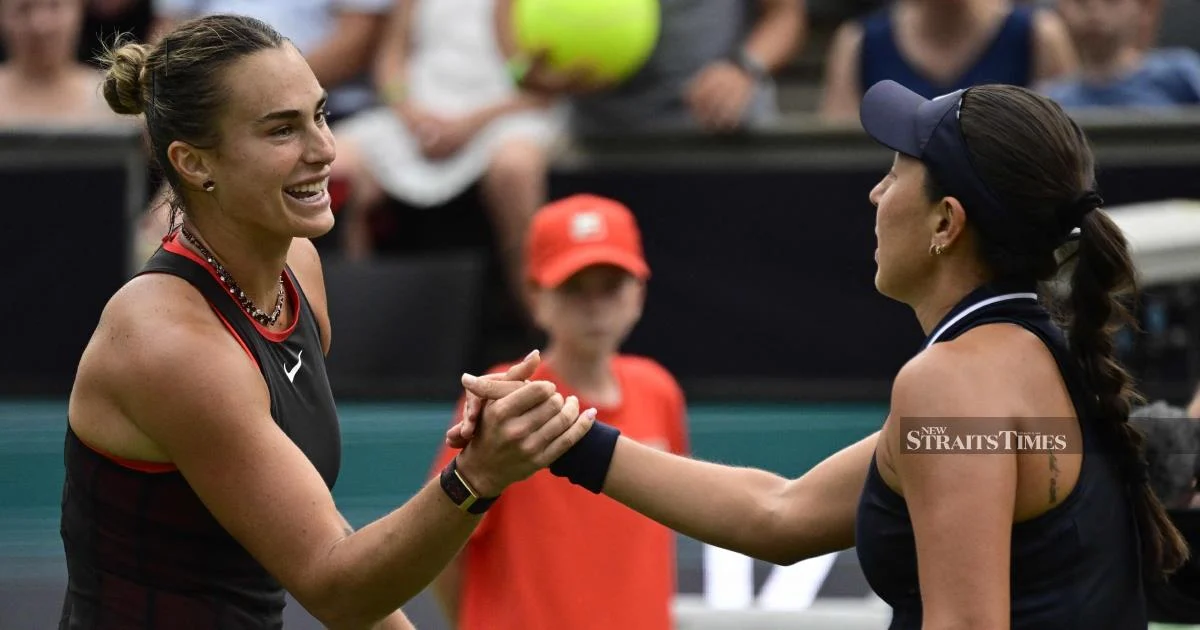
American Jessica Pegula has secured her place in the Berlin WTA grass-court championship final by overcoming world number one Aryna Sabalenka in an impressive semi-final clash. Playing with precision and tactical acuity across the court, Pegula dispatched the top-ranked Ukrainian in straight sets, winning 6-2, 6-7 (4-7), 6-0 to reach the final for the second occasion in her tournament history.
Pegula's performance demonstrated the technical mastery required to succeed on grass courts, where serve-and-volley tactics and court positioning become increasingly crucial. The American capitalised on her opponent's occasional lapses in the opening set, breaking serve at key moments and maintaining composure under pressure. Her aggressive approach proved particularly effective, forcing Sabalenka into defensive positions and preventing the world number one from establishing her typically commanding rhythm.
The second set showcased Sabalenka's competitive character, as the Ukrainian fought back to force a tie-break that stretched to seven points. However, Pegula's superior court sense and strategic variety ultimately prevailed in the deciding moments of that set. Rather than allowing momentum to shift entirely in Sabalenka's favour, Pegula maintained her aggressive baseline game while remaining alert to transition opportunities at net, a combination that proved too complex for her opponent to manage simultaneously.
By the third set, Pegula had established complete dominance. The scoreline of 6-0 reflects not merely a loss of form by Sabalenka but rather a comprehensively superior performance from Pegula, who dictated play throughout and offered few opportunities for her opponent to generate offensive pressure. This shutout set underscores the importance of momentum in professional tennis, particularly on grass surfaces where points tend to conclude quickly and opportunities for momentum swings multiply.
For Pegula, this victory represents a significant achievement in her career trajectory. The American has been steadily climbing the rankings through consistent performances at the sport's highest level, and reaching major final stages at premier tournaments validates her status as a genuine contender. The Berlin tournament, held annually on the grass courts that reward precision and timing, has become an important proving ground where elite players demonstrate their readiness for Wimbledon, the sport's most prestigious championship.
Sabalenka's loss at this stage reflects the challenging demands of back-to-back matches against world-class opponents. Despite her ranking and recent form, even the best players occasionally encounter opponents whose particular style and court conditions align unfavourably. Grass courts particularly favour players with strong serving and court mobility, attributes that Pegula possessed in abundance throughout this encounter. For Sabalenka, the focus now shifts to preparation for Wimbledon, where she will seek to demonstrate that this semi-final exit represents merely a temporary setback rather than a broader loss of form.
Pegula's advancement to the Berlin final carries significance beyond individual tournament success. American representation at the sport's highest levels remains important for the sport's commercial development and grassroots participation within the United States. Pegula's performances on elite stages help elevate the profile of American women's tennis and inspire younger players pursuing professional careers in the sport. Her consistency across different surfaces and against varied opponents demonstrates the complete player she has become.
The grass-court season represents a compressed but crucial window in the tennis calendar. Wimbledon represents the ultimate objective, but tournaments like Berlin provide essential preparation and confidence-building opportunities. Players using these weeks to refine grass-court tactics, adjust serve patterns, and build momentum heading into the season's final major championship. Pegula's strong showing in Berlin suggests she has effectively utilised this critical preparation period and arrives at her next appointments in peak condition.
Looking ahead, Pegula faces the challenge of sustaining this intensity through the final. Her opponent will emerge from the other semi-final, bringing their own strengths and tactical approaches to the championship encounter. Nevertheless, Pegula's performance against Sabalenka demonstrates that she possesses the technical skills, mental fortitude, and strategic flexibility required to compete at the sport's highest levels. Her second career appearance in the Berlin final provides an opportunity to add significant silverware to her professional resume and further establish herself among tennis's elite players.