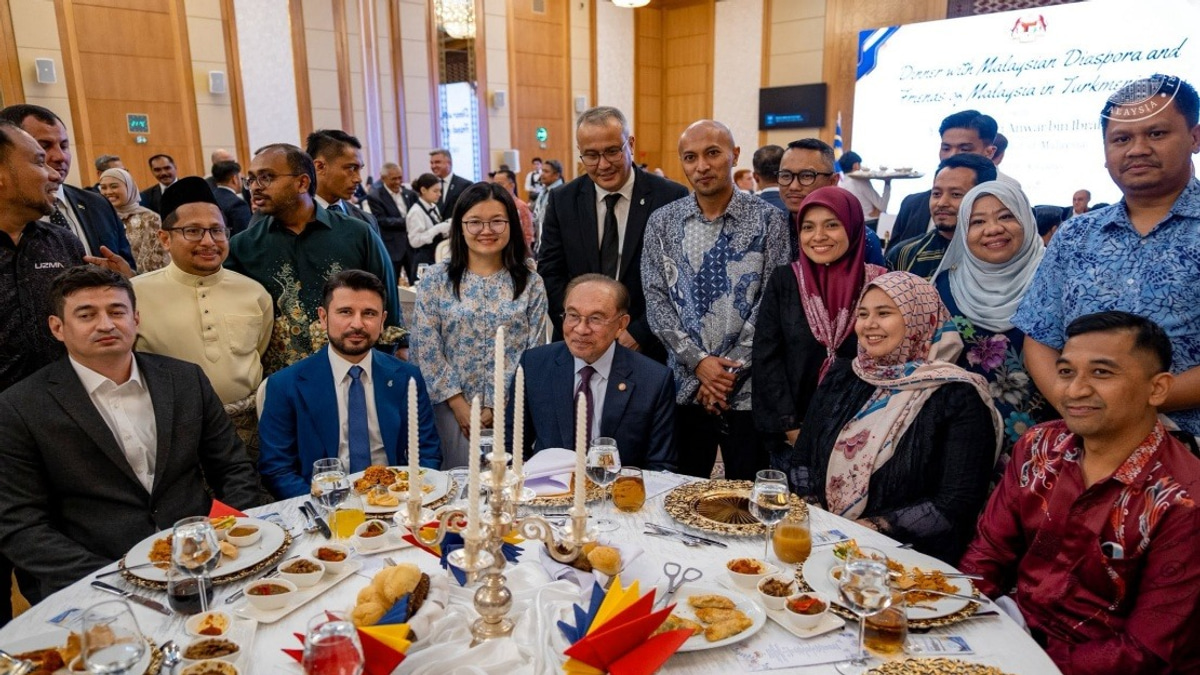
The chairman of Urimai has offered a sharp assessment of PAS's political trajectory, contending that the Islamic party's withdrawal from its coalition with Bersatu represents a strategic miscalculation that has strengthened Prime Minister Anwar Ibrahim's position at the helm of government. By fracturing the opposition alliance that previously presented a consolidated challenge to the ruling Pakatan Harapan administration, PAS essentially handed Putrajaya to Anwar on favourable terms, according to Ramasamy's analysis.
The dynamics of Malaysian politics have shifted considerably since PAS repositioned itself away from the Bersatu-led opposition alignment. What was once a united front capable of marshalling significant parliamentary numbers and mobilising grassroots support across the country became fractured, with each component pursuing divergent strategic interests. This fragmentation naturally benefited the government, which faced a weakened and disunited opposition lacking the coherence necessary to mount an effective counter-narrative or coordinated parliamentary challenge.
Ramasamy's critique touches on a fundamental reality of Malaysian parliamentary politics: numerical strength alone does not determine electoral or political viability. Rather, the ability to maintain coalition discipline and present voters with a credible alternative government framework proves decisive. PAS's departure from the broader opposition ecosystem disrupted this calculus, diluting what had previously represented a genuine threat to continued Pakatan Harapan dominance. The party's decision to pursue independent positioning left its former allies vulnerable and forced a realignment of opposition strategy at a moment when momentum mattered considerably.
From a Malaysian perspective, the implications extend beyond simple party-political calculations. A weakened opposition constrains healthy democratic competition and reduces the quality of public discourse around governance alternatives. When opposition parties divide their energies competing against each other rather than presenting cohesive challenges to government policy, voters lose meaningful options for exercising electoral choice. This dynamic particularly affects states and constituencies where opposition fragmentation translates into direct electoral advantage for incumbent parties.
The history of coalition politics in Southeast Asia demonstrates repeatedly that alliances require constant maintenance and shared commitment to medium-term objectives. Parties that prioritise short-term factional or personal gains over collective strategic positioning frequently discover that their bargaining power diminishes once unity fractures. PAS's experience aligns with this broader pattern, suggesting that the party may have underestimated how thoroughly the opposition consolidation had constrained government manoeuvre room.
Bersatu's positioning within the opposition framework had proven contentious, given its origins within the ruling coalition apparatus and the complex personal dynamics surrounding its founder. However, from a purely structural standpoint, Bersatu's presence represented additional parliamentary seats and a claim to represent Bumiputera-oriented voters dissatisfied with both Pakatan Harapan and traditional Umno-led structures. PAS's departure weakened this tri-polar competition dynamic and restored a more conventional government versus opposition binary.
Anwar Ibrahim's government entered office facing considerable headwinds: an economically troubled inheritance, fractious coalition management requirements, and vulnerability to opposition parliamentary manoeuvres. A united and disciplined opposition could have rendered legislative agendas considerably more difficult to advance. Instead, PAS's repositioning gift-wrapped political space to the Prime Minister, permitting more stable governance than the underlying parliamentary arithmetic might otherwise have allowed. This represents a tangible advantage that extends across multiple policy domains and legislative sessions.
For Southeast Asian observers tracking Malaysian political development, PAS's trajectory illustrates the persistent challenge of maintaining opposition coherence in pluralistic democracies where parties operate simultaneously within religious, ethnic, and ideological frameworks. The Islamic party's identity as a religiously-oriented movement creates tensions with secular-nationalist or multi-ethnic coalition partners. These tensions prove manageable only when parties accept that strategic coalition objectives supersede narrower factional preferences.
Ramasamy's analysis also implicitly addresses questions about PAS's political viability outside traditional opposition frameworks. The party's experiments with power-sharing arrangements and varied coalition alignments suggest leadership uncertainty about optimal political positioning. This indecision has consequences: when parties frequently shift strategic posture, they signal to potential allies and voters that commitments remain contingent and reversible. Such signals undermine the trust necessary for sustained coalition building.
Moving forward, Malaysia's political landscape will likely reflect the consequences of opposition fragmentation for years. Umno's rehabilitation within acceptable political space, Bersatu's continued struggle for relevance, and PAS's fluctuating alignment decisions all stem partly from the breakdown of opposition unity. Voters seeking alternatives to Pakatan Harapan face a balkanised opposition landscape offering multiple competing visions rather than a clear path to alternative governance. This fragmentation serves incumbent interests almost automatically, regardless of government performance or popularity.
The broader lesson for Malaysian politics concerns the rarity and fragility of opposition coalitions capable of genuinely challenging incumbent coalitions. Building such alliances requires sustained commitment transcending immediate factional disputes. PAS's departure from the opposition framework suggests the party leadership assessed its interests as better served through independent positioning. Ramasamy's critique suggests this assessment proved strategically miscalculated, ultimately advantaging the government while weakening the opposition's capacity for accountability and scrutiny.