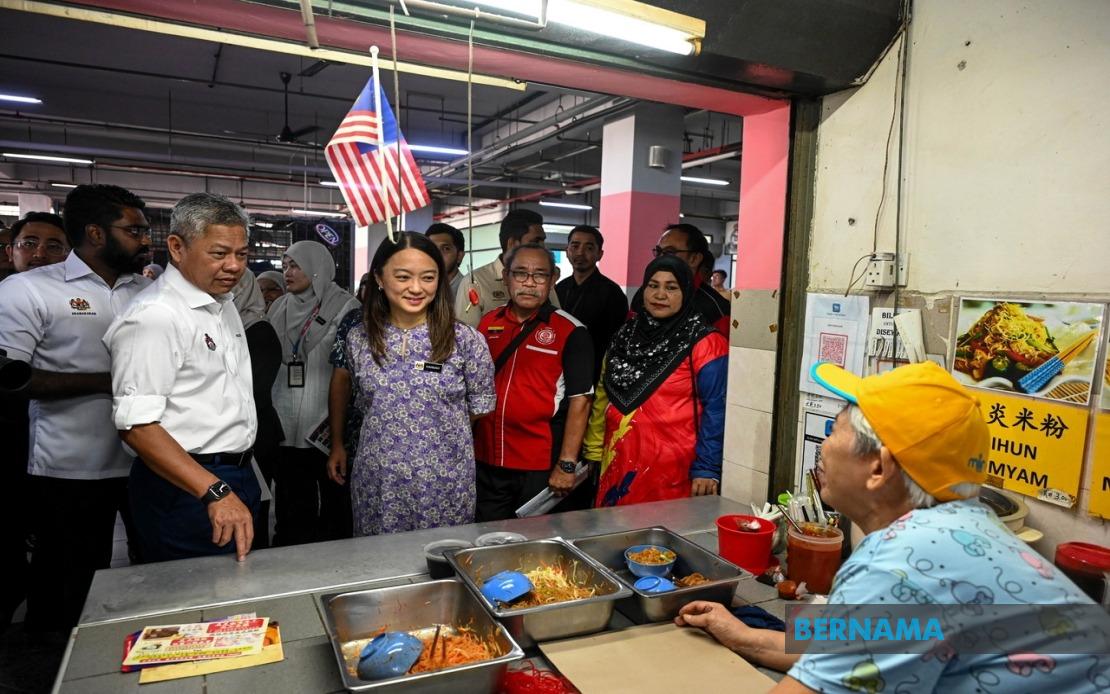
Kuala Lumpur's municipal authority has committed RM200 million towards a comprehensive modernisation programme spanning 287 hawker trading locations across the city, representing one of the largest coordinated upgrades of informal food commerce infrastructure in Malaysia's capital. The Lestari Niaga @ Kuala Lumpur 2026 initiative, unveiled in June, aims to transform the operational environment for more than 11,000 small traders and hawkers operating under various regulatory frameworks within the city limits.
The ambitious scope of the scheme reflects growing recognition that Malaysia's hawker ecosystem, which forms a crucial part of urban food culture and employs thousands, requires systematic modernisation to meet contemporary safety, hygiene, and urban planning standards. For traders, the initiative promises purpose-built facilities in place of makeshift arrangements. For residents and businesses, the programme addresses longstanding concerns about traffic congestion, sanitation, and organised use of public space. The balancing act between these competing interests has emerged as a central challenge in implementing such programmes across Southeast Asian cities grappling with informal economy formalisation.
Minister Hannah Yeoh, overseeing federal territories in the Prime Minister's Department, emphasised that the city authority had adopted a consultative approach throughout the planning process. Multiple rounds of stakeholder engagement involving residents, traders themselves, and commercial tenants have informed site selection and facility design. This consultation framework marks a departure from earlier modernisation efforts that sometimes proceeded with limited input from affected communities, generating friction and resistance that delayed implementation. By integrating feedback loops before and during rollout, the city aims to build consensus around controversial relocations.
The geographic spread of initial upgrades reveals the city's phased strategy. The UTC Sentul hawker precinct, which garnered public attention online, serves as a visible flagship demonstration. Here, DBKL is investing RM1.6 million to construct 20 modern modular kiosks replacing existing structures, with completion targeted before October of the same year. This condensed three-month timeline differs markedly from earlier overhauls, suggesting improved project management and prefabrication techniques that accelerate construction cycles.
A significant innovation in the Lestari Niaga framework addresses a perennial problem in hawker modernisation: income disruption during construction. Rather than establishing temporary trading sites—which experience has shown are often remote, poorly equipped, and result in steep customer losses—DBKL introduced monthly financial assistance of RM1,500 for affected traders during the upgrade period. This direct cash support mechanism acknowledges that relocating a hawker stall involves more than physical movement; customer bases are location-dependent, and displaced traders frequently experience substantial revenue decline even in alternative sites. By providing predictable monthly income support, the city reduces trader resistance and financial hardship during transition.
The broader programme encompasses considerable diversity in hawker arrangements within Kuala Lumpur. Of the 11,000 traders across 287 sites, approximately 4,000 operate as street hawkers with minimal permanent infrastructure. Another 5,000 occupy spaces classified as mayor's assets—municipal property rented at subsidised rates. The remaining 1,000 represent traders in reapplication status, having been involved in previous relocation exercises or regulatory processes. Each category presents distinct upgrade requirements and implementation timelines. The initial phase targets 224 of the 287 sites, allowing the authority to refine approaches before expanding further.
Expansion plans announced during the programme launch indicate its significance within the city's broader economic development strategy. Simultaneous projects utilising the RM1,500 monthly assistance scheme are advancing in districts including Jalan Dato Senu, Pudu Ulu, and Bandar Tun Razak. These locations, selected based on infrastructure readiness and trader concentration, represent a geographic distribution ensuring benefits reach diverse communities across Kuala Lumpur rather than concentrating in central areas. Each neighbourhood upgrade will generate local employment during construction and create modern trading environments that enhance area attractiveness.
For Malaysian economic observers, the initiative reflects broader policy recognition that informal sector modernisation cannot rely solely on top-down regulation. Hawkers contribute significantly to urban employment, food security, and cultural vibrancy. A quarter of Kuala Lumpur's trading population—roughly 11,000 individuals—depends on hawking for primary income. Many are marginal traders with limited capital and no formal business registration, making them vulnerable to sudden displacement. The financial assistance component acknowledges these realities while moving away from paternalistic approaches that historically marginalised hawkers from urban planning conversations.
The consultation framework also signals shifting municipal governance philosophy. Earlier city beautification drives often prioritised aesthetic outcomes and traffic efficiency without adequately weighing impacts on livelihoods. The Lestari Niaga approach explicitly integrates trader welfare as an objective equal to urban infrastructure goals. Hannah Yeoh's emphasis on fairness to all stakeholders—residents demanding smooth traffic, traders requiring viable income opportunities, building tenants pursuing commercial interests—frames hawker modernisation as a political and social challenge requiring negotiation rather than mere administrative implementation.
Implementation success will likely determine the model's replicability across other Malaysian cities pursuing similar objectives. George Town, Penang; Kuching, Sarawak; and Johor Bahru all grapple with comparable pressures to modernise hawker precincts while protecting trader livelihoods. The financial assistance innovation, if effective in reducing trader resistance while maintaining customer bases, could become an industry standard practice. Conversely, delays or inadequate support would reinforce trader scepticism about modernisation programmes, complicating future city-level upgrades.
The programme's three-year timeline through 2026 suggests realistic pacing, avoiding overly ambitious targets that historically generate implementation failures. Phasing the 287 sites across multiple years allows municipal capacity to be deployed effectively, quality control to be maintained across projects, and lessons from early phases to inform subsequent work. For the 11,000 traders involved, this incremental approach provides time to understand coming changes and participate in feedback processes.
Regionally, Malaysia's emphasis on formalising informal commerce through supported modernisation rather than suppression aligns with Southeast Asian best practices recognised by urban development organisations. Thailand, Vietnam, and Indonesia have experimented with various models, from restrictive hawker bans to cooperative formalisation with municipal support. The Lestari Niaga combination of infrastructure investment, financial assistance, and stakeholder consultation represents a pragmatic middle ground that respects both trader agency and municipal governance objectives. As other Malaysian cities consider similar programmes, Kuala Lumpur's experience will provide valuable lessons about implementation challenges, costs, and trader responses.

