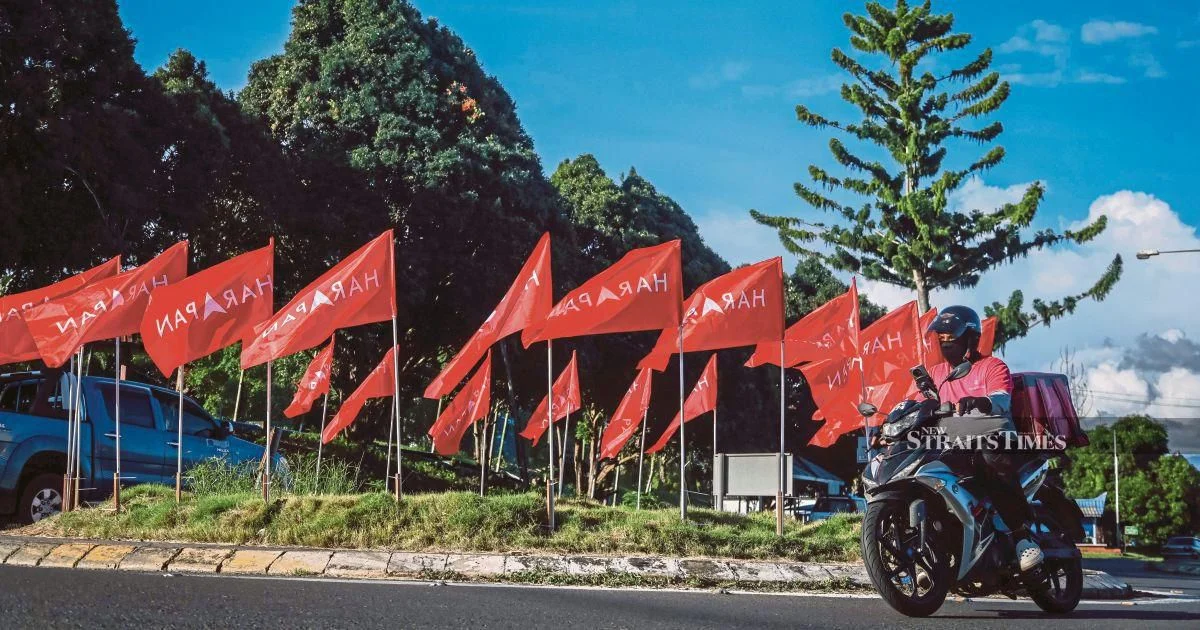
Pakatan Harapan has signalled its determination to select a menteri besar candidate for the upcoming 16th Johor state election entirely on its own terms, resisting external pressure from competing political coalitions to rush the announcement. Coalition leaders have indicated that the timing and identity of their candidate will be determined by internal deliberation rather than external demands, framing the choice as a substantive decision requiring careful consideration rather than a headline-grabbing move designed to appease opponents or satisfy media timelines.
The coalition's measured approach reflects a broader strategic calculus in Malaysian state politics, where premature candidate announcements can inadvertently expose weaknesses, create internal discord, or provide rival camps with months of ammunition before actual campaigning begins. By maintaining strategic silence, Pakatan Harapan preserves flexibility and denies opposition parties the opportunity to define a candidate's narrative before the coalition can establish its preferred political messaging. This defensive posture has become increasingly common among major coalitions seeking to control the pace and framing of electoral contests.
Johor remains one of Malaysia's most politically volatile and economically significant states, with a history of dramatic electoral swings and complex inter-party negotiations. The state's diverse demographic composition, combining urban, industrial, and agricultural constituencies, demands careful consideration of which candidate can command broad support across the coalition's component parties while appealing to swing voters who have proven decisive in previous state elections. The menteri besar position carries outsized importance given Johor's status as the nation's second-largest economy and its strategic location adjacent to Singapore.
Pakatan Harapan's current composition brings together diverse political interests that must be balanced during any high-stakes selection process. Different component parties harbour their own expectations regarding representation in executive positions, and rushing a decision could trigger internal tensions that would undermine the coalition's unity just as it enters the critical pre-election phase. Coalition unity has historically proven fragile during state elections, with recriminations over power-sharing arrangements occasionally erupting into public disputes that damage electoral prospects.
The decision to avoid external pressure also signals confidence in the coalition's internal mechanisms for vetting and selecting candidates. Rather than yielding to claims from rivals that a delayed announcement suggests weakness or indecision, coalition strategists have framed their deliberative approach as reflective of serious governance thinking. This rhetorical reframing transforms what might appear as hesitation into a virtue, suggesting that the eventual candidate will be chosen through rigorous assessment of qualifications and electability rather than horse-trading or political convenience.
Opposition parties, particularly Barisan Nasional and other coalitions, have presumably attempted to create pressure by establishing their own candidate timelines or suggesting that Pakatan Harapan's silence indicates internal disarray. Standard political strategy dictates that early candidate announcements force opponents to respond, potentially drawing media attention and allowing the announcing coalition to frame the electoral narrative. However, Pakatan Harapan's resistance to this tactic suggests coalition strategists believe that superior candidate quality and internal unity matter more than early announcement advantages.
The broader Southeast Asian context underscores how menteri besar selections in major Malaysian states influence regional perceptions of political stability and economic governance. International investors and regional governments monitor state-level leadership transitions closely, interpreting candidate selections as indicators of likely policy directions regarding infrastructure development, business regulation, and cross-border relations. A poorly managed succession process could send unintended signals about institutional dysfunction, whereas a smooth, carefully executed transition reinforces impressions of serious governance.
For ordinary Johor voters, the extended deliberation period offers a window during which various potential candidates can be informally tested against public opinion. Grassroots party machinery and informal networks transmit information about possible contenders, allowing the coalition to gauge voter sentiment before making formal announcements. This organic vetting process, though invisible to outside observers, influences coalition decisions in ways that formal opinion polling cannot capture.
The timing of the eventual announcement will likely be calibrated to optimize the coalition's overall campaign strategy. Announcing too early risks giving rivals extended time to attack and define a candidate; announcing too late risks appearing disorganized. Coalition strategists presumably aim for a moment that maximizes media attention for their chosen candidate whilst limiting the opposition's preparation time, though this calculation involves uncertainties that defy precise prediction. Recent developments in Malaysian politics have demonstrated that unexpected events can rapidly alter electoral dynamics regardless of candidate announcement timing.
Pakatan Harapan's stance also reflects broader maturation in Malaysian coalition politics, where serious contenders increasingly emphasize strategic discipline over reactive posturing. The coalition's message—that it will announce when ready, on terms of its choosing—amounts to a straightforward assertion of political agency and self-determination. This confident framing, whether justified by actual internal unity or aspirational positioning, sets a tone that influences how both supporters and undecided voters perceive coalition competence and seriousness of purpose.
The eventual menteri besar candidate will inherit a complex legacy shaped by previous administrations' decisions regarding infrastructure investment, urban development, and labour relations. Johor's economy comprises significant manufacturing sectors dependent on skilled labour and cross-border connectivity, demanding candidates with demonstrated expertise in economic policy or proven administrative records. The selection process, whatever its timeline, will ultimately be judged by voters based not on announcement timing but on whether the chosen candidate can deliver effective governance during an uncertain economic period.