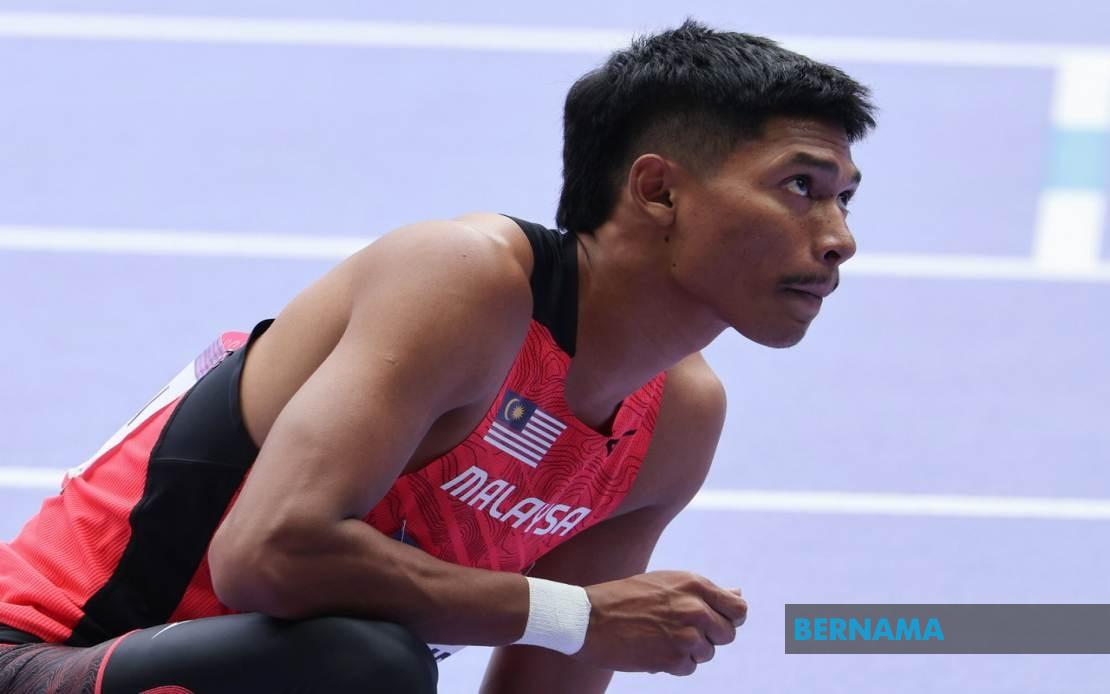
Malaysia's fastest sprinter, Muhammad Azeem Mohd Fahmi, has signalled his commitment to developing his athletics career on home soil following the completion of his undergraduate degree at Auburn University in the United States. The 22-year-old, who holds the national 100-metre benchmark at 10.09 seconds, has ruled out an immediate return to America, choosing instead to reconnect with his support network and pursue the next phase of his competitive journey domestically.
Azeem's decision reflects a growing trend among Malaysian athletes who seek to balance overseas education with long-term career development in their home country. Having spent four years away from Malaysia, the sprinter emphasised that his immediate priority is rebuilding personal connections rather than chasing overseas opportunities. This sentiment resonates within Malaysian sports circles, where the tension between international exposure and domestic commitment has become increasingly relevant as athletes navigate globalised careers.
The sprinter articulated his reasoning with particular emphasis on family bonds, acknowledging that his parents, siblings, and close circle have provided the emotional foundation for his athletic achievements. This familial dimension underscores a cultural reality often overlooked in discussions of athlete development: the psychological toll of extended separation from support systems, even when pursuing elite training opportunities abroad. Azeem's willingness to publicly prioritise this aspect suggests a maturing perspective on what sustained athletic excellence requires beyond technical refinement.
Training arrangements have been carefully structured to leverage both international expertise and local knowledge. American coach Ken Harnden, who guided Azeem's development at Auburn, will continue designing his overall programme remotely. However, day-to-day coaching oversight will fall to Muhammad Amir Izwan Tan Abdullah, a Malaysian coach familiar with local training infrastructure and Azeem's specific needs. This hybrid approach represents a pragmatic solution increasingly adopted by national federations seeking to maintain coaching continuity while keeping athletes based domestically.
For Malaysian athletics, Azeem's return carries significant implications. As the national record holder in the 100-metre sprint, his presence in the country strengthens the depth of competitive talent available for regional and international competitions. His commitment to training locally also provides visibility and inspiration for younger sprinters coming through the development pipeline, demonstrating that elite-level athletics can be pursued and refined within Malaysia's sporting ecosystem.
The broader context of athlete development in Southeast Asia has shifted considerably. Where previous generations often viewed overseas relocation as essential for reaching elite levels, contemporary athletes increasingly recognise that technical excellence and international standards can be accessed through remote coaching relationships. Azeem's arrangement with Harnden exemplifies this evolution, suggesting that geographic location need not be the limiting factor it once was.
Azeem also disclosed intentions to pursue postgraduate studies, though he has deliberately chosen to defer this commitment to concentrate fully on athletics in the coming months. This sequencing decision demonstrates strategic thinking about career phases—recognising that the window for competitive sprint development has finite dimensions that must take priority over academic progression. The flexibility to return to tertiary studies later, particularly through online or part-time frameworks, provides him with long-term options without compromising immediate athletic objectives.
Malaysian athletics has benefited from increased investment and institutional support in recent years, creating conditions more conducive to elite athlete development domestically. National facilities have improved, coaching expertise has expanded, and competitive opportunities within the region have proliferated. Azeem's decision to base himself locally suggests confidence that these infrastructural improvements can adequately support his trajectory toward international competitiveness.
The 10.09-second national record, while impressive by regional standards, positions Azeem within striking distance of sub-10-second performances that define elite global sprinting. Achieving this benchmark will require sustained, focused development over the coming seasons. His strategic choice to eliminate geographical disruption and maintain family proximity may paradoxically enhance his capacity to train at the intensity and consistency necessary for such breakthroughs.
From a regional athletics perspective, Azeem's commitment to Malaysia also matters for competition structures and championships. His participation in domestic championships and Southeast Asian events provides those competitions with credible representation from the region's fastest sprinter, enhancing their profile and attracting stronger international entries. This interconnection between individual athlete choices and ecosystem-wide competitiveness often goes unrecognised but proves decisive in building sustainable sporting cultures.
Looking forward, the coming months will prove pivotal in determining whether the coaching arrangement and domestic infrastructure can adequately support Azeem's trajectory. The remote relationship with Harnden will require exceptional communication and periodic in-person review sessions to ensure programme coherence. Meanwhile, Amir Izwan's ability to translate the American coach's methodologies into local practice conditions will significantly influence outcomes. Success in this period could validate the hybrid coaching model for other Malaysian athletes considering similar pathways.