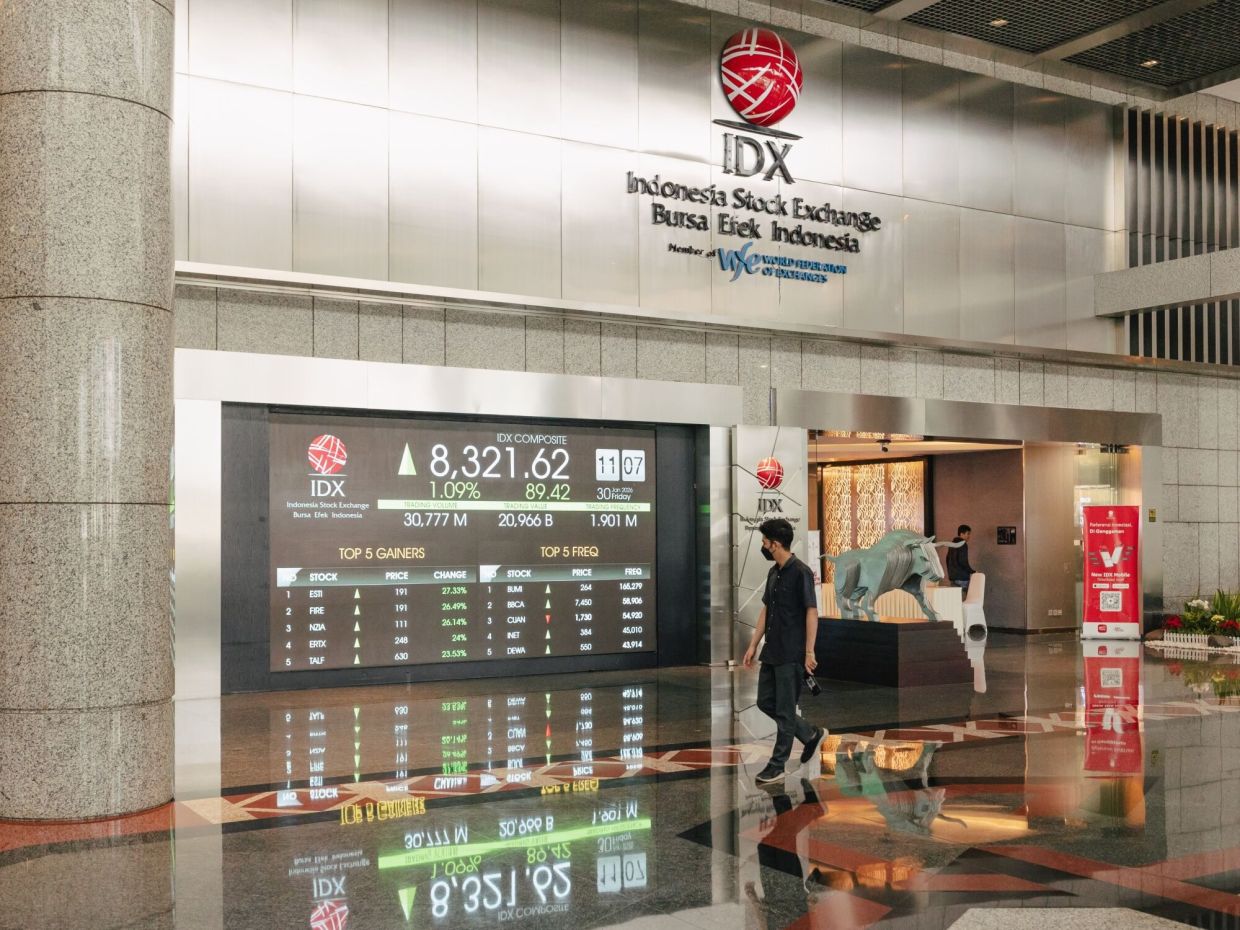
MSCI, the world's most influential index provider, has escalated its criticism of Indonesia's capital market governance, flagging significant concerns over ownership transparency and coordinated trading activity. The fresh warning, delivered through the company's latest market accessibility review, represents another setback for what has become the worst-performing major stock market globally, arriving just days before MSCI announces whether it will strip Indonesia of its emerging markets status in favour of frontier classification—a demotion that could unleash substantial foreign investor withdrawals.
The stakes are extraordinarily high. A downgrade to frontier status could trigger automatic selling by the vast network of passive investment funds that track MSCI indices, potentially removing as much as $13 billion from Indonesian markets. Active fund managers benchmarked to MSCI indices would face similar pressures to reduce their exposure. For a nation already reeling from currency weakness and capital flight, such a forced delisting would compound an already severe confidence crisis.
MSCI's Thursday review specifically lowered Indonesia's information flow criterion to negative, reflecting what the index provider characterizes as opacity in shareholding data and unclear market activity patterns. These deficiencies, MSCI argues, fundamentally undermine price discovery mechanisms and make it difficult for global investors to determine the actual free float of listed companies—a critical metric for calculating index weightings and assessing true liquidity. The transparency gaps extend to tracking the coordination of large share transactions, raising questions about whether market prices genuinely reflect underlying supply and demand dynamics.
Yet interpretations of MSCI's latest moves diverge sharply among market participants. Mohit Mirpuri, a fund manager at SGMC Capital in Singapore, cautioned against reading doom into the announcement. He noted that only one accessibility metric deteriorated in the review, while Indonesia maintained competitive scoring against regional peers including South Korea, China and India across several important benchmarks. Mirpuri's base case scenario assumes Indonesia will retain its emerging market classification despite the ongoing concerns—a position that suggests the downgrade risk, while real, remains contested among sophisticated investors.
Indonesia's authorities have not remained idle since MSCI's initial January warning triggered alarm bells across the market. The exchange and financial regulator subsequently implemented a suite of reform measures designed to address governance gaps. Most prominently, they doubled the minimum free float requirement for listed companies to 15 percent, signalling commitment to broadening share ownership and reducing concentration. The urgency of these moves was underscored by the dramatic January resignations of the exchange's and regulator's top executives, who departed on the same afternoon—a coordinated departure that both acknowledged the severity of the crisis and represented an attempt to signal fresh institutional commitment to reform.
The timeline of deterioration has been relentless. Following MSCI's January warning, the Jakarta stock index entered a prolonged slump. In April, MSCI extended its review period, buying time for further investigation. Then in May, the index provider removed six companies from its benchmarks, most with apparent links to Indonesian tycoons, prompting another sharp market decline. Each announcement has reinforced narrative momentum toward downgrade, with foreign investors responding by liquidating holdings. Year-to-date foreign selling has reached approximately $3.65 billion, reflecting a strategic retreat from Indonesian exposure by global money managers.
Beyond the technical governance issues that MSCI has emphasized, Indonesia confronts a broader macroeconomic credibility challenge that influences foreign investor sentiment. President Prabowo Subianto's populist policy agenda and concerning fiscal trajectories have spooked international observers, pushing the rupiah to historic lows against the dollar. In response, Bank Indonesia has repeatedly raised interest rates in recent weeks, attempting to support the currency through monetary tightening. Rating agencies have reacted with their own downgrades: both Moody's and Fitch cut their debt outlooks for Indonesia to negative during 2026, explicitly citing eroded policy credibility as a primary concern for a $1.4 trillion economy that once commanded premium valuations as a reliable emerging market investment destination.
MSCI's accessibility review highlighted an additional vulnerability: Indonesia's foreign exchange markets lack the efficiency and depth required for seamless international capital flows. The index provider noted the absence of a functioning offshore currency market while simultaneously identifying constraints within the onshore market structure. These limitations mean that foreign investors seeking to repatriate earnings or adjust hedging positions face friction costs and execution challenges that would be unthinkable in mature or even most emerging markets. Such infrastructure gaps become particularly acute when investor confidence erodes, as capital seeking exit faces bottlenecks that amplify selling pressure and currency depreciation.
The Jakarta Composite Index, which epitomizes investor sentiment toward Indonesian equities, has collapsed 29 percent during 2026 alone. This dramatic decline reflects not merely negative technical sentiment but rather a fundamental reassessment of Indonesia's attractiveness as an allocation destination. The convergence of transparency concerns, policy uncertainty, macroeconomic instability, and infrastructure limitations has created a toxic combination that discourages fresh foreign investment while encouraging existing holders to exit positions.
MSCI's formal decision, arriving within days, will likely prove to be the inflection point that determines Indonesia's market trajectory over the coming months. A downgrade would accelerate capital outflows beyond the organic selling already underway, as mechanical index-tracking forces liquidations. Retention of emerging market status would offer reprieve and possibly signal to skeptical foreign investors that governance improvements warrant a second look. Either outcome carries profound implications not just for Indonesian market participants but for Southeast Asian capital markets more broadly, as investors reassess their entire regional allocation framework.