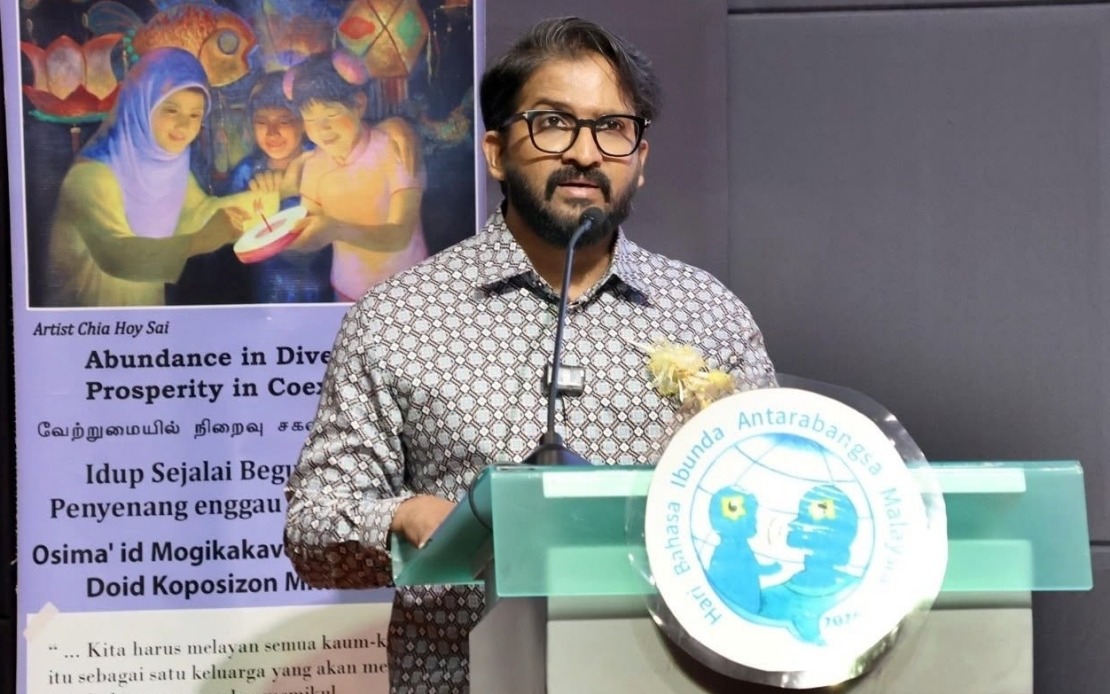
Deputy National Unity Minister R. Yuneswaran has made a compelling case for elevating mother-tongue proficiency among young Malaysians, framing linguistic preservation not as a barrier to national cohesion but as a pathway toward it. Speaking on June 21, Yuneswaran contended that deepening command of one's heritage language directly counters the divisive race, religion and royalty controversies that plague Malaysian social media platforms with alarming frequency. His intervention arrives at a critical juncture when digital discourse increasingly serves as a flashpoint for communal tensions, suggesting that linguistic and cultural understanding may offer a preventive remedy.
The minister's diagnosis of Malaysia's 3R problem zeroes in on a foundational deficit: insufficient mutual comprehension of each community's historical narratives, linguistic frameworks, and cultural moorings. When citizens lack fluency in their own heritage languages, he suggests, they forfeit a crucial mechanism for understanding not just their own identity but the identities of neighbours. Language carries far more than instrumental communication value, Yuneswaran emphasized, embedding within it the accumulated wisdom, values, and historical memory of entire peoples. This perspective reframes mother-tongue education from a potentially parochial exercise into an essential component of national integration.
Malaysia's linguistic landscape encompasses approximately 130 distinct languages, a figure that underscores both the nation's extraordinary cultural plurality and the complexity inherent in managing such diversity. Rather than treating this multiplicity as a liability, Yuneswaran urged Malaysians to recognise their linguistic heritage as a collective strength. The framing proves significant because it challenges a narrative sometimes present in nation-building discourse—that diverse languages inherently fragment national unity. Instead, the minister posits that informed appreciation of linguistic diversity can generate the mutual respect necessary for peaceful coexistence.
A particularly persuasive element of Yuneswaran's argument concerns the complementary rather than competitive relationship between mother tongues and the national language. Drawing on his own background spanning Chinese and national school education, he testified that proficiency in heritage languages neither diminishes nor supplants capacity in Bahasa Malaysia. This testimony carries weight because it counters a persistent anxiety among some stakeholders that emphasising non-Malay languages might weaken national linguistic unity. The evidence of his own multilingual competence suggests these concerns rest on false premises about how languages function cognitively and socially.
The connection Yuneswaran establishes between linguistic competence and cultural respect offers important pedagogical implications for Malaysia's education system. When students develop genuine fluency in their heritage languages, they simultaneously acquire deeper insight into their own communities' values, historical experiences, and worldviews. This self-understanding, the minister argues, naturally generates greater capacity for appreciating analogous dimensions of other cultures. The mechanism resembles the principle that one's deepest learning about one's own society often illuminates universal human patterns.
Within the institutional framework, Yuneswaran's National Unity Ministry bears responsibility under the 13th Malaysia Plan for fortifying nation-building initiatives centred on mutual comprehension, respect, and reciprocal learning. This mandate positions the ministry as a strategic player in addressing social fragmentation, though the effectiveness of such efforts depends substantially on coordination with education authorities and cultural institutions. The challenge lies in translating rhetorical support for mother-tongue preservation into tangible policies and resource allocation.
The phenomenon of 3R conflicts erupting across social media platforms reflects not merely disagreements over factual claims but deeper failures of intercommunal understanding. When individuals lack grounding in their own cultural traditions, they become vulnerable to distorted or inflammatory representations of others' traditions circulating online. Conversely, those secure in their heritage possess stronger conceptual tools for distinguishing authentic cultural practice from sensationalist caricatures. Yuneswaran's argument suggests that mother-tongue education functions as a cognitive inoculation against precisely the kind of decontextualised outrage that fuels digital sectarianism.
For Malaysian policymakers and educators, Yuneswaran's intervention advocates a shift in how heritage languages are positioned within national discourse. Rather than framing them as obstacles to national development or as vestiges of pre-independence particularism, the minister encourages recognition of them as resources for building the very intercommunal solidarity that modern Malaysia requires. This reorientation would necessitate institutional changes, from curriculum design to teacher training to community language initiatives.
The practical implications extend beyond schools into broader civil society. Community language programmes, cultural centres, and media initiatives could all potentially strengthen mother-tongue proficiency among those no longer acquiring such languages through family transmission. The economic dimension merits attention as well; heritage language competence increasingly offers commercial and professional advantages in an increasingly multicultural regional economy.
Yuneswaran's formulation—that language unites while unity strengthens Malaysia—encapsulates a vision of linguistic diversity as foundational to national resilience rather than a threat to it. This represents a meaningful reframing of debates that sometimes cast heritage languages as incompatible with national development. Yet the success of such advocacy depends on whether institutions can translate these principles into sustained programmatic support and whether communities themselves prioritise linguistic transmission across generational lines.