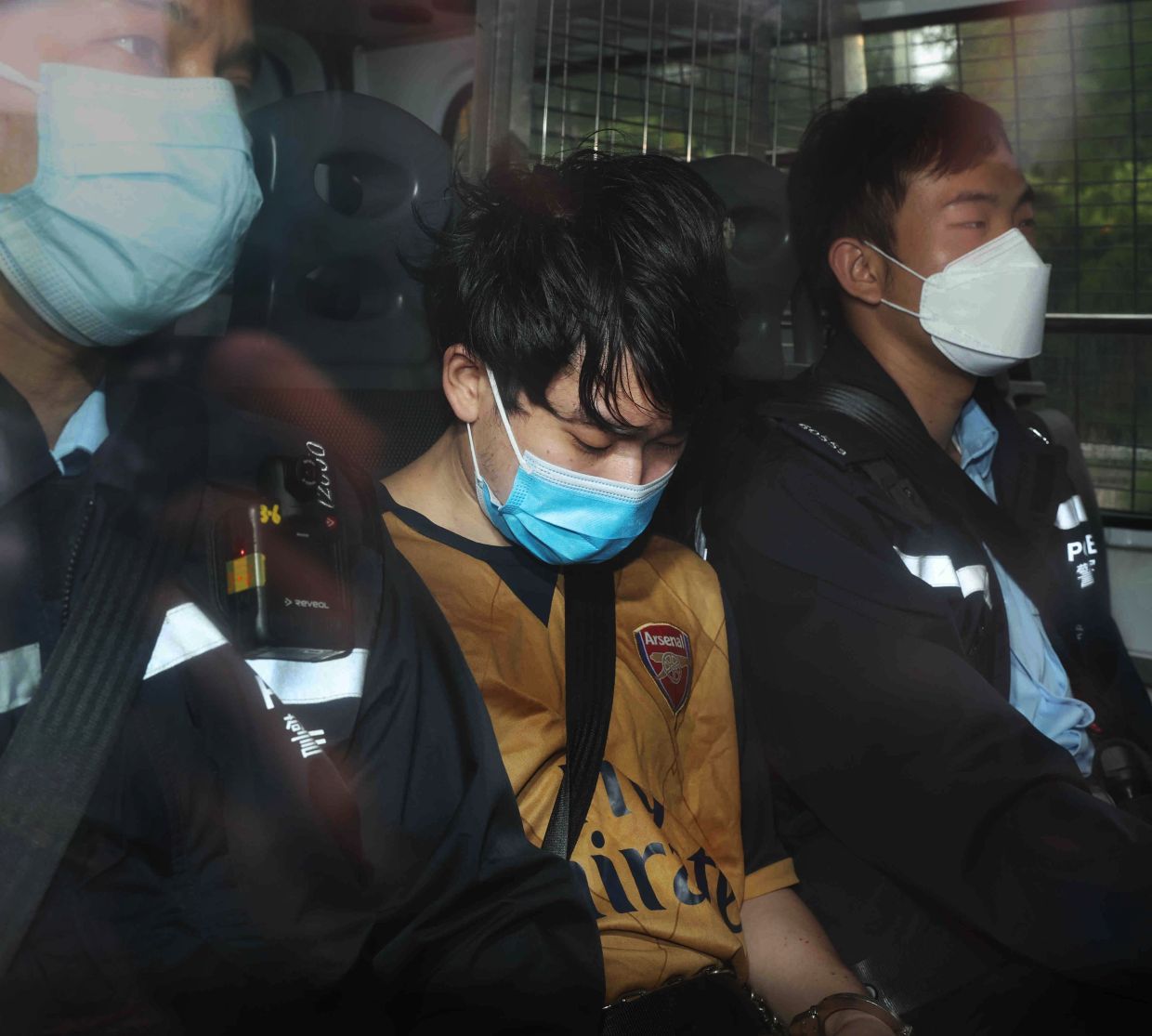
A 29-year-old jobless man is defending himself against murder charges in Hong Kong's High Court after the death of his 30-year-old girlfriend four years ago, offering an explanation that prosecution officials have firmly rejected as implausible. Ng Ka-sing stands accused of killing Yip Tsz-ching at their 700 square foot apartment in Galore Garden in Hung Shui Kiu over the nights of April 28 and 29, 2022, in what prosecutors describe as a deliberate and brutal killing. The case has drawn attention not only for the serious allegations but for the defendant's extraordinary claims about how the fatal injuries occurred, presenting the court with what prosecutors argue is an attempt to minimise culpability through an implausible narrative.
Ng's version of events, as outlined during police interviews and presented to the court, centres on a misguided attempt to assist his partner in weight loss through sleep deprivation. According to his account, he struck Yip repeatedly with a rod over several hours spanning the nights of April 27 and 28, beginning around 10 p.m. on April 27 and continuing intermittently until the early morning hours of April 28. He claimed these actions were intended to keep her awake, based on a belief that preventing sleep would facilitate weight loss. The defendant maintained that when he asked whether he should cease striking her, a woman living in the flat—identified as his sworn sister—urged him to continue, a detail that has become crucial in assessing whether others present bore responsibility for failing to intervene.
Senior public prosecutor Audrey Parwani has directly challenged the coherence of Ng's account, stating that the prosecution cannot accept his explanation as truthful in its entirety. The gaps and inconsistencies in his narrative form a central pillar of the Crown's case, with forensic and medical evidence painting a picture substantially at odds with Ng's claims of accidental harm. Parwani informed the seven-member jury during her opening statement that the evidence would demonstrate premeditation and brutality rather than a misguided weight-loss scheme that spiralled out of control.
The physical evidence reveals the extent of Yip's injuries with stark clarity. Government pathologist Dr Foo Ka-chung determined that the cause of death was suffocation following head injuries sustained through blunt force trauma, combined with extensive chemical burns covering 55 per cent of her body. These burns were consistent with exposure to drain cleaner, a substance found at the apartment. Ng's explanation that Yip poured the corrosive liquid on herself while he merely splashed it on the floor to stimulate her feet strains credibility, particularly given the distribution and severity of the chemical injuries documented by the pathologist.
The timeline of events adds further complexity to the case. Ng allegedly continued his assault intermittently—between 10 p.m. on April 27 and 1.30 a.m. on April 28, then again between 3 a.m. and 5.30 a.m. on April 28. According to his statement to police, he sustained this pattern because Yip did not explicitly tell him to stop, a rationalisation that appears to underscore either a profound disconnect from reality or a calculated attempt to deflect responsibility. The court has heard that around 5 a.m. on April 28, Yip informed Ng that she was experiencing pain and doubted her survival. She subsequently fell into a coma and spoke for the last time at 7.21 a.m., passing away within hours.
The discovery of her body occurred when early morning joggers observed a human leg protruding from a rolled quilt loaded onto a wheelboard at approximately 6 a.m. on April 29. Ng was transporting the body along Tin Ha Road, having wrapped it in multiple layers of plastic film and a quilt. The manner in which the body had been wrapped and secured—including the victim's head being encased in cling film and adhesive tape, her body tied to an overturned wooden chair with black rubbish bags—speaks to deliberate concealment rather than panic or confusion. Forensic evidence specialist Lo Man-hung documented these details during the court proceedings, establishing the care taken to obscure the body from discovery.
Witnesses to the discovery presented a picture of Ng's demeanour that contradicts any narrative of anguish or remorse. Jogger Lau Kwok-yan, who first spotted the remains and reported the matter to police, testified that Ng stood on the street doing nothing while awaiting police arrival, appearing calm rather than distressed or panicked. Street cleaner Wong Ah-sum recounted questioning Ng about what he was transporting, to which the defendant responded matter-of-factly that it was a corpse and that he intended to take it to a police station—a statement that suggests awareness of wrongdoing and a desire to fabricate a pretext for his actions.
When arrested at 6.36 a.m., Ng's statement to officers was more direct than the elaborate explanation he later constructed. He told police: "This was my girlfriend. I hit her to death with a rod by mistake." This initial confession, though framed as accidental, acknowledges the fundamental fact of lethal violence, yet the subsequent embellishment of the narrative with claims about weight loss and sleep deprivation has prompted prosecutors to suspect a deliberate attempt to recharacterise intentional violence as a tragic miscalculation. The progression from this stark admission to the more elaborate account raises questions about the reliability of his entire statement to authorities.
Ng had previously offered to plead guilty to manslaughter, a considerably lesser charge than murder, but prosecutors rejected this overture. The decision to proceed with a full murder trial reflects confidence in the strength of the evidence and a determination to have a jury assess whether the killing was premeditated or reckless murder rather than an unintended consequence of a bizarre intervention. Government pathologist Dr Foo Ka-chung's finding that Yip had been deceased for 12 to 24 hours at the time of discovery, combined with his catalogue of multiple bruises, abrasions, and lacerations consistent with blunt force trauma including punching and kicking, suggests violence of an intensity difficult to reconcile with Ng's characterisation of events.
The case carries broader implications for Hong Kong's legal system regarding how courts assess the credibility of defendants who present narratives that strain plausibility. The trial before Mrs Justice Judianna Barnes is expected to span 18 days, affording prosecution and defence substantial opportunity to present evidence and argument. For Malaysian and regional observers, the case underscores the importance of forensic rigour and witness testimony in cases where a defendant's account contradicts physical evidence. The jury will ultimately determine whether Ng's explanation represents a genuine attempt to clarify a tragic accident or a constructed narrative designed to obscure intentional violence, a distinction that carries profound consequences for both justice and the victim's memory.

