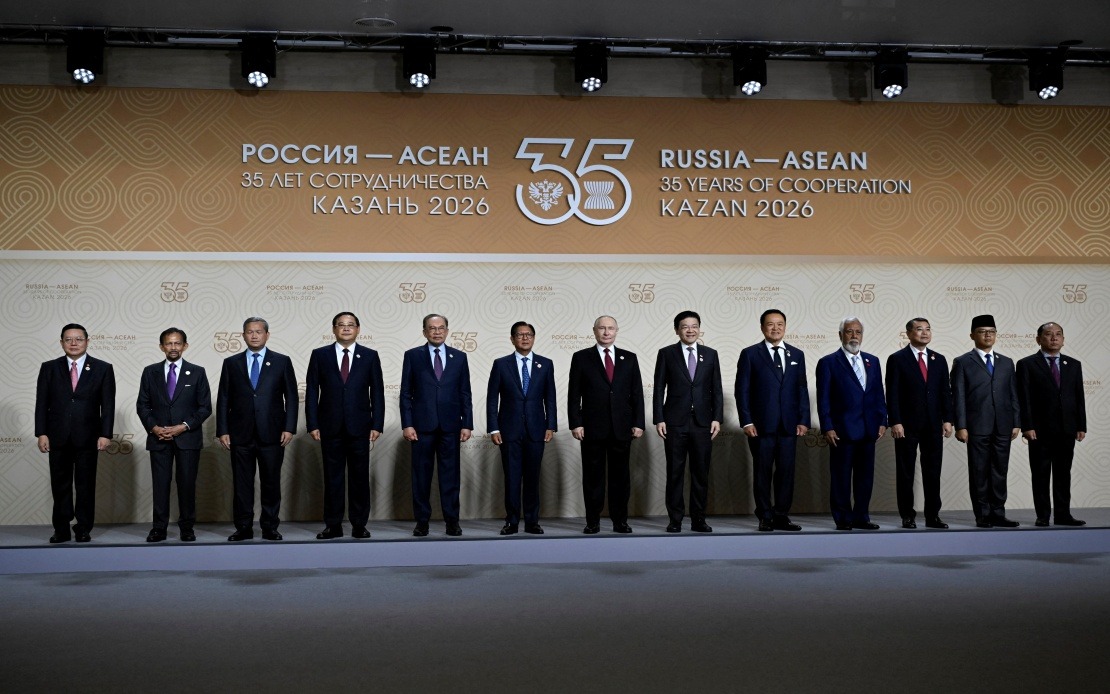
Philippine President Ferdinand R. Marcos Jr has publicly advocated for revitalizing the relationship between ASEAN and Russia, particularly through collaboration in cutting-edge industries that represent a departure from established trade patterns. Speaking after attending the ASEAN-Russia Commemorative Summit in Kazan, Marcos outlined a vision for the regional bloc to expand its engagement with Moscow across technology, artificial intelligence, data infrastructure, and renewable energy—sectors that barely existed when bilateral ties first formed three decades ago.
The backdrop to Marcos's remarks is instructive for understanding the current phase of Southeast Asian diplomacy. While ASEAN-Russia relations have existed formally for over 35 years, progress has been uneven and measured. Marcos acknowledged this candidly, noting that although the partnership has developed incrementally, it has not accelerated to the pace one might expect given geographic proximity and shared interests in regional stability. The variation across ASEAN member states further complicates the picture: some nations have cultivated substantially deeper ties with Moscow than others, reflecting differing strategic priorities and historical legacies within the association.
What distinguishes Marcos's framing is his emphasis on structural transformation in ASEAN's strategic orientation. He characterized the regional bloc as "growing up fast" in its capacity to diversify external partnerships beyond traditional Cold War-era alignments. This language signals recognition that ASEAN is no longer constrained by the binary frameworks that shaped earlier decades. Instead, member states are increasingly comfortable pursuing parallel engagement with multiple powers across different domains. For Malaysia and other regional players, this flexibility offers genuine strategic latitude—the ability to benefit from Russian expertise in specific sectors without committing to comprehensive political realignment.
The technology and energy sectors Marcos highlighted carry particular significance for Southeast Asia's development trajectory. Artificial intelligence, data centre infrastructure, and power generation are not peripheral concerns but central to the region's economic competitiveness and energy security. Russia possesses considerable technical capacity in these domains, particularly in energy systems and computational infrastructure. A structured partnership could help ASEAN nations reduce technological dependency on any single source while accessing Russian knowledge in fields where it maintains genuine competitive advantage. For Malaysian stakeholders in particular, closer ASEAN-Russia cooperation in these areas might diversify supply chains and investment sources.
Marcos's observation that these opportunities "simply did not exist" in the past illuminates a crucial aspect of evolving great power competition in Asia. The emergence of AI and data centres as strategic assets has redrawn the map of international cooperation. Unlike traditional sectors where established hierarchies persist, these newer domains remain contested and fluid. ASEAN's positioning in these spaces is still forming, offering a window for Russia to establish itself as a meaningful technology partner rather than remaining confined to energy and defence relationships.
The Kazan summit's formal outcomes reinforce this direction. The adoption of the Kazan Declaration 2026 and the ASEAN-Russia Comprehensive Plan of Action for 2026–2030 provide institutional scaffolding for deepened engagement. These frameworks are significant because they commit participating nations to concrete deliverables and timelines, moving beyond rhetorical support for cooperation. The inclusion of culture and energy in the joint documents suggests a holistic approach to partnership—one that recognizes both soft power dimensions and hard infrastructure needs. For ASEAN members, these instruments create diplomatic momentum and legitimate channels for exploring expanded ties without triggering concerns about strategic alignment.
Marcos's characterization of this phase as a "new day" reflects broader shifts in Southeast Asian positioning. The region has demonstrably grown more assertive in managing great power competition rather than simply acquiescing to it. ASEAN nations increasingly set their own terms of engagement with external actors, demanding partnerships that serve regional interests rather than distant agendas. Russia, having faced Western sanctions and strategic isolation, possesses incentive to offer terms attractive to Southeast Asian partners. This creates genuine space for mutually beneficial arrangements.
However, the diplomatic positioning carries underlying complexities that Malaysian and other regional observers should appreciate. ASEAN-Russia cooperation in advanced technology domains will inevitably intersect with competition between Russia and Western powers. Data centre development, for instance, sits at the intersection of technological capability, cybersecurity concerns, and geopolitical alignment. Nations hosting such infrastructure must carefully calibrate arrangements to maintain operational independence and protect sensitive information. Similarly, energy cooperation may involve liquefied natural gas procurement, renewable energy development, or nuclear technology—each carrying distinct implications for energy independence and strategic flexibility.
Marcos's framing also acknowledges variation within ASEAN, recognizing that some member states will move further down this path than others. This differentiated approach reflects pragmatic acceptance that ASEAN functions through consensus-building among diverse economies with distinct interests. Thailand, Vietnam, Indonesia, and the Philippines each maintain distinct historical relationships with Russia and varying capacity for technological integration. Rather than pushing for bloc-wide uniformity, Marcos appears to advocate for individual member state autonomy to deepen ties where opportunities align with national development priorities.
The timing of this initiative merits consideration within the broader context of ASEAN's external relations. As the regional grouping navigates tensions in the South China Sea, competing great power interests, and divergent development trajectories, diversified partnerships serve strategic value. Engaging Russia in technology and energy cooperation provides alternative pathways for development finance, technical expertise, and market access. This diversification reduces ASEAN's vulnerability to pressure from any single external actor while expanding the toolkit available for addressing development challenges.
For Malaysia specifically, the expansion of ASEAN-Russia cooperation in these sectors presents both opportunities and strategic considerations. Malaysia's own technology ambitions, renewable energy targets, and infrastructure development plans could benefit from expanded Russian engagement through ASEAN frameworks. However, such expansion requires careful attention to sovereignty concerns, technological security, and alignment with Malaysia's own foreign policy principles. The ASEAN framework provides diplomatic cover and institutional mechanisms for managing these dynamics transparently.
Looking ahead, the next three to five years will test whether the Kazan summit's commitments translate into substantive cooperation or remain largely symbolic. Success will depend on Russia's ability to offer technology transfers and partnerships that genuinely enhance ASEAN capabilities rather than simply extracting resource concessions. It will also require ASEAN members to coordinate sufficiently to maintain negotiating leverage while respecting individual member state autonomy. For regional observers, the trajectory of ASEAN-Russia cooperation offers insights into how Southeast Asian nations are actively reshaping their external engagement patterns in response to shifting global dynamics.