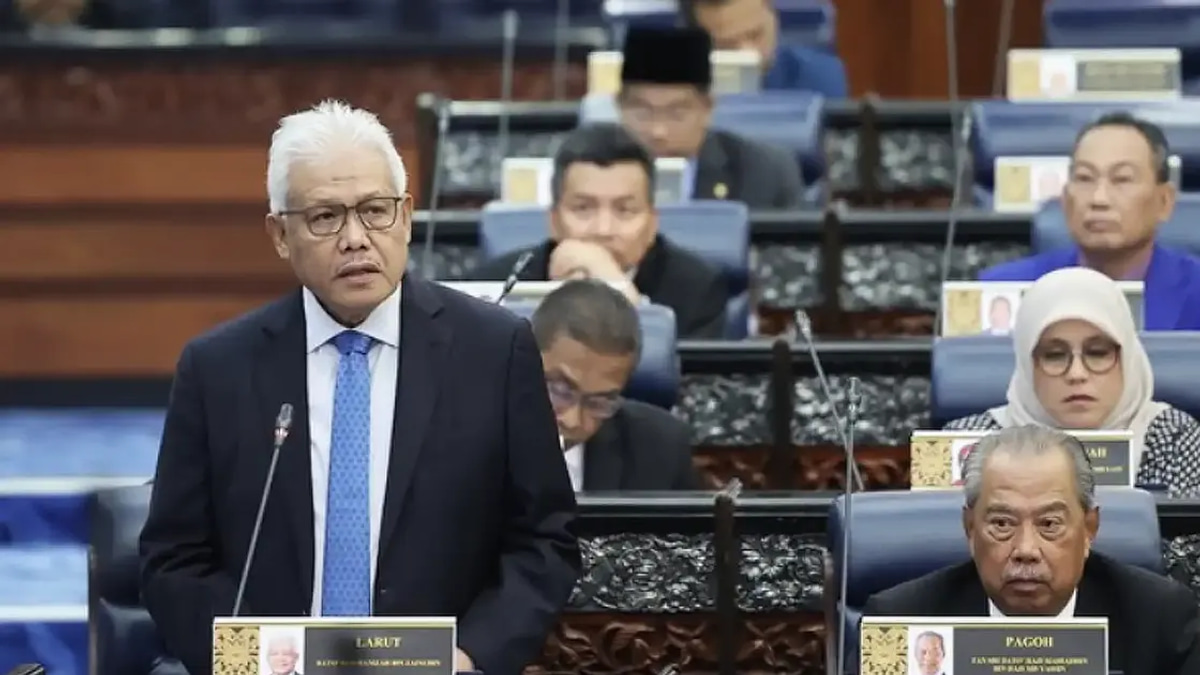
Prime Minister Anwar Ibrahim has appealed to Malaysians to move beyond the divisive and inflammatory rhetoric being propagated by certain political leaders, positioning the country's multi-ethnic composition as a fundamental pillar of national resilience and progress.
The Prime Minister's message underscores a persistent tension within Malaysian politics, where periodic attempts by some figures to exploit communal sensitivities have threatened social cohesion. By framing ethnic and religious diversity not as a liability but as a competitive advantage, Anwar has sought to reorient the national conversation towards unity and shared prosperity, challenging what he views as destructive patterns of political discourse.
Malaysia's demographic tapestry—encompassing Malay Muslims, Chinese, Indians, indigenous communities, and numerous religious groups—has historically been presented by national leaders as emblematic of the country's resilience during periods of challenge. Yet this narrative frequently competes with zero-sum political framing that positions communities as rivals for scarce resources or political power. The Prime Minister's emphasis on diversity as strength represents a deliberate counter-narrative to such divisive approaches.
The appeal comes amid a broader context of electoral competition and shifting political coalitions in Malaysia, where appeals to ethnic or religious grievance have occasionally surfaced as mobilisation tools. Such rhetoric, regardless of which political faction deploys it, risks corroding the delicate social compact that has underpinned relative stability across decades. Anwar's intervention signals concern about the normalisation of such discourse within political circles.
For Malaysian businesses and investors, narratives centred on social fragmentation create uncertainty and constrain economic confidence. Companies operating across the region depend on stable operating environments where contract enforcement, property rights, and labour market access are predictable. Political messaging that suggests communal conflict undermines the climate essential for sustained investment, particularly foreign direct investment and regional corporate expansion.
Regionally, Malaysia's standing within ASEAN and beyond rests partly on its image as a functioning multi-community state navigating diversity without sustained conflict. Persistent internal messaging emphasising ethnic division weakens Malaysia's soft power and its ability to position itself as a model for inclusive governance within Southeast Asia. This has implications for bilateral relations, trade arrangements, and Malaysia's influence within regional institutions.
The Prime Minister's framing of diversity as strength also speaks to demographic and economic realities. Malaysia's position as a major regional economy depends on harnessing talent and innovation across all communities. When political leaders resort to rhetoric that alienates or marginalises particular groups, they constrain the human capital available for economic participation, innovation, and entrepreneurship. The country's capacity to remain competitive in an increasingly knowledge-intensive regional economy depends on broad-based participation.
Educational and professional advancement have increasingly crossed ethnic lines in Malaysia, creating a generation of Malaysians whose identities and loyalties are shaped as much by economic interest and professional affiliation as by communal ties. Yet political messaging premised on communal antagonism risks reversing these trends by incentivising retreat into ethnic silos and reinforcing zero-sum calculations about group advantage.
The appeal also carries implications for how Malaysia manages disputes around affirmative action policies, language, religion, and representation—perennial sources of tension. Anwar's emphasis on unity does not erase legitimate divergence in how different communities view these issues, but it potentially creates space for negotiation and compromise rather than hardened positional bargaining premised on tribal allegiance.
Institutional health and rule of law depend partly on political elites modelling restraint and demonstrating commitment to constitutional norms over factional advantage. When leaders resort to inflammatory communal rhetoric, they signal to supporters that norm violation is justified by perceived threats from other groups. Over time, this degrades institutional capacity and rule-based governance, creating cycles of retaliation and counter-retaliation.
The challenge for Anwar lies in translating rhetorical appeals into concrete policies and institutional arrangements that demonstrably benefit all communities and reduce zero-sum perceptions about resource distribution. Without substantive governance outcomes that validate the diversity-as-strength narrative, the appeal risks remaining aspirational rather than transformative.
Going forward, sustained attention to inclusive growth, equitable access to education and economic opportunity, and transparent governance across all communities will be essential for anchoring Anwar's vision. The Prime Minister's call represents an important reassertion of integrative values within Malaysian political discourse, yet its durability will depend on whether it translates into institutional practices and measurable improvements in lived experience across Malaysia's diverse population.