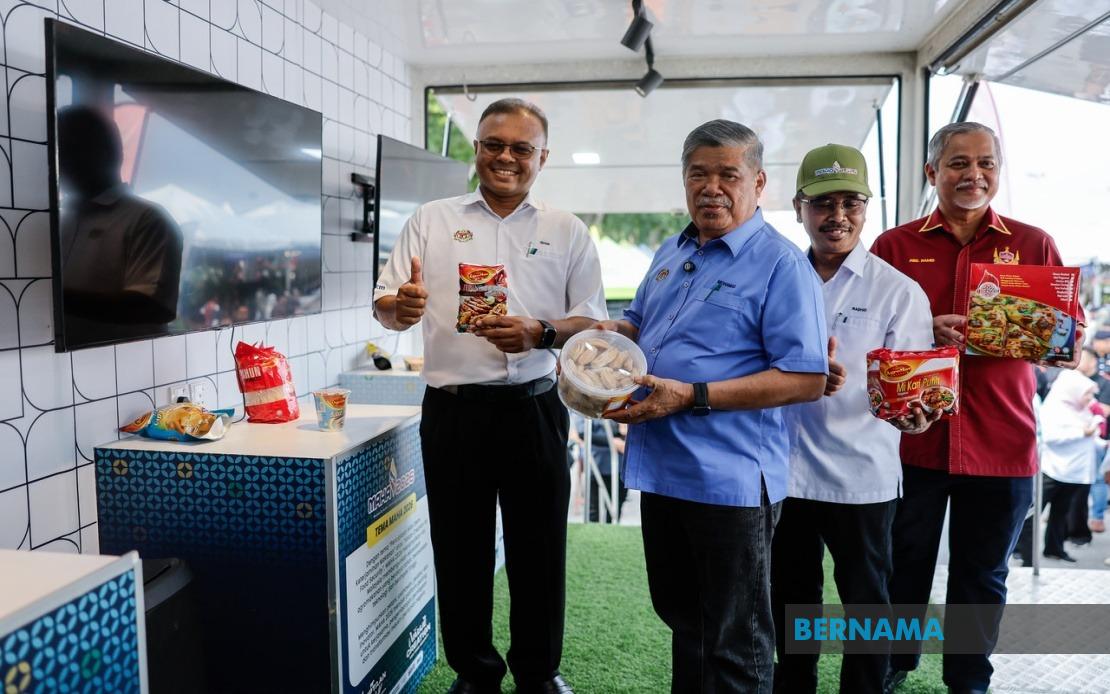
The Malaysia Agriculture, Horticulture and Agrotourism Show (MAHA) 2026 is poised to transform into a truly international event, with Agriculture and Food Security Minister Datuk Seri Mohamad Sabu announcing unprecedented foreign participation that promises to reshape how local farmers and agribusinesses engage with global counterparts. The biennial showcase, traditionally a domestic platform celebrating Malaysian agricultural prowess, will now welcome exhibitors from Brazil, China, the United States, Japan, South Korea, Hungary and China's Guangxi region, marking the first time the event has opened its doors to international participants on such a scale.
The inclusion of these nations represents a deliberate strategy to position MAHA as a regional hub for agricultural innovation and trade. By bringing together competitors and potential partners from diverse agricultural landscapes, organisers aim to create an environment where knowledge transfer and business opportunities flourish naturally. The participating countries span multiple continents and climates, from tropical agricultural powerhouses like Brazil to the temperate farming zones of Central Europe and East Asia, ensuring that Malaysian participants encounter a comprehensive cross-section of global farming practices and technologies.
Uzbeskistan has also signalled its intention to participate, though several other nations remain in discussions about attendance, suggesting the final exhibitor roster could expand further. This diplomatic and commercial achievement underscores growing international recognition of MAHA's significance within Asia-Pacific agricultural circles. For Malaysian farmers and agribusiness operators accustomed to competing primarily within domestic and regional ASEAN markets, the prospect of direct exposure to international standards and innovations carries profound implications for competitiveness and modernisation.
According to Datuk Isham Ishak, secretary-general of the Agriculture and Food Security Ministry, the foreign presence will fundamentally alter the knowledge ecosystem at MAHA. Participants will gain access to cutting-edge agricultural technologies and methodologies that global leaders employ to maximise yields, reduce waste and adapt to climate variability. This knowledge transfer mechanism operates bidirectionally, with local exhibitors similarly positioned to showcase Malaysian innovations in tropical agriculture, sustainable farming practices and value-added food processing that have been refined over decades of operating in Southeast Asian conditions.
A particularly valuable dimension involves the structured business matching sessions that organisers intend to orchestrate throughout the event. These formal networking mechanisms will facilitate direct negotiations between local producers seeking export opportunities and international buyers scouting for reliable supply partners. Conversely, Malaysian participants interested in importing advanced equipment, seeds, breeding stock or processing technology will have unprecedented direct access to foreign suppliers, potentially reducing intermediary costs and accelerating technology adoption cycles that typically characterise agricultural development.
The minister's framing of food security as an interconnected global challenge reflects Malaysia's recognition that domestic agricultural resilience cannot be achieved in isolation. When climate disasters, disease outbreaks or supply chain disruptions affect major food-producing regions, importing countries face immediate vulnerability. By cultivating relationships with international agricultural stakeholders through MAHA, Malaysia can strengthen both formal trade partnerships and informal knowledge networks that prove invaluable during crises. This geopolitical dimension adds strategic weight to what might otherwise appear as a purely commercial exhibition.
Complementing this international expansion, the government simultaneously unveiled the Surveillance and Intervention Supply Demand Agrofood (SISDA) system, a technological infrastructure designed to modernise how Malaysia monitors and responds to food market dynamics. Leveraging artificial intelligence, big data analytics and predictive modelling, SISDA enables policymakers to detect supply vulnerabilities before they trigger price spikes or shortages that disrupt consumers and destabilise farming incomes. The system monitors supply availability, consumer demand patterns and pricing trends across major food categories, generating early warnings that trigger targeted government interventions.
This technological advancement carries direct relevance to MAHA 2026's international dimension. Foreign exhibitors introducing new crop varieties, production techniques or supply chain innovations can be rapidly assessed through SISDA to determine whether they address identified gaps in Malaysia's food supply ecosystem. Rather than adopting foreign agricultural solutions through ad-hoc purchasing decisions, policymakers and industry participants can make evidence-based choices grounded in comprehensive understanding of domestic requirements and constraints. This creates a more strategic framework for technology transfer and market integration.
For Malaysian farmers and agricultural entrepreneurs, MAHA 2026 represents a critical inflection point. Smallholder producers dominate Malaysian agriculture, and many operate with limited exposure to international best practices or global market standards. The exhibition provides an accessible venue for these producers to benchmark their operations against international competitors, identify capability gaps and establish relationships with suppliers of modern inputs. Simultaneously, those operating at commercial scale can identify export-ready technologies and assess whether their current production systems meet international quality assurance and food safety protocols that affluent markets increasingly demand.
The agrotourism component of MAHA has historically emphasised domestic leisure and education tourism, but international participation introduces commercial tourism dimensions as well. Agricultural professionals, investors and industry observers from participating countries will likely attend, creating spillover economic benefits for Selangor and surrounding regions through accommodation, dining and transportation services. This tertiary economic impact extends beyond the exhibition grounds themselves, generating employment and economic activity throughout the host region.
However, the success of this international expansion hinges on quality execution and genuine commercial substance. International exhibitors will evaluate MAHA primarily through the lens of business outcomes: qualifying leads generated, contracts negotiated and follow-up relationships established. If the event devolves into superficial networking without substantive business transactions, foreign participation may decline in subsequent editions. Organisers must therefore ensure that logistics, translation services, business matching facilitation and technical support meet international standards that participants from developed agricultural economies expect.
The timing of this strategic pivot aligns with broader Malaysian government priorities around agricultural modernisation and food security enhancement. Climate variability increasingly threatens traditional Malaysian farming systems, while rapid urbanisation reduces agricultural land availability and rural labour supply. Exposure to international agricultural innovations, demonstrated through MAHA 2026, may accelerate adoption of climate-smart agriculture, precision farming techniques and vertical farming methodologies that enable higher productivity from constrained land and labour resources.
Looking forward, MAHA 2026 promises to establish Malaysia as a meaningful node within international agricultural trade and technology networks. By successfully orchestrating this inaugural international edition, policymakers create momentum for deepening these connections through subsequent biennial events, potentially expanding the exhibitor roster and commercial significance incrementally. For Malaysian agriculture—a sector that contributes substantially to rural livelihoods and national food sovereignty—this internationalisation represents both opportunity and imperative.