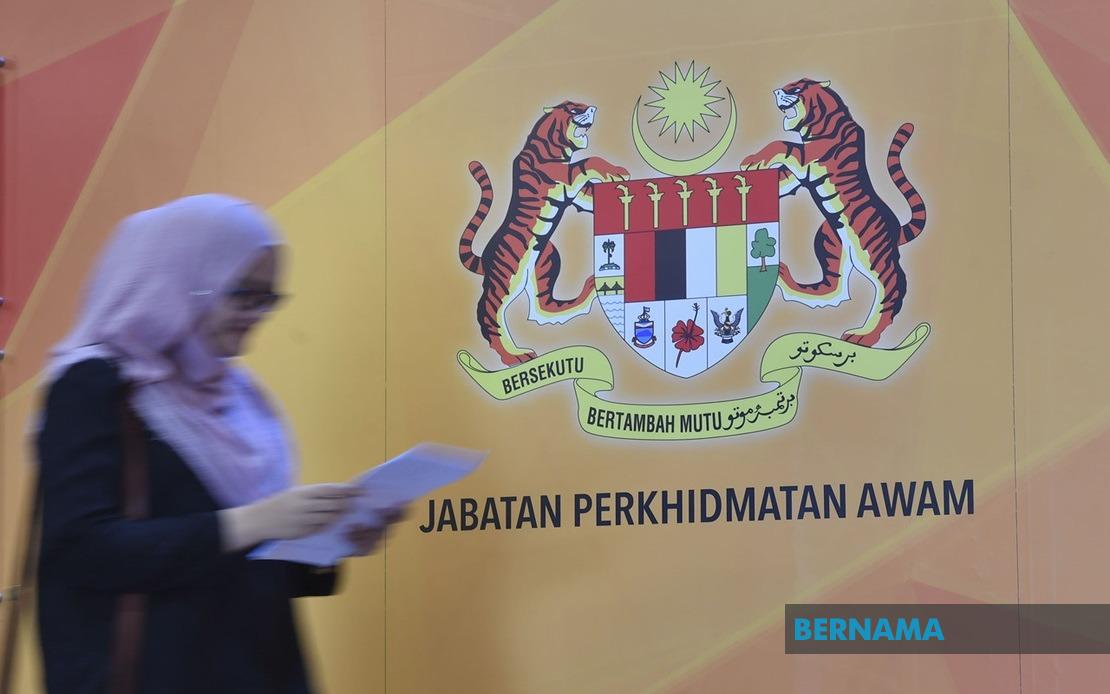
The Public Service Department (JPA) has unveiled a significant educational initiative by opening 640 sponsorship opportunities for students graduating from the Sijil Pelajaran Malaysia (SPM) examination in 2026. This announcement, made in Putrajaya on June 19, underscores the government's ongoing investment in cultivating a skilled and competitive workforce capable of advancing Malaysia's developmental objectives in an increasingly demanding global marketplace.
The timing and scale of this initiative reflect the MADANI Government's strategic priorities around human capital development. By investing in sponsorships for promising secondary school graduates, JPA signals that talent development remains a cornerstone of national planning. These opportunities enable high-achieving students to pursue tertiary education without bearing the full financial burden, thereby widening access to quality higher learning across socioeconomic divides—a particularly important consideration in a country where educational equity remains an ongoing challenge.
The sponsorship programme is structured around four distinct pathways, each serving different strategic objectives. The National Sponsorship Programme provides 30 slots and represents the flagship offering targeting Malaysia's most accomplished students. The Special Programme for Japan, Korea, France and Germany comprises 140 positions, reflecting Malaysia's economic and diplomatic partnerships with these developed nations and the recognition that exposure to advanced tertiary systems in these countries offers particular value. The Special Programme for Domestic SPM Graduates allocates 200 slots to students pursuing qualifications within Malaysia's own higher education institutions, ensuring that national talent development is not solely oriented toward foreign study. The JPA-MARA Special Programme (PKJM) rounds out the offerings with 270 slots, the largest single component, representing a collaborative approach between two major government agencies.
Disciplinary focus areas emphasise fields deemed strategically critical for Malaysia's economic trajectory and competitiveness. Engineering, science, and technology dominate the sponsorship allocation, reflecting the nation's pivot toward knowledge-intensive industries and technological innovation. Social sciences are also included, recognising that sustainable development demands expertise across multiple domains including public administration, economics, and policy analysis. This breadth of coverage suggests a considered approach to developing human capital across interconnected sectors rather than pursuing narrow sectoral priorities.
Geographic diversity of study destinations represents a distinctive feature of these sponsorships. Students have access to leading institutions in the United States, Australia, Japan, South Korea, France, Germany, the United Kingdom, and New Zealand, alongside opportunities within Malaysia itself. This international distribution exposes Malaysian graduates to varied educational philosophies, research methodologies, and professional networks while strengthening Malaysia's educational and cultural ties with key partner nations. For many recipients, studying abroad provides exposure to different approaches to problem-solving and innovation that can enrich their contributions upon return to the Malaysian workforce.
The implementation of the Academic Merit-Based Convertible Loan (PBUA) framework, introduced by JPA in June 2025, introduces an important structural element to these sponsorships. Rather than outright grants, successful applicants receive funding structured as convertible loans, meaning recipients can have portions forgiven based on sustained academic performance and subsequent service conditions. This mechanism incentivises continuous excellence throughout tertiary studies while simultaneously managing fiscal sustainability—sponsorship recipients understand that maintaining high standards directly influences their financial obligations. The convertible component also encourages recipients to consider their post-graduation professional trajectory, as loan forgiveness may depend on contributing to national development priorities.
Access to information about sponsorship outcomes has been streamlined through digital channels. Candidates who submitted applications can verify results online through JPA's designated system between 10 am on the announcement date and 5 pm on June 22, representing a transparent and efficient approach to disseminating information to potentially thousands of applicants. This digital accessibility ensures that students across Malaysia, regardless of geographic location, can access their results simultaneously without geographic disadvantage.
The announcement carries broader implications for Malaysia's competitive positioning in the region and globally. Southeast Asian nations increasingly compete for talent and investment by demonstrating commitment to developing human capital. Singapore and Thailand have established long-standing scholarship programmes that have produced generations of influential professionals. Malaysia's structured approach through JPA's various programmes positions the country similarly, signalling to its own youth and to the international community that merit-based advancement remains viable and that government actively supports talented individuals in achieving their potential.
For successful applicants, these sponsorships represent transformative opportunities extending far beyond financial support. Recipients typically join alumni networks spanning decades, connecting them with influential professionals across government, business, and academia. International study experiences broaden perspectives and networks in ways that domestic education alone cannot replicate, while simultaneously creating bonds between Malaysia and host nations. Many sponsorship recipients subsequently become leaders within their fields, influencing policy and practice across sectors.
The structure of offering 640 slots across four distinct programmes suggests thoughtful segmentation of different student populations and aspirations. High-achievers targeting international prestige pursue the National Sponsorship Programme, while those interested in specific regional partnerships pursue the special programmes for particular countries. Students preferring domestic study or those partnering through MARA have dedicated pathways. This pluralistic approach acknowledges that student populations are heterogeneous with varying goals, financial circumstances, and geographic preferences.
Looking forward, these sponsorship opportunities merit careful consideration by 2026 SPM graduates and their families. The combination of financial support, merit recognition, and access to world-class institutions represents competitive advantage in an increasingly knowledge-based economy. For Malaysia, sustained investment in such programmes contributes to the nation's long-term developmental objectives by ensuring that talent is identified early, nurtured systematically, and retained through opportunities that compete globally for the services and commitment of high-performing individuals.
%22%2F%3E%3C%2Fpattern%3E%3C%2Fdefs%3E%3Crect%20width%3D%22100%25%22%20height%3D%22100%25%22%20fill%3D%22url(%23ph4lm65g)%22%2F%3E%3Crect%20width%3D%22100%25%22%20height%3D%22100%25%22%20fill%3D%22url(%23ph4lm65p)%22%2F%3E%3Ctext%20x%3D%2250%25%22%20y%3D%2250%25%22%20text-anchor%3D%22middle%22%20dominant-baseline%3D%22central%22%20fill%3D%22rgba(255%2C255%2C255%2C0.95)%22%20font-family%3D%22Georgia%2C%20'Times%20New%20Roman'%2C%20serif%22%20font-weight%3D%22700%22%20font-size%3D%22170%22%20letter-spacing%3D%22-0.02em%22%3EMalaysia%3C%2Ftext%3E%3C%2Fsvg%3E)