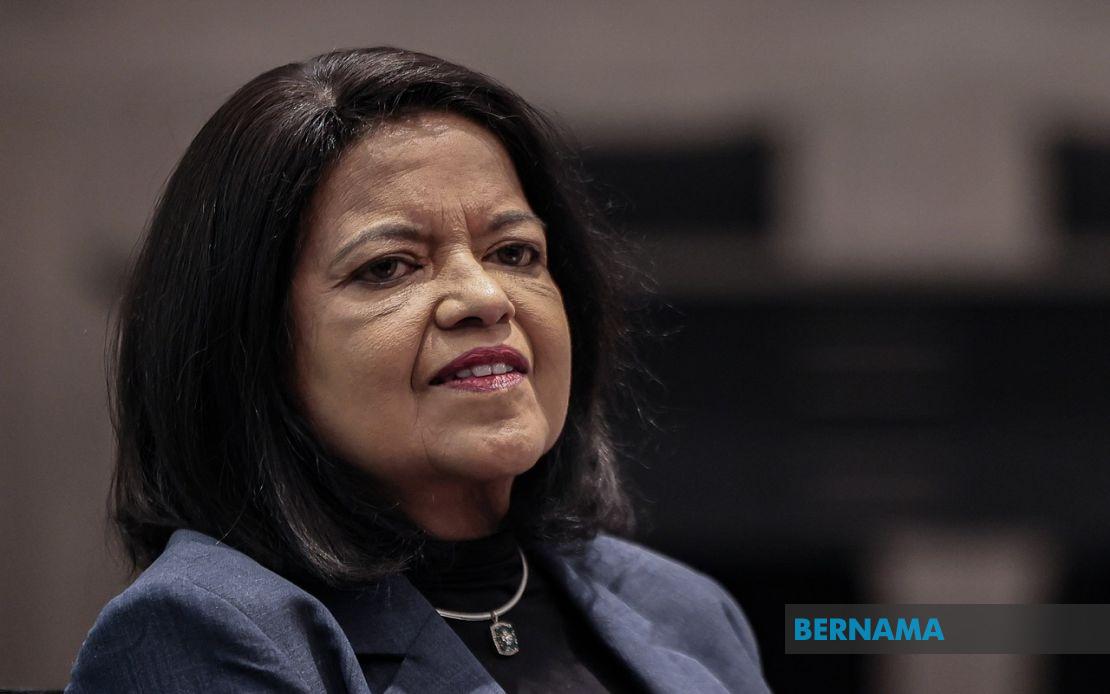
The Malaysian Media Council is preparing to deploy a newly designed verification system during the forthcoming state elections in Johor and Negeri Sembilan, marking the first comprehensive test of its capacity to combat misinformation at scale during high-stakes electoral contests. Tan Sri Nallini Pathmanathan, the MMC's chairperson, outlined the initiative at a media dialogue session held alongside National Journalists' Day celebrations, emphasizing that the proximity of the two elections—scheduled for July 11 and August 1 respectively—provides an invaluable opportunity to identify weaknesses and strengthen the mechanism before it faces broader deployment.
The timing advantage is substantial and strategic. The lessons learned during Johor's electoral campaign can be directly incorporated and refined for Negeri Sembilan's contest just weeks later, creating a natural laboratory for testing how quickly the system responds to emerging falsehoods and how effectively it reaches voters before misleading content takes root. This iterative approach reflects a sophisticated understanding of the digital environment, where misinformation spreads at speeds far exceeding traditional fact-checking processes. By compressing the pilot phase into two consecutive elections, the MMC transforms a potential liability into an experimental advantage.
The initiative itself focuses on a specific and measurable challenge: verifying whether disputed content genuinely originates from established media organizations. This scope deliberately excludes attempts to judge the truthfulness of political claims, manifestos, or campaign rhetoric—a territory where the council recognizes both its limitations and the political sensitivities involved. Instead, the mechanism targets fabricated graphics bearing news outlet logos, doctored screenshots, and forged reports, all common tools of electoral misinformation campaigns. Such synthetic content is particularly pernicious because it borrows the credibility of legitimate news organizations to spread false narratives, effectively weaponizing institutional trust.
The structural architecture distributes responsibilities across multiple agencies in a carefully calibrated division of labor. The MMC itself assumes a neutral coordinating role rather than an adjudicatory one, allowing individual media organizations to verify whether questioned content actually appeared on their platforms. The Election Commission functions as the definitive reference point for procedural and regulatory election matters, ensuring that queries about voting rules or candidate eligibility receive authoritative answers. Bernama, Malaysia's national news agency, becomes the primary conduit for distributing verified information to the public and affiliated outlets, leveraging its established distribution networks and credibility.
Beyond these core players, the initiative incorporates a broader ecosystem of supporting institutions. Content Forum Malaysia specializes in digital platform dynamics and media literacy education. The Department of Community Communications and National Information Dissemination Centres work to ensure that corrections and verified information penetrate local communities, not merely urban online spaces where misinformation often concentrates. The Malaysian Communications and Multimedia Commission remains available to address regulatory violations and coordinate with digital platforms when necessary, providing technical and legal pathways for addressing content that exceeds merely false attribution.
The operational efficiency of the system depends on speed. Consider a hypothetical scenario that Nallini presented: a viral graphic falsely bearing a major news organization's logo claims that a prominent candidate has withdrawn from the race. Under the previous environment, such content could circulate for hours before correction, by which time thousands of voters may have encountered and acted upon the misinformation. Under the new mechanism, the affected media organization can verify within minutes that no such report originated from their newsroom, enabling rapid dissemination of a correction before the false claim achieves saturation within voter networks.
The initiative's emergence reflects a specific technological threat that has evolved dramatically in recent years. Synthetic media—including AI-generated content, deepfakes, and sophisticated manipulations—can be produced with minimal resources and distributed to thousands of users within minutes. Election periods, characterized by heightened emotional engagement and reduced individual verification capacity, create ideal conditions for such content to flourish. Traditional fact-checking, conducted through lengthy investigation processes, cannot hope to match this velocity. By creating institutional pathways for rapid verification, the MMC acknowledges that containment must happen faster than the falsehood's natural spread rate.
Complementing the institutional mechanism, the council is launching a public awareness campaign centered on the phrase "Who Said It? What's The Source?"—taglined in Malay as "Siapa kata? Sos mana?" This campaign deliberately avoids instructing citizens to silence themselves or withdraw from electoral debate. Rather, it invites critical thinking, urging voters to pause before accepting or amplifying claims, particularly those bearing media organization branding. The emphasis on source verification represents a foundational literacy practice; in an environment saturated with competing narratives, the ability to trace information to its origin becomes a primary defense against manipulation.
The campaign's tone is notably inclusive rather than restrictive. Nallini explicitly affirmed citizens' rights to read, debate, and participate vigorously in electoral discourse. The distinction here matters significantly for Malaysian politics: the initiative positions itself as enhancing democratic participation rather than constraining it. By helping voters distinguish authentic reporting from fabricated content, the system theoretically enables more informed engagement, not less. This framing addresses legitimate concerns that misinformation-fighting measures might be weaponized to suppress legitimate political speech—a particular anxiety in Southeast Asian democracies with mixed records on press freedom.
For Malaysian voters and media consumers, the initiative represents an acknowledgment that the information environment has fundamentally changed. The capacity for individuals or coordinated networks to manufacture and distribute convincing-looking media content now exceeds traditional institutional capacity to respond. The MMC's approach—distributed across multiple organizations, focused on specific verifiable claims rather than subjective truth assessments, and transparent about its mechanisms—suggests an evolution in how Malaysia's media institutions and government intend to manage electoral communication. The system's success in these two state elections will likely influence how federal campaigns are managed in future cycles.
The broader implications extend beyond electoral contexts. If the mechanism succeeds in reducing the circulation of fabricated media content during elections, the same institutional coordination could potentially address similar challenges during public health emergencies, economic crises, or security incidents where misinformation carries immediate consequences. The precedent established here—bringing media organizations, government agencies, news distributors, and digital platforms into structured coordination around verification—could reshape how Malaysia addresses information integrity across multiple domains. The success or failure of this pilot will signal whether institutional cooperation can effectively counter digital-era misinformation at scale.