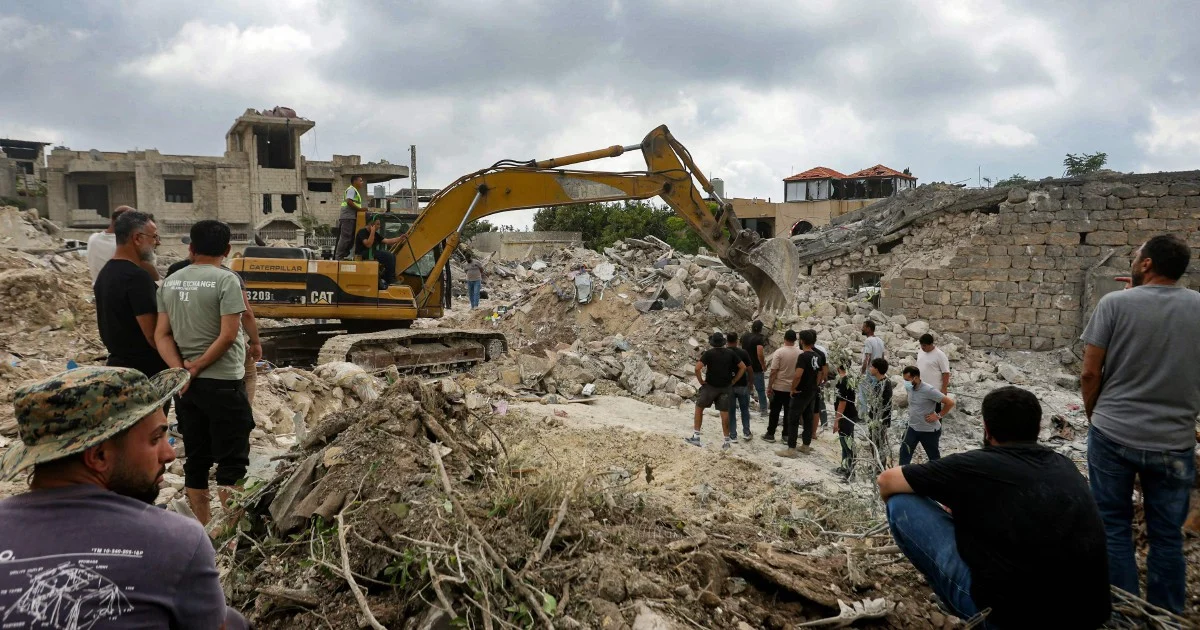
The Lebanese militant group Hezbollah has firmly dismissed any arrangement permitting Israeli military forces to establish a buffer zone within Lebanese territory, marking a significant escalation in the standoff between the two antagonistic parties. Naim Qassem, the organisation's leader, issued his rejection during statements made on Sunday, underscoring Hezbollah's uncompromising position on the question of foreign military presence on Lebanese soil.
This forceful response arrives amid declarations by Israeli Prime Minister Benjamin Netanyahu that his military personnel would maintain their deployment throughout southern Lebanon for whatever duration deemed necessary to safeguard Israeli security interests. The Israeli leader's commitment to an open-ended occupation has proven deeply contentious, drawing sharp rebukes not only from Lebanese actors but from international observers concerned about regional stability.
The disagreement reflects a deeper conflict centred on territorial control and military authority along the Lebanon-Israel border, a region that has experienced repeated cycles of confrontation over several decades. Southern Lebanon has long served as a flashpoint between Israel and various Lebanese factions, particularly Hezbollah, which maintains significant military capacity and political influence within the country.
Hezbollah's rejection carries substantial weight given the organisation's military strength and deep roots within Lebanese society. As both a political party commanding parliamentary seats and an armed faction with thousands of fighters, Hezbollah wields considerable leverage in determining whether any arrangement could gain acceptance among influential Lebanese constituencies. Qassem's statement therefore represents not merely symbolic resistance but a concrete assertion that such zones would face organised opposition.
The concept of a security zone itself remains intensely controversial in Lebanese political discourse. Israel previously established and maintained such zones in southern Lebanon during earlier military campaigns, experiences that remain deeply embedded in Lebanese national memory as periods of occupation and foreign control. Any renewed attempt to formalise such an arrangement would likely encounter widespread resistance across diverse Lebanese groups, transcending Hezbollah's specific objections.
Israel's strategic rationale for maintaining troops and establishing defensive perimeters rests fundamentally on the assessment that Hezbollah poses an existential security threat. The Israeli government has characterised the group's military infrastructure, particularly its extensive rocket arsenal, as presenting capabilities that demand prevention through military means. This threat assessment has driven Israeli military operations and strategic planning in the region for years.
Hezbollah's counter-position emphasises Lebanese sovereignty and the right to resist what it characterises as foreign occupation. The organisation frames its military capabilities as defensive measures necessary to counter Israeli military superiority and to deter further incursions. This ideological framework, rooted in resistance narratives that resonate strongly within certain Lebanese constituencies, shapes the organisation's categorical rejection of any security arrangement favouring Israeli interests.
The international dimensions of this dispute cannot be overlooked. Various regional and global powers maintain stakes in Lebanese stability and the broader Israeli-Lebanese relationship. The United States, which provides military support to Israel, has distinct interests from those pursued by Iran, which maintains close ties with Hezbollah. France and other European nations have attempted mediation roles at different junctures, reflecting broader concerns about preventing renewed conflict that could destabilise the eastern Mediterranean.
For Malaysian readers and Southeast Asian observers, this confrontation illuminates how unresolved territorial disputes and security concerns can perpetuate cycles of confrontation when external mediation remains insufficient and direct bilateral dialogue proves inadequate. The apparent intransigence on both sides suggests that diplomatic pathways toward accommodation remain severely constrained, with military positions continuing to harden rather than soften.
The practical implications extend beyond rhetoric to military posturing and operational readiness. Both sides maintain forces positioned to resist or advance their respective objectives, creating an environment where miscalculation or escalation remains an enduring risk. The presence of Israeli troops operating within Lebanese territory without formal international agreement or recognised Lebanese governmental approval creates persistent friction points that could trigger broader conflict.
Regional stability depends substantially on whether parties can negotiate frameworks acceptable to both sides, but Hezbollah's unequivocal rejection suggests such consensus remains distant. Lebanon's broader political challenges—chronic institutional dysfunction, economic collapse, and competing power centres—further complicate possibilities for coherent national negotiating positions that could encompass compromises.
The standoff also reflects how security concerns, legitimate or perceived, can justify military actions that others view as provocative or illegitimate. Netanyahu's commitment to indefinite military presence addresses Israeli security anxieties but simultaneously generates Lebanese nationalist resistance, creating a dynamic wherein security for one side produces insecurity for the other. Breaking such cycles typically requires either overwhelming military victory, which appears unlikely here, or genuine diplomatic breakthroughs incorporating mutual security arrangements—arrangements currently appearing unattainable given the parties' fundamentally opposed positions.
%22%2F%3E%3C%2Fpattern%3E%3C%2Fdefs%3E%3Crect%20width%3D%22100%25%22%20height%3D%22100%25%22%20fill%3D%22url(%23ph4tyccg)%22%2F%3E%3Crect%20width%3D%22100%25%22%20height%3D%22100%25%22%20fill%3D%22url(%23ph4tyccp)%22%2F%3E%3Ctext%20x%3D%2250%25%22%20y%3D%2250%25%22%20text-anchor%3D%22middle%22%20dominant-baseline%3D%22central%22%20fill%3D%22rgba(255%2C255%2C255%2C0.95)%22%20font-family%3D%22Georgia%2C%20'Times%20New%20Roman'%2C%20serif%22%20font-weight%3D%22700%22%20font-size%3D%22170%22%20letter-spacing%3D%22-0.02em%22%3EFracture%3C%2Ftext%3E%3C%2Fsvg%3E)