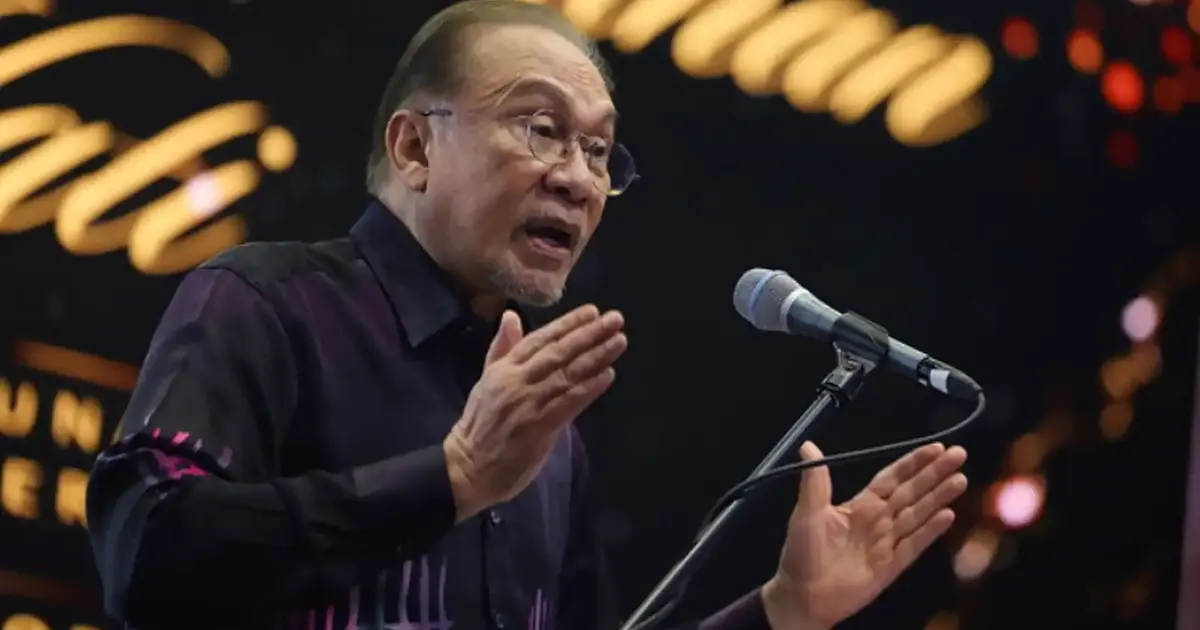
Prime Minister Anwar Ibrahim has made an impassioned appeal to Malaysians to transcend the divisive and inflammatory rhetoric being propagated by particular political leaders, positioning the country's ethnic and cultural diversity as a defining strength rather than a source of friction. In his remarks, Anwar emphasised that fostering national cohesion requires citizens to consciously reject the polarising messaging that has become increasingly prevalent in Malaysia's political discourse.
The Prime Minister's statement arrives at a moment of heightened political tensions within Malaysia, where competitive posturing among various factions has frequently involved appeals to ethnic and religious grievances. By calling on the population to rise above such divisive messaging, Anwar is attempting to steer the national conversation toward a more inclusive vision of Malaysian identity. His intervention suggests growing concern within the government about the corrosive effects of hate-driven political narratives on social stability and national unity.
Anwar's emphasis on Malaysia's ethnic diversity reflects a deliberate rhetorical strategy designed to reframe multiculturalism from a potential flashpoint into a competitive advantage. Rather than treating the coexistence of Malays, Chinese, Indians, and other communities as an inherent source of instability requiring management, he presents it as a tangible benefit that distinguishes Malaysia in the region. This framing positions those who exploit ethnic divisions as acting against the nation's interests.
The Prime Minister's words carry particular weight given Malaysia's historical experience with ethnic tensions and periodic outbursts of communal violence. The social contract established at independence was premised on a delicate balance of accommodation between Malaysia's various communities, though this balance has been repeatedly tested over subsequent decades. Anwar's contemporary appeal to unity thus resonates with established constitutional principles while addressing present-day challenges.
In the Southeast Asian context, Malaysia's multicultural model has long been viewed as a significant regional asset, differentiating it from neighbouring nations and attracting international investment and talent. The Prime Minister's defence of this model implicitly argues that departing from it through the adoption of divisive politics would undermine Malaysia's competitive positioning in an increasingly globalised economy. For Malaysian business leaders and policymakers concerned with maintaining investor confidence and economic stability, Anwar's stance offers reassurance about the government's commitment to social equilibrium.
The challenge for Anwar lies in translating his rhetorical appeal into concrete political action. While calling on citizens to reject divisive messaging is symbolically important, the persistence of such messaging among various political actors suggests deep structural incentives for politicians to mobilise supporters along ethnic and religious lines. Without corresponding changes to the political incentive structures that reward polarisation, exhortations to unity risk appearing hollow to sceptical observers.
Opposition to Anwar's message may come from multiple quarters, including politicians who have invested heavily in mobilising ethnic constituencies and activists who view explicit advocacy for particular group interests as legitimate political expression. The tension between Anwar's call for transcendence and the more combative approach adopted by various political competitors will likely define much of Malaysian politics in coming months. This ideological disagreement about the proper role of ethnic appeals in democratic politics remains largely unresolved in Malaysian public discourse.
For ordinary Malaysians navigating daily life in an ethnically mixed society, Anwar's message may resonate particularly strongly, as many citizens demonstrate through their conduct that functional multiculturalism remains possible despite political tensions. Workplaces, schools, neighbourhoods, and informal networks across the country continue to function on bases of mutual respect and practical cooperation, suggesting that popular appetite for divisive politics exists alongside substantial grassroots commitment to coexistence.
The international dimension of Anwar's message should not be overlooked. Malaysia's economic relationships with countries across the Muslim world, East Asia, and the West are facilitated by its reputation as a tolerant, multiethnic democracy. Perceptions abroad of increasing ethno-religious polarisation could affect foreign investment decisions, tourism flows, and Malaysia's soft power positioning. By publicly defending pluralism, Anwar is also projecting an image of Malaysia as a stable and principled nation worthy of confidence from international partners.
Moving forward, the sustainability of Anwar's message depends on whether political competition can be channelled toward programmatic and ideological differences rather than ethnic mobilisation. This would require all major political parties to exercise discipline in their rhetoric and resist the temptation to exploit communal grievances, even when doing so might yield short-term electoral advantages. Whether Malaysia's fractious political environment can accommodate such restraint remains an open question that will test the resilience of the nation's multicultural social contract.
%22%2F%3E%3C%2Fpattern%3E%3C%2Fdefs%3E%3Crect%20width%3D%22100%25%22%20height%3D%22100%25%22%20fill%3D%22url(%23ph25mefg)%22%2F%3E%3Crect%20width%3D%22100%25%22%20height%3D%22100%25%22%20fill%3D%22url(%23ph25mefp)%22%2F%3E%3Ctext%20x%3D%2250%25%22%20y%3D%2250%25%22%20text-anchor%3D%22middle%22%20dominant-baseline%3D%22central%22%20fill%3D%22rgba(255%2C255%2C255%2C0.95)%22%20font-family%3D%22Georgia%2C%20'Times%20New%20Roman'%2C%20serif%22%20font-weight%3D%22700%22%20font-size%3D%22226%22%20letter-spacing%3D%22-0.02em%22%3ESultan%3C%2Ftext%3E%3C%2Fsvg%3E)

%22%2F%3E%3C%2Fpattern%3E%3C%2Fdefs%3E%3Crect%20width%3D%22100%25%22%20height%3D%22100%25%22%20fill%3D%22url(%23ph17rgmg)%22%2F%3E%3Crect%20width%3D%22100%25%22%20height%3D%22100%25%22%20fill%3D%22url(%23ph17rgmp)%22%2F%3E%3Ctext%20x%3D%2250%25%22%20y%3D%2250%25%22%20text-anchor%3D%22middle%22%20dominant-baseline%3D%22central%22%20fill%3D%22rgba(255%2C255%2C255%2C0.95)%22%20font-family%3D%22Georgia%2C%20'Times%20New%20Roman'%2C%20serif%22%20font-weight%3D%22700%22%20font-size%3D%22320%22%20letter-spacing%3D%22-0.02em%22%3EPM%3C%2Ftext%3E%3C%2Fsvg%3E)