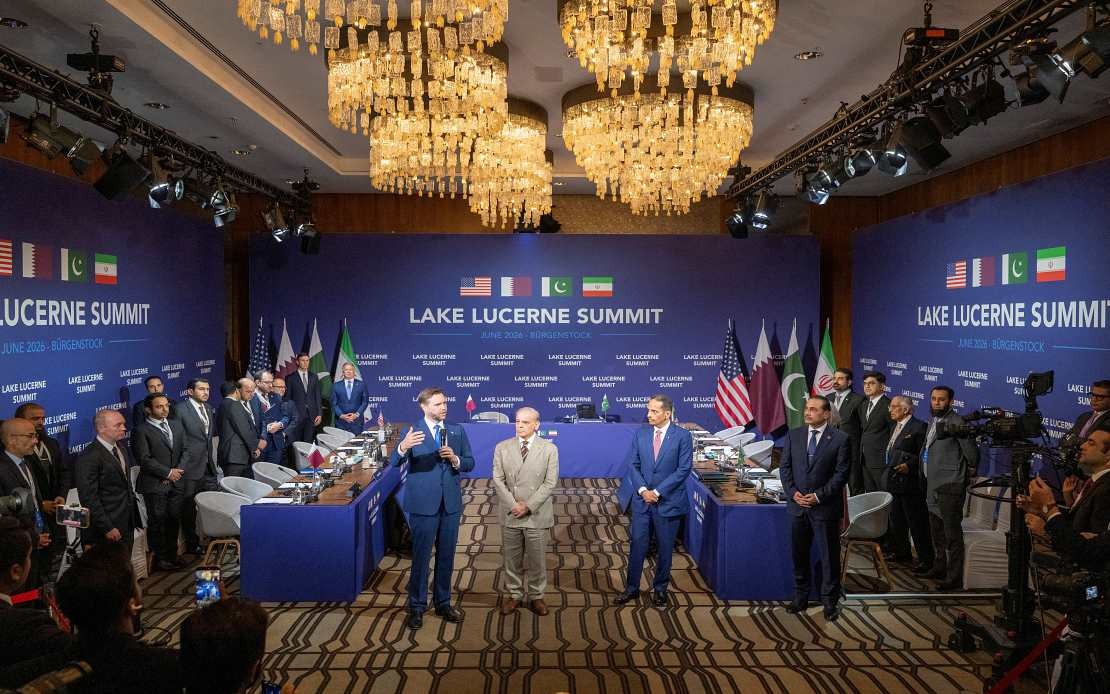
Diplomatic efforts between the United States and Iran have entered a new phase of momentum following the opening session of talks at the Lake Lucerne Summit in Switzerland, with Qatar and Pakistan announcing substantial headway in their mediation role. The two Gulf and South Asian nations, which have served as key intermediaries in the protracted dispute, characterised the initial discussions as occurring within a constructive framework that has yielded tangible structural outcomes for advancing the process. This development marks a critical juncture in one of the region's most consequential diplomatic standoffs, with implications rippling across global energy markets, maritime security, and the broader geopolitical balance in the Middle East.
The joint statement released by the mediators underscores the establishment of institutional mechanisms designed to sustain momentum beyond the immediate negotiations. Most significantly, the parties have created a high-level oversight committee tasked with shepherding the political dimensions of the entire mediation architecture. This supervisory body will receive regular briefings from the chief negotiators and maintain purview over specialised technical working groups, representing a hierarchical governance structure intended to ensure coherence between political objectives and detailed implementation planning. The creation of such oversight bodies typically signals that negotiators have moved beyond preliminary posturing toward substantive engagement on core issues.
Among the immediate priorities receiving dedicated technical attention are three interconnected areas that have historically proved contentious. Working groups will focus on the Iranian nuclear programme, addressing both enrichment capabilities and international monitoring frameworks that remain at the heart of international concerns. Simultaneously, another group will tackle the complex labyrinth of economic sanctions, examining which measures might be lifted or suspended in exchange for Iranian compliance with agreed benchmarks. A third group will develop dispute resolution mechanisms designed to provide clarity on how disagreements will be adjudicated should implementation challenges arise, reducing the risk that technical disagreements could derail the broader agreement.
The timeline established during these discussions reflects an attempt to inject urgency into the process. Both parties have agreed to pursue a final comprehensive agreement within a sixty-day window, a compressed schedule that suggests confidence in the negotiating framework but also signals pressure from all sides to reach resolution. This deadline provides a realistic but demanding timeframe for resolving issues that have proven intractable over years of intermittent diplomacy. For Southeast Asian observers, including Malaysia, such timelines carry lessons about the importance of clear deadlines in ensuring that diplomatic processes maintain forward momentum rather than languishing in extended preliminary discussions.
A critical and sometimes overlooked outcome involves the establishment of a dedicated communication channel specifically designed to prevent escalation through accident or miscalculation. The provision addressing safe passage through the Strait of Hormuz represents acknowledgment that military tensions and commercial shipping concerns remain intertwined with the broader nuclear and sanctions issues. The Strait remains one of the world's most critical chokepoints for petroleum transportation, with approximately one-third of seaborne traded oil passing through its waters. Any disruption to navigation in these waters would send shockwaves through global energy prices and supply chains, affecting energy-dependent economies throughout Southeast Asia, including Malaysia and neighbouring countries.
The memorandum of understanding that was signed in the days preceding this summit appears to have provided sufficient scaffolding for parties to move into substantive technical discussions. Rather than remaining locked in positions regarding fundamental principles, the negotiations have shifted toward operationalising agreed frameworks. This represents a meaningful transition in diplomatic posture, moving from the asymmetrical blame-oriented discourse that often characterises initial phases toward the collaborative problem-solving required to implement complex technical arrangements across multiple domains simultaneously.
The role played by Qatar and Pakistan in achieving this progress deserves careful attention, particularly for regional governments seeking to enhance their diplomatic weight and soft power. Qatar's access to Western capitals and its historical relationships with Iranian leadership positioned it uniquely to facilitate shuttle diplomacy. Pakistan's broader engagement across the Islamic world and its own historical relationships with both Washington and Tehran provided additional channels and credibility. The success of these two nations in moving parties toward productive dialogue underscores how smaller regional powers can exercise disproportionate influence when they possess credibility with all sides and are perceived as having no maximalist agenda of their own.
For Malaysia and other ASEAN members, the unfolding US-Iran negotiations carry significant implications beyond the immediate diplomatic sphere. A resolution to the nuclear standoff could reshape regional security architectures, potentially reducing the need for military buildups in the Gulf and lowering global tensions that have occasionally threatened to disrupt ASEAN centrality in regional affairs. Conversely, if negotiations falter despite this positive opening, the cycle of escalation and counter-escalation could intensify, drawing major powers into more pronounced competition within the broader Asian region and potentially complicating ASEAN's efforts to maintain strategic autonomy and inclusive engagement.
The established roadmap for reaching agreement within sixty days will test whether the recent positive atmosphere can withstand the granular negotiations required to move from framework agreement to final settlement. Technical working groups must grapple with questions of verification, enforcement, sunset clauses, and reciprocal obligations that have historically proven contentious. The existence of a high-level oversight committee should help escalate issues that threaten to derail technical discussions, preventing lower-level disputes from becoming high-stakes confrontations. However, both Washington and Tehran maintain domestic constituencies that view aspects of any potential agreement with profound suspicion, introducing variables that extend beyond the negotiating table itself.
The maritime security provisions exemplify the interconnected nature of modern international disputes. Resolution of the nuclear issue cannot be cleanly separated from concerns about regional stability, freedom of navigation, and economic sanctions. Negotiators must address not merely technical specifications regarding uranium enrichment but also the broader strategic equilibrium that participants seek to establish. This holistic approach, while complex, may ultimately prove more durable than narrow technical agreements that ignore the underlying geopolitical anxieties motivating all parties.
The coming sixty days will determine whether this encouraging opening represents genuine movement toward resolution or merely a more sophisticated phase of negotiating positions. International observers, including those in Southeast Asia with significant interests in regional stability and unimpeded maritime commerce, should monitor developments closely. The success or failure of these talks will reverberate beyond the Middle East, affecting global energy prices, insurance costs for shipping, and the broader stability upon which trade-dependent economies rely.

