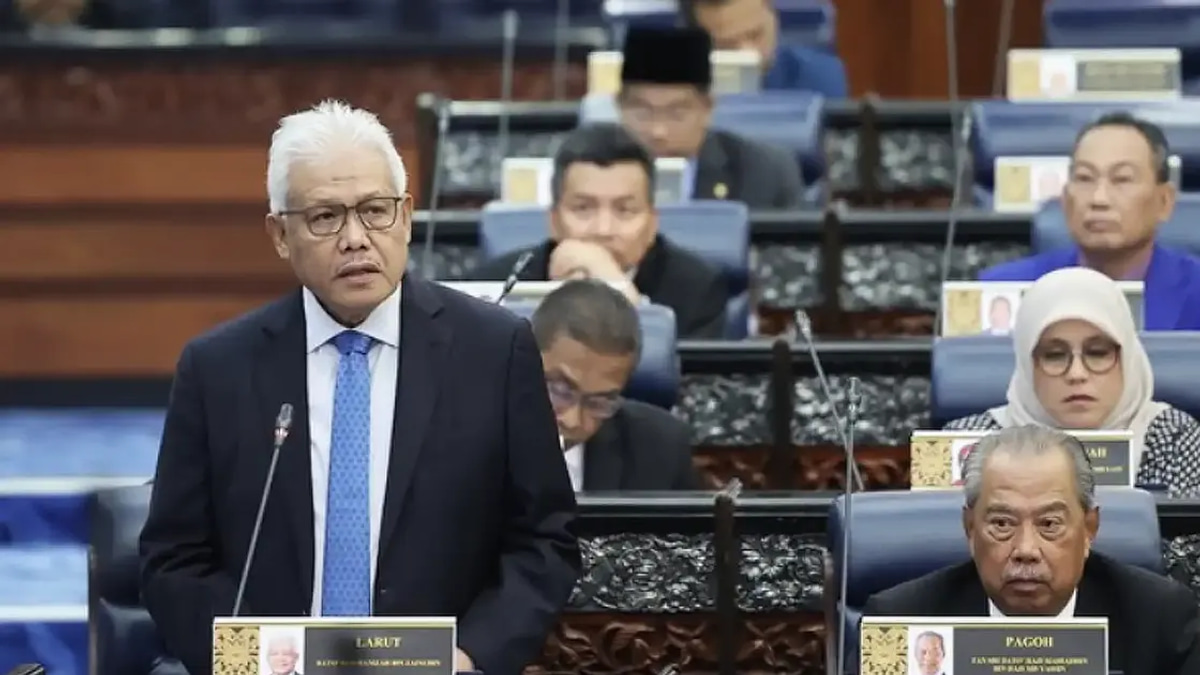
The Dewan Rakyat Speaker Tan Sri Johari Abdul has been formally notified of Perikatan Nasional's reappointment of Datuk Seri Hamzah Zainudin as opposition leader. The notification came through an official letter submitted by PN chief whip Datuk Seri Takiyuddin Hassan, establishing Hamzah's continued role as the principal opposition figure in parliament.
This reappointment represents a significant moment in Malaysia's current political configuration, particularly as the opposition bloc seeks to consolidate its institutional standing within parliament. The formal notification to the Speaker's office serves as official parliamentary recognition of PN's leadership hierarchy and operational structure during the ongoing legislative session. Such formal communication is a routine constitutional requirement that ensures all parliamentary actors understand the official chain of command and representation structures within opposing coalitions.
Hamzah's continuation in the role underscores Perikatan Nasional's stability as an organized political force despite the fluid nature of contemporary Malaysian politics. His tenure as opposition leader positions him as the primary interlocutor between PN and the government on parliamentary matters, including budget debates, legislative proposals, and matters of national importance. The opposition leader's responsibilities extend to coordinating parliamentary strategy, managing debates, and ensuring his coalition members maintain discipline during key votes and proceedings.
The PN bloc, which comprises multiple parties including PAS and others, maintains substantial representation in the current Dewan Rakyat. This collective strength enables the opposition to exercise meaningful scrutiny of government policies and legislative initiatives. Hamzah's reappointment signals that PN intends to leverage this parliamentary presence effectively through centralized leadership and coordinated engagement with the government's legislative agenda.
For Malaysian politics, the stability provided by clear opposition leadership carries broader implications. A well-organized opposition functions as a critical institutional check on executive power, ensuring that governmental proposals face rigorous examination and debate. The parliamentary process depends fundamentally on robust engagement between government and opposition, with opposition leaders playing pivotal roles in articulating alternative perspectives and demanding transparency and accountability.
The formal notification process itself reflects the procedural maturity of Malaysia's parliamentary democracy. By submitting official communications to the Speaker, PN demonstrates commitment to constitutional protocols and institutional norms. This approach contrasts with informal or ambiguous leadership claims, establishing clarity that serves the interests of parliament as a whole by eliminating uncertainty about who represents the opposition in official capacity.
Hamzah brings considerable parliamentary experience to his role, having navigated various government and opposition positions throughout his career. His familiarity with parliamentary procedure, relationship-building capabilities, and policy expertise equip him to manage the complexities of opposition leadership effectively. The continuity provided by maintaining him in this position allows PN to pursue sustained legislative strategies rather than experiencing disruptive transitions in opposition management.
The reappointment also carries implications for cross-party parliamentary dynamics. Opposition leaders serve as crucial negotiation partners when parliament addresses matters requiring consensus or all-party support, including constitutional amendments, electoral reforms, and responses to national crises. Hamzah's established presence in such discussions positions PN to participate meaningfully in processes where coordinated parliamentary responses prove necessary.
Looking toward future parliamentary sessions, Hamzah's formal reappointment indicates PN's intentions regarding engagement with the government's legislative priorities. Opposition leaders typically signal their coalition's tactical approach through their statements and parliamentary conduct shortly after taking or reconfirming office. Observer eyes will focus on whether PN intends to adopt confrontational approaches on specific issues or pursue more constructive engagement on select matters where common ground exists.
The notification also reflects practical considerations regarding parliamentary administration. The Speaker's office requires accurate information about opposition structures to organize seating, allocate speaking time during debates, determine committee compositions, and manage other procedural matters. Hamzah's formal recognition ensures parliamentary staff can direct official communications to the appropriate opposition representative and coordinate logistics accordingly.
Within the broader context of Malaysian politics, PN's consolidation efforts through such formal appointments demonstrate the coalition's focus on institutional stability and demonstrable organizational capacity. These foundations matter considerably for political coalitions seeking to maintain relevance and credibility with voters, analysts, and international observers. A coherent, professionally managed opposition enhances PN's positioning for potential future electoral contests or political realignments.
The symbolism of formal notification processes extends beyond procedural requirements. By publicly communicating leadership decisions through official channels, political parties reinforce their own internal discipline while signaling to parliament and the public that organizational structures remain intact and functioning. Such transparency builds confidence among party members and supporters regarding leadership legitimacy and commitment to institutional frameworks.