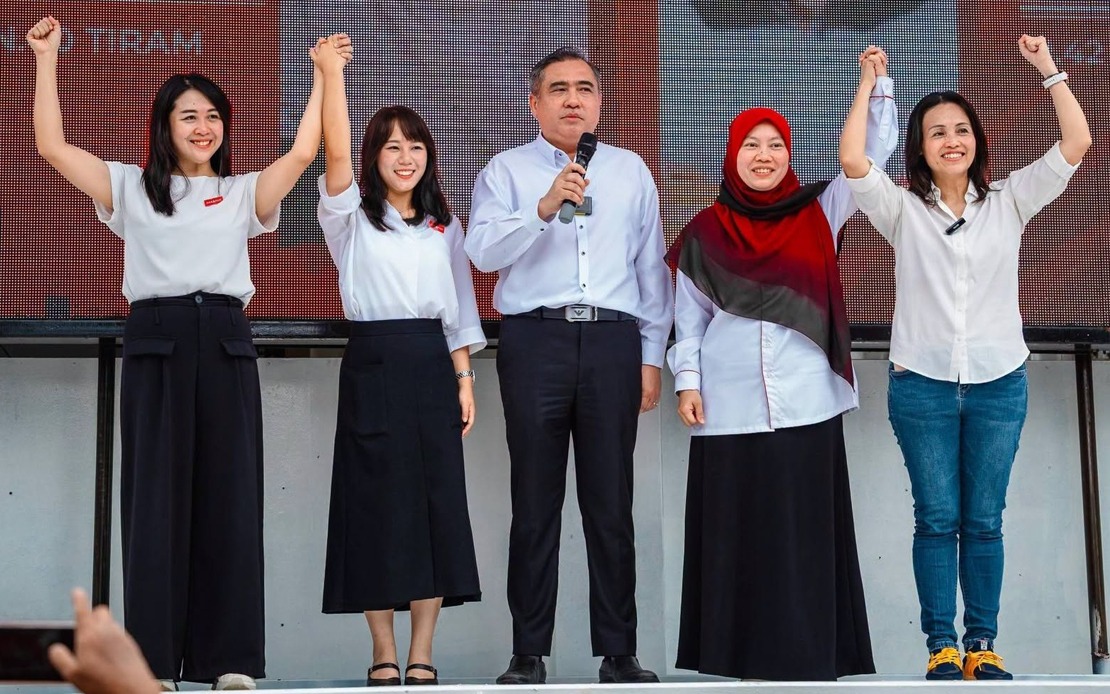
The Democratic Action Party announced its slate of four candidates for the Johor state election on June 20, signalling an ambitious push to expand its presence in Malaysia's southern heartland. The move, disclosed at a candidate launch ceremony in Johor Bahru, reflects the party's confidence in contesting seats beyond its traditional strongholds and forms part of a coordinated Pakatan Harapan strategy to consolidate opposition control across multiple state assemblies.
Nor Zulaila Abd Ghani, 38, a private secretary to the Deputy Finance Minister, will represent DAP in the Tiram state constituency, marking the first occasion the party has fielded a candidate in this Malay-majority mixed seat. Her nomination represents a calculated expansion into demographic terrain where DAP has historically struggled to gain traction, underscoring the coalition's determination to broaden its voter base beyond urban, Chinese-majority areas. The selection of a candidate with ties to the federal government apparatus may signal an attempt to leverage administrative credibility and insider connections to sway voters in a constituency where established networks often prove decisive.
Lee Wern Yiing, 30, chief of Johor DAP Socialist Youth, has been fielded in Johor Jaya, bringing the party's youth leadership directly into the electoral contest. Her candidacy reflects a broader generational shift within DAP, as the party increasingly promotes younger activists into frontline political roles. The Johor Jaya seat, located within the Kulai parliamentary constituency, forms part of the opposition's concentrated effort to dominate this particular parliamentary zone through coordinated candidate selection across multiple state assemblies.
Mohamad Shafwan Ani, 33, currently serving as special assistant to the Kulai Member of Parliament, will contest the Bukit Permai state seat. According to DAP secretary-general Anthony Loke Siew Fook, Shafwan brings nine years of ground-level experience in the constituency, establishing him as a locally embedded candidate with demonstrated community engagement. This emphasis on long-term constituency presence reflects contemporary electoral strategy, where campaigns increasingly rely on grassroots networks and personal visibility rather than purely party machinery.
Incumbent assemblyman Wong Bor Yang, 40, secured renomination to defend his Senai seat, indicating DAP's confidence in retaining this existing stronghold. Wong's continuation as the party's standard-bearer provides continuity and maintains institutional memory within the party's state assembly presence. His retention also suggests that DAP views Senai as secure enough to allocate promotional resources and campaign focus toward the three contested seats.
The announcement ceremony, presided over by Anthony Loke in his capacity as Transport Minister and DAP secretary-general, underscored the intersection between federal ministerial roles and state-level party management. Loke's remarks emphasised the strategic rationale behind the candidate selections, articulating how the four nominees fit within Pakatan Harapan's broader electoral calculus. The presence of Johor DAP chairman Teo Nie Ching and deputy Wong Shu Qi reinforced the party's institutional commitment to the state campaign.
Loke articulated a unified opposition strategy centred on dominating all three state assembly seats within the Kulai parliamentary constituency. This approach recognises that parliamentary elections rest partly on state-level sentiment and incumbent performance, creating incentives for coalition partners to concentrate resources in specific zones. With Bukit Batu contested by PKR and Senai already held by DAP, the Bukit Permai seat became the logical target for DAP's expansion, while Tiram represented the most ambitious reach into unfamiliar electoral terrain.
The Johor state election scheduled for July 11 occurs within Malaysia's broader political realignment, following the 2022 general election that fragmented the parliamentary landscape and forced reconstitution of state-level coalitions. The Election Commission has set nomination day for June 27, allowing a fortnight for campaign preparation, with early voting scheduled for July 7. This compressed timeline intensifies the importance of pre-existing ground networks and established candidate visibility, factors that likely influenced DAP's emphasis on Shafwan's lengthy constituency presence.
For regional observers, the Johor contest carries implications beyond a single state election. Johor's electoral performance influences broader perceptions of opposition momentum in Southeast Asia's third-largest economy by state GDP. A strong DAP and Pakatan Harapan performance would validate the coalition's recovery narrative following the 2023 leadership transition that elevated Anwar Ibrahim to Prime Minister. Conversely, setbacks would invite scrutiny of whether the federal government's honeymoon period among voters has begun to erode.
The selection of candidates with diverse backgrounds—ranging from private-sector administrative experience to youth activism to ground-level political networking—suggests DAP's attempt to project inclusivity and accessibility across different demographic segments. This differentiation in candidate profiles may reflect internal polling or demographic analysis indicating that uniform candidate archetypes perform poorly against an increasingly fragmented electorate increasingly sceptical of traditional party structures.