Carlo Ancelotti has not yet untangled all of Brazil's difficulties, but the Italian coach provided supporters with a more encouraging sign of where his team might go after the disappointment of stumbling against Morocco in their opening Group C fixture. The commanding 3-0 demolition of Haiti in Philadelphia gave the squad a morale boost and, more importantly, a tactical blueprint that suggests Ancelotti has identified where structural improvements are needed. Haiti's defensive naivety—repeatedly pushing forward without protecting themselves at the back—certainly made Brazil's path to victory simpler than it might have been, yet the visitors' improved cohesion was undeniable even accounting for the opposition's limitations.
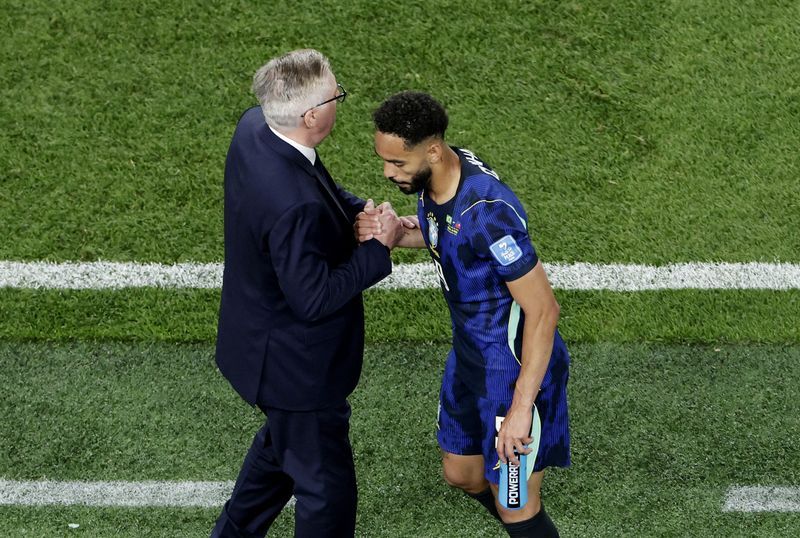
Following the 1-1 stalemate with Morocco, Ancelotti engineered two alterations to his starting eleven that immediately sharpened Brazil's attacking play. The most consequential switch involved replacing Igor Thiago with Matheus Cunha, a substitution that fundamentally altered how Brazil connected between their midfield engine room and their forward-thinking players. This was not merely a straightforward personnel swap; it represented a philosophical adjustment to how the team would function in possession and transition. Cunha's presence unlocked something that had been missing in the opener: a natural, intuitive link between what the midfielders were attempting to build and what the attackers needed to execute.
The diamond midfield formation, which Ancelotti has championed throughout his managerial career, finally began to show genuine teeth against Haiti. Lucas Paquetá, whose performance against Morocco had drawn considerable criticism and disappointment, found himself far more at ease when deployed on the left flank of the diamond's base. The Paris Saint-Germain midfielder's contribution improved markedly as he provided consistent support to Vinicius Jr, while simultaneously combining fluently with Cunha's intelligent movement. This trio—Paquetá, Cunha, and Vinicius—developed a synchronicity that emerged almost organically, with each player seemingly understanding where the others would be without needing explicit instruction. Brazil's dangerous attacking sequences and ultimately their goal-scoring opportunities flowed predominantly from this rejuvenated left-sided axis, suggesting that Ancelotti has discovered a winning combination.
Cunha's tireless running and positional intelligence proved essential to unlocking Brazil's potential going forward. Operating in that hybrid space between midfield and the front three, the Atlético Madrid forward constantly drifted inward and outward, creating passing angles and finding pockets of space that opposing defenders struggled to police. Vinicius, so often isolated for Brazil despite his extraordinary talent, suddenly had a creative collaborator who understood how to feed his runs and maximize his lethality in the final third. This represents a significant departure from how Brazil have attempted to function since Neymar's debilitating injury derailed the side's attacking rhythm at the highest level. For the first time since losing their talismanic winger, the selection committee appears to have found a formula that compensates for that absence.
Yet the formation's promise comes with a significant caveat: the opposite flank remains deeply problematic. Raphinha produced another forgettable display, continuing a pattern of underperformance that now extends to two consecutive matches. The Barcelona winger departed the field due to a physical concern after battling blister issues that had forced him to skip training sessions midweek. Beyond the injury questions, however, Raphinha's fundamental issue appears tactical in nature. Pinned rigidly to the right wing in a narrow position, he seemed uncomfortable and out of rhythm, repeatedly misfiring passes and struggling to control possession. This represents a puzzling departure from how he operates at club level, where he functions with greater freedom and undertakes a role considerably more similar to what Cunha accomplished for Brazil against Haiti.
The defensive vulnerabilities at the heart of Brazil's midfield also warrant serious scrutiny as the tournament progresses. Casemiro, now 34 years old, may struggle when encountering opponents with superior technical quality and intensity than Haiti demonstrated. Ancelotti might need to reconsider the balance of his midfield three, potentially dropping Bruno Guimarães back from his right-sided midfield position to provide additional defensive cover and facilitate cleaner possession patterns from deeper areas. This would represent a strategic trade-off between defensive solidity and creative ambition, a calculation that becomes increasingly important as Brazil faces more accomplished opponents in subsequent group matches.
The potential absence of Raphinha for the Scotland encounter presents a selection dilemma for Ancelotti. Rayan's cameo appearance as a replacement failed to inspire confidence, suggesting that Luiz Henrique may represent a more viable alternative should the Barcelona winger's injury prove sufficiently serious. Finding the right personnel and tactical arrangement for the right flank may ultimately determine whether Brazil's Group C campaign becomes a genuine platform for tournament success or another frustrating exercise in unfulfilled potential.
While the victory over Haiti certainly did not constitute a performance that will strike fear into elite opposition, it represented genuine progression from the Morocco stalemate. Ancelotti's diamond has finally begun yielding tangible benefits, and Cunha's role as the connector between midfield and attack offers Brazil a credible template for future matches. The encouraging signs on the left side must be balanced against persistent concerns on the right, suggesting that Brazil remain fundamentally unbalanced. As the tournament develops, Ancelotti's ability to resolve these architectural flaws—particularly regarding Raphinha's role and Casemiro's long-term viability—will likely determine whether this squad can genuinely challenge for the trophy that has eluded them since 2002.