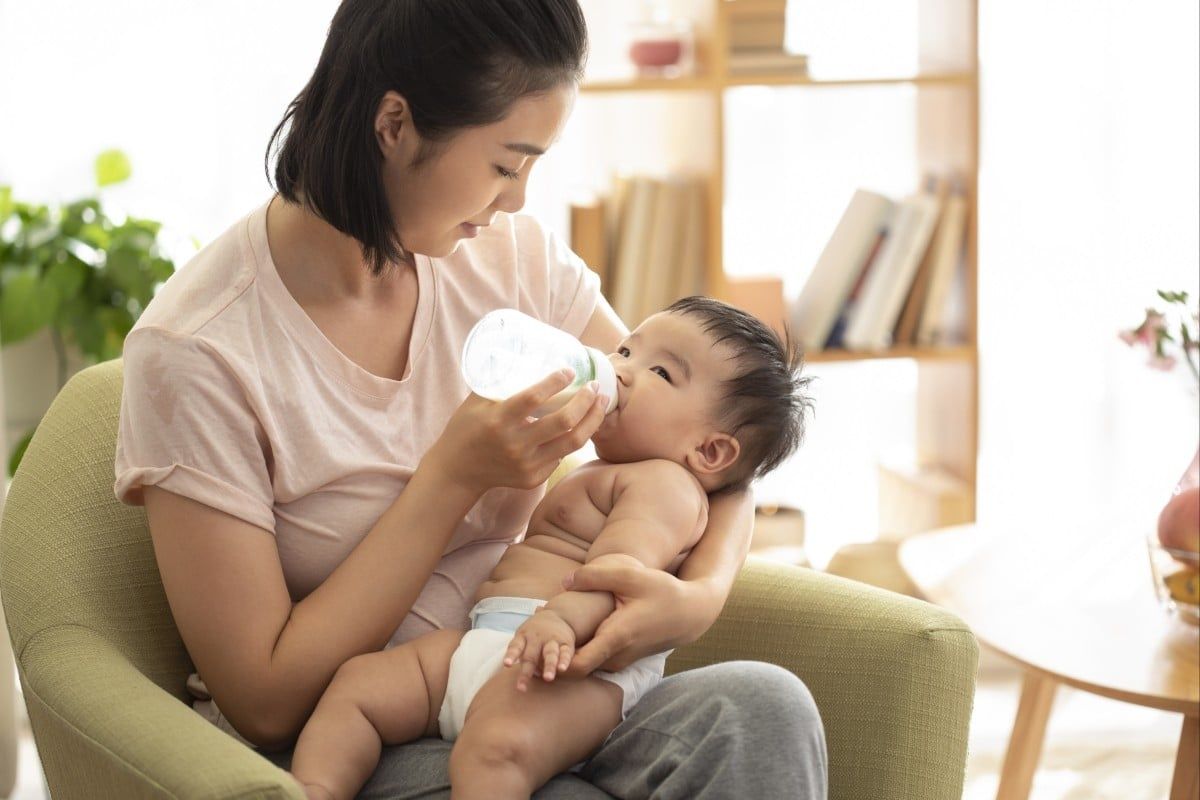
A three-month-old boy in China's Guangdong province was rushed to intensive care after his parents inadvertently poisoned him with a well-intentioned but hazardous feeding choice. When the infant's body turned purple and his lips darkened to a purplish-blue, accompanied by severe breathing difficulties, his alarmed parents brought him to Zhongshan Women and Children's Hospital. Medical staff swiftly identified the cause: the baby had suffered acute nitrite toxicity, a potentially fatal poisoning that had developed within hours of consuming the contaminated formula.
The infant's parents had prepared his milk formula using boiled vegetable juice instead of plain water, believing the added nutrients would benefit their young child's development. This assumption, though rooted in good intentions, reveals a dangerous knowledge gap regarding infant nutrition and the physiological capabilities of newborns. The parents' reasoning reflected a common parental instinct to maximise nutritional intake, yet it overlooked critical safety factors that even seemingly wholesome natural foods can pose to babies whose bodies remain developmentally fragile.
Doctors at the hospital explained the mechanism behind the child's severe symptoms. When vegetables undergo prolonged boiling, the cooking process triggers the conversion of naturally occurring nitrates into nitrites—a chemical transformation that accumulates dangerously in the resulting broth. These concentrated nitrites, when introduced into formula consumed by an infant, overwhelm the body's ability to process them safely. For a three-month-old, whose digestive system and kidney function remain incomplete, even moderate nitrite exposure can trigger systemic toxicity.
Once nitrites enter the bloodstream, they interfere fundamentally with the blood's capacity to carry oxygen throughout the body. Haemoglobin, the protein responsible for oxygen transport, becomes chemically altered when exposed to nitrites, rendering it unable to perform its vital function. This explains why the infant developed the characteristic purple discolouration across his skin, lips and nail beds—a visible sign that his tissues were being starved of oxygen despite his lungs working to breathe. The condition, termed methaemoglobin poisoning, represents a medical emergency requiring immediate intervention.
Following two days of intensive medical treatment, the infant recovered sufficiently to be discharged in mid-June. While the outcome in this case was fortunate, paediatricians warn that the margin between recovery and tragedy in such cases remains perilously narrow. Cao Qi, a senior paediatrician at Nanning No 1 People's Hospital in Guangxi, issued an urgent public reminder via social media about the symptoms parents must recognise. According to Cao, any delay in seeking medical attention when a baby displays signs of oxygen deprivation can swiftly become life-threatening, with minutes making the difference between survival and permanent harm.
Cao's broader message addresses a troubling pattern in Chinese parenting communities, where social media trends and well-meaning but unqualified advice can lead families astray. The paediatrician cautioned parents against substituting professional medical guidance with subjective judgement or popular feeding trends. His statement underscores a critical principle: natural foods, despite their perceived wholesomeness, are not automatically appropriate for infants whose physiological systems remain under construction. What benefits an older child or adult can prove toxic to a baby whose organs cannot yet process or eliminate certain compounds.
This incident is not isolated within China's infant health landscape. The previous year saw a 52-day-old infant hospitalised in Henan province after his grandmother added honey to his feeding water, an action that introduced botulism-causing bacteria. That case similarly reflected the gap between parental intention and infant safety requirements—in that instance, the well-established medical guidance against honey for babies under twelve months old went unheeded. These cases suggest a broader public health communication challenge in educating families about age-appropriate infant nutrition.
The incident carries implications that extend beyond individual families to broader food and health safety discussions in the region. Southeast Asian countries with significant Chinese diaspora communities and similar cultural preferences toward natural remedies should note these cautionary examples. Paediatricians across Malaysia, Singapore, and other neighbouring nations frequently encounter parents attempting similar nutritional experiments, often based on traditional beliefs or information circulating through social media channels that lack medical verification.
Health authorities in China and beyond have responded by reinforcing fundamental infant feeding protocols. Medical consensus remains clear: infant formula should be reconstituted exclusively with safe, clean water that has been boiled and cooled to appropriate temperatures. Water remains the only appropriate liquid for this purpose; substitutes including vegetable broths, rice water, fruit juices, soups and other liquids introduce unpredictable chemical compounds that infants cannot safely metabolise. This guidance reflects decades of research into infant physiology and nutrition requirements.
The case highlights the critical importance of accessible, credible health information reaching new parents before they face feeding decisions. Many families lack easy access to professional paediatric guidance and instead rely on relatives' advice, internet forums, or social media recommendations—sources that may contain dangerous misinformation. Building stronger connections between families and qualified healthcare providers, particularly in early parenthood, could prevent similar tragedies. Healthcare systems across Asia should consider whether their public health messaging reaches vulnerable populations effectively.
For Malaysian parents and those throughout Southeast Asia, the key lesson remains straightforward but vital: infant formula preparation requires strict adherence to manufacturer instructions and healthcare provider guidance. Any uncertainty about appropriate feeding practices warrants consultation with a qualified paediatrician rather than experimentation. The temporary purple discolouration that alarmed Guangdong's parents served as a critical warning sign that allowed medical intervention, but not all cases of infant poisoning produce such obvious symptoms. Awareness of dangerous substitutions—whether vegetable juice, herbal preparations, or honey—combined with prompt medical response when symptoms appear, offers the best protection for vulnerable infants.