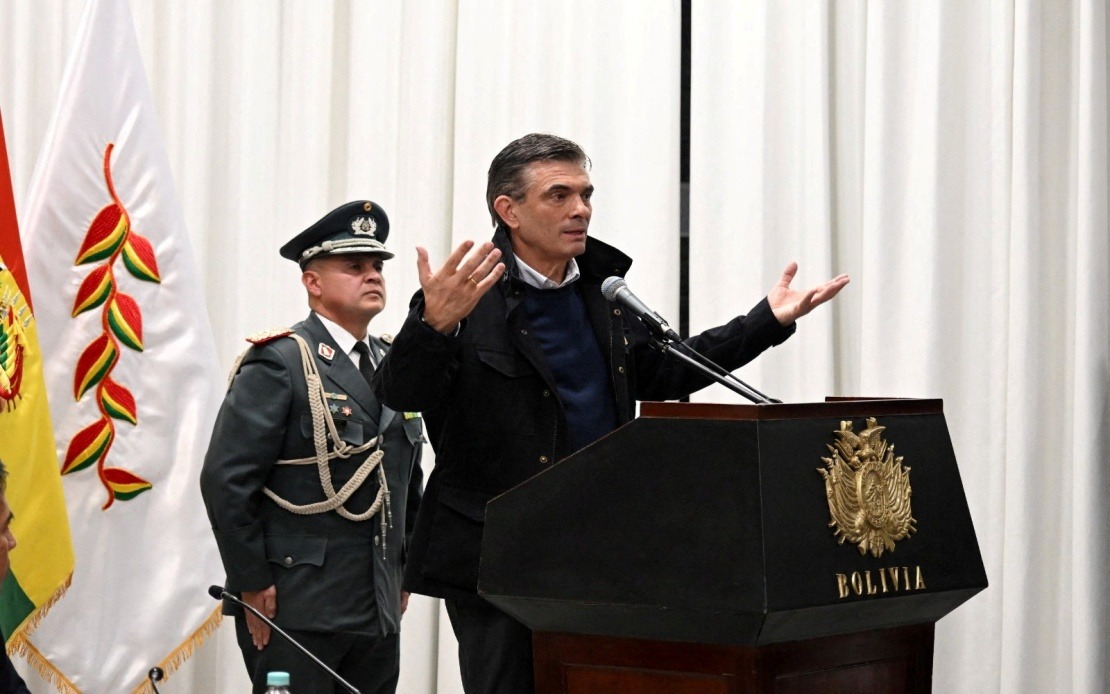
Bolivian President Rodrigo Paz has invoked emergency powers to confront an escalating political and economic crisis gripping the South American nation. The declaration came after prolonged anti-government demonstrations and coordinated road blockades have severely disrupted daily life across the country, with workers' unions and farming organisations maintaining pressure for Paz's resignation amid deteriorating economic conditions and skyrocketing cost of living.
The standoff has persisted for five decades, creating an acute humanitarian dimension to what began as targeted political protest. Citizens have faced acute shortages of essential goods including food, fuel, and medical supplies as the blockades have severed transport routes connecting Bolivia's regions. The economic toll extends beyond supply chain disruptions, with broader commercial activity grinding to a halt as businesses cannot move products or access critical inputs. Schools and hospitals have struggled to maintain operations under the constraints, while ordinary Bolivians confront empty shelves and petrol queues.
Addressing the nation via televised remarks, Paz framed his emergency declaration as a necessary measure to restore fundamental freedoms and basic services. His language reflected the severity officials perceive in the situation, invoking the right of citizens to work, access education, obtain medical care, purchase food, and sustain their families—all of which have been compromised by the sustained blockade campaign. The president's rhetoric acknowledged widespread frustration while attempting to recalibrate the narrative around necessary state intervention.
The economic pressures fuelling the unrest represent genuine hardship for ordinary Bolivians. Inflation and cost-of-living crises have eroded purchasing power across income levels, making basic necessities unaffordable for many households. Rather than diffusing tensions, these material grievances have coalesced into organised pressure for Paz to step down, with unions coordinating their leverage through transport disruption. The blockade strategy proves particularly effective in landlocked Bolivia, where road networks form the economic lifeline connecting producers to consumers and the outside world.
Paz's invocation of the state of exception carries significant constitutional implications. The declaration explicitly authorises military deployment to restore road access and maintain order nationwide, transforming this from a civilian administrative response into a security operation. Bolivia's recent history includes military interventions during political turmoil, making resort to armed forces deployment a consequential escalation that could either stabilise the situation or further inflame tensions between the government and its critics.
The blockade organisers have demonstrated sophisticated political strategy by targeting infrastructure rather than staging symbolic protests. This approach imposes tangible costs on the broader population, creating pressure on government beyond the activists themselves. However, the same tactic risks public backlash as citizens caught in the middle experience genuine hardship—a dynamic that may ultimately benefit Paz by shifting blame toward the protest movement for the shortages and disruptions.
For Southeast Asian observers, Bolivia's crisis illustrates vulnerabilities that regional economies share. Heavy dependence on narrow road networks for supply chains, the potential for organised disruption of critical infrastructure, and the way economic grievances translate into political destabilisation offer relevant lessons. Malaysia and its neighbours have experienced transport-related blockades and protests, making Bolivia's response patterns worth monitoring as case studies in managing such challenges.
The timing and intensity of Bolivia's crisis also reflects broader regional patterns in South American politics. Multiple nations across the continent have experienced commodity price shocks, currency pressures, and consequent inflation that drive popular discontent. Peru, Chile, and Argentina have navigated similar dynamics in recent years, and Bolivia's trajectory will influence how other governments respond to comparable organised pressure campaigns.
Paz's gamble on emergency powers carries political risk despite its potential for immediate tactical benefit. Military deployment might clear roads within days, but addressing the underlying economic discontent that motivates the protests requires different policy responses. Unless coupled with measures addressing living costs and economic inequality, the emergency declaration may suppress symptoms while leaving root causes unresolved, potentially enabling further crisis cycles.
The international dimension remains understated in initial coverage but merits attention. Bolivia's regional standing and relations with trading partners may influence how the crisis unfolds. Neighbouring countries and international organisations are likely monitoring whether the emergency declaration succeeds in restoring order and whether Paz can navigate toward negotiated settlement or faces renewed pressure as blockade organisers respond to military intervention.
The broader question confronting Paz involves whether the state of emergency represents a transition toward resolution or a deepening of confrontation. If military deployment rapidly clears blockades without significant violence, the government may regain initiative. Conversely, if security operations generate civilian casualties or resistance hardens, the emergency declaration could become the catalyst for expanded rather than contained conflict.