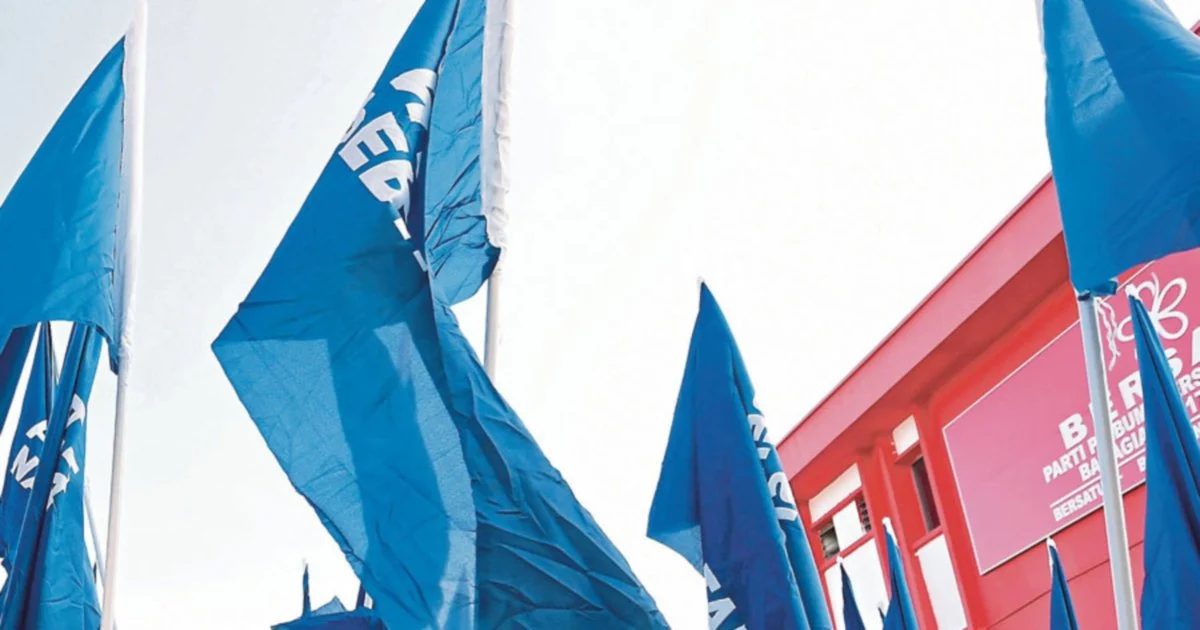
The question of who controls the Perikatan Nasional logo has emerged as a significant flashpoint within Malaysia's opposition coalition, with Bersatu potentially facing the prospect of fielding candidates independently rather than under the joint party banner in future elections. Political analysts warn that without explicit authorisation from PN chairman Datuk Seri Dr Ahmad Samsuri Mokhtar, Bersatu members could find themselves unable to contest using the coalition's logo—a development that would fundamentally reshape the party's electoral prospects and internal coalition dynamics.
The dispute centres on formal authority over the PN symbol, a crucial asset in Malaysian electoral politics where coalition logos provide unified branding and voter recognition across multiple parties. The logo has become more than a mere design; it represents legitimacy, resource-sharing arrangements, and the formal recognition that comes with membership in a recognized political front. For a party like Bersatu, which has historically relied on coalition platforms to amplify its electoral reach, the ability to use the PN logo carries significant strategic weight in reaching voters across different states and constituencies.
Bersatu's predicament reflects broader tensions within PN itself, where questions of leadership hierarchy and decision-making authority remain contentious. The requirement for candidates to obtain authorization from the coalition chairman introduces a gatekeeping mechanism that could be weaponized in internal disputes. Such controls become particularly problematic in a coalition that spans multiple significant parties with differing interests, as they risk appearing arbitrary or politically motivated rather than serving genuine administrative purposes.
The implications for Bersatu are substantial and multilayered. The party, which emerged from the 2020 political upheaval and has positioned itself as a key component of PN, would face considerable disadvantage contesting elections without the coalition identity. Voters accustomed to seeing the PN logo on ballot papers might overlook a Bersatu-only entry, effectively reducing the party's visibility. In a crowded Malaysian political landscape where brand recognition drives vote allocation, such marginalization could translate directly into lost seats and reduced parliamentary representation.
Moreover, this development threatens to undermine the entire coalition structure that PN has attempted to build since its formation. If constituent parties cannot be assured of logo access, the very foundation of coalition unity becomes questionable. Other PN members would naturally begin reassessing their commitment to the arrangement, potentially leading to defections or the formation of alternative groupings. The centralization of logo control in one individual's hands also raises questions about the democratic principles supposedly governing coalition operations.
For Malaysian electoral politics more broadly, the situation highlights persistent challenges in coalition management at the national level. History demonstrates that Malaysian coalition arrangements—whether Barisan Nasional, Pakatan Harapan, or PN itself—frequently collapse under the weight of internal tensions regarding resource distribution and decision-making authority. The logo control battle represents exactly the kind of structural weakness that has historically destabilized political fronts in Malaysia.
The timing of this dispute is significant, occurring as Malaysian politics enters what many anticipate will be an active election period within the coming years. Coalition partners typically spend this period consolidating relationships, negotiating seat distributions, and building campaign machinery. Instead, PN finds itself managing internal disputes over fundamental coalition mechanics. This distraction comes at a moment when opposition coalitions need maximum cohesion to effectively challenge the ruling Barisan Nasional government.
Bersatu's position within PN has never been entirely secure. The party's leadership, particularly former Prime Minister Muhyiddin Yassin, has struggled to establish consistent coalition dynamics with other PN partners. Previous tensions have periodically surfaced regarding seat allocations, policy positions, and strategic direction. The logo authorization issue represents a tangible threat that goes beyond rhetorical disagreement—it directly impedes the party's ability to field candidates under the joint banner.
Analysts suggest several possible resolutions, though none appears immediately forthcoming. A formal review of coalition governance procedures could establish clearer criteria and less discretionary authority over logo authorization. Alternatively, a power-sharing arrangement regarding logo control might distribute this responsibility among multiple coalition leaders. However, such institutional reforms require consensus precisely when disagreement prevails, creating something of a deadlock.
The broader context matters considerably for understanding this dispute's significance. Malaysian opposition coalitions have consistently struggled with internal management precisely because they often lack the institutional frameworks and trust-building mechanisms that mature governing coalitions develop over decades. PN, relatively young as coalition structures go, faces the challenge of operating effectively without having established deep precedents or shared institutional culture.
For voters, this development carries practical implications. Should Bersatu indeed contest without the PN logo, the opposition vote risks fragmentation precisely at moments requiring maximum coordination. In tight electoral contests, such fragmentation could favour dominant parties by splitting anti-establishment votes. This outcome would paradoxically weaken the very forces pushing for political change that PN was ostensibly formed to advance.
Moving forward, how PN resolves the logo authorization question will signal whether the coalition possesses sufficient maturity and commitment to function as a genuine alternative political force. Currently, the signs are ambiguous, with control mechanisms potentially tightening in ways that could undermine broader coalition cohesion. Unless senior leadership acts decisively to clarify procedures and build consensus, the dispute risks cascading into more serious organizational dysfunction at precisely the moment when political transitions appear increasingly likely.
%22%2F%3E%3C%2Fpattern%3E%3C%2Fdefs%3E%3Crect%20width%3D%22100%25%22%20height%3D%22100%25%22%20fill%3D%22url(%23ph4lm65g)%22%2F%3E%3Crect%20width%3D%22100%25%22%20height%3D%22100%25%22%20fill%3D%22url(%23ph4lm65p)%22%2F%3E%3Ctext%20x%3D%2250%25%22%20y%3D%2250%25%22%20text-anchor%3D%22middle%22%20dominant-baseline%3D%22central%22%20fill%3D%22rgba(255%2C255%2C255%2C0.95)%22%20font-family%3D%22Georgia%2C%20'Times%20New%20Roman'%2C%20serif%22%20font-weight%3D%22700%22%20font-size%3D%22170%22%20letter-spacing%3D%22-0.02em%22%3EMalaysia%3C%2Ftext%3E%3C%2Fsvg%3E)