Most Asian share markets closed weaker on Monday, buffeted by twin concerns over stalled diplomatic progress in the Middle East and deepening political turbulence in Britain that has spooked global investors. The confluence of these geopolitical headwinds sent crude oil surging and bond yields climbing, prompting market participants to reassess the likelihood of aggressive US interest rate tightening in coming months. The mood across regional bourses remained cautious, with investors rotating away from riskier assets in favour of safer havens.
Tensions in the Middle East intensified after Iran announced it had once again restricted passage through the Strait of Hormuz, a chokepoint critical to global energy supplies. Shipping data indicated a sharp drop in vessel transits, with only 26 and 32 ships moving through the waterway on consecutive days compared to typical volumes. These actions by Tehran, coupled with uncertainty surrounding peace negotiations mediated by the United States, sent crude oil prices climbing substantially. Brent crude futures rose 1.1 percent to settle at $81.43 per barrel, though prices remain considerably below the May high of $126.41. West Texas Intermediate crude gained more aggressively, climbing 2.7 percent to $78.70 per barrel, still trading well above the $67 level that prevailed before the recent conflict erupted.
The geopolitical friction was compounded by a dramatic development in British politics. Prime Minister Keir Starmer's political position came under intensified scrutiny following his Labour Party colleague Andy Burnham's commanding parliamentary election victory, which emboldened backbench MPs to openly call for Starmer's removal. The uncertainty surrounding the Prime Minister's future sent sterling sliding, with the currency declining 0.2 percent to $1.3210. Adding to the turmoil, US President Donald Trump claimed via social media that Starmer was preparing to announce his resignation, heightening market anxiety about potential policy shifts under a new Labour leadership. Analysts warned that this political instability threatens to prolong selling pressure on British government bonds, or gilts, as investors grapple with fundamental questions about the country's fiscal direction.
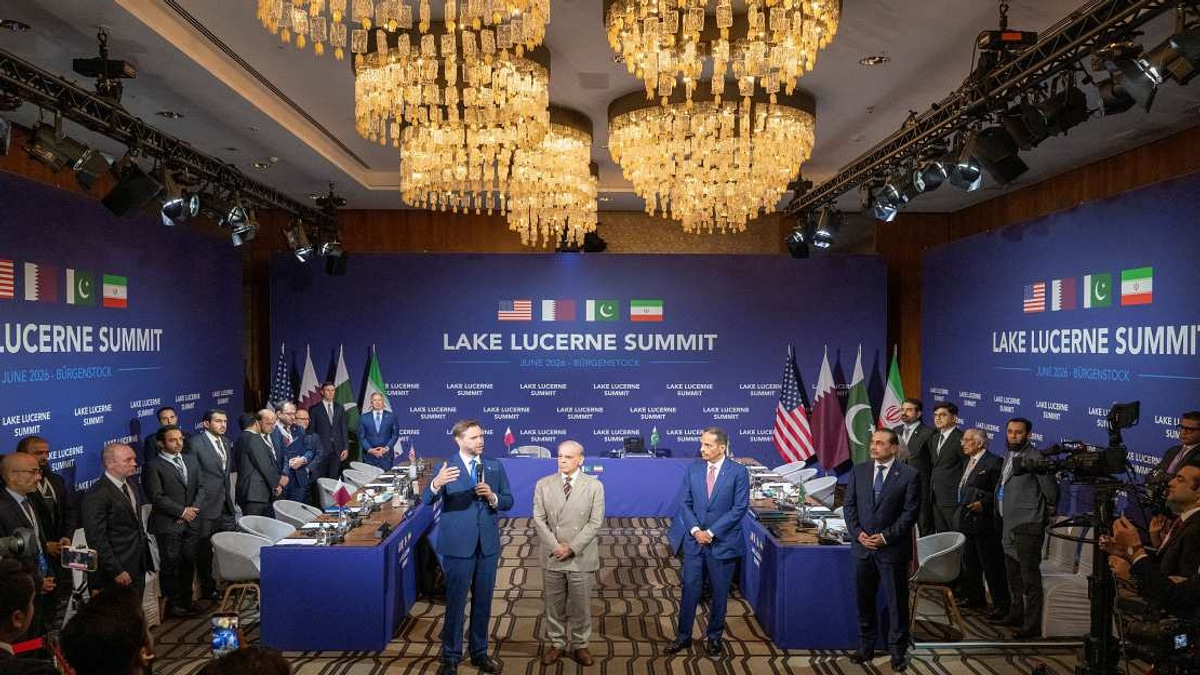
The simultaneous pursuit of Middle East diplomacy and fresh threats against Iran created confusion among traders trying to gauge the true state of negotiations. Vice President JD Vance was meeting with Iranian officials for preliminary talks under an interim peace framework, yet Trump's public statements threatened further military strikes against Tehran. This contradictory messaging undermined confidence in any durable resolution and reinforced perceptions that escalation remains a tangible risk. Market participants interpreted these signals as evidence that geopolitical premiums would persist in oil pricing, potentially constraining global economic growth if energy costs remain elevated.
Equity markets across the Asia-Pacific region responded with broad-based weakness, though performances varied by geography and sector. Japan's Nikkei Index managed a modest 0.7 percent gain, building on a spectacular 8 percent surge during the previous week that had lifted the benchmark to record territory. South Korea's more speculative market suffered a 0.9 percent decline after climbing over 11 percent the prior week on semiconductor demand optimism, suggesting some profit-taking after the outsized rally. MSCI's comprehensive gauge of Asia-Pacific equities excluding Japan edged down 0.4 percent, reflecting the region's cautious mood. US equity futures also declined, with S&P 500 contracts falling 0.5 percent and Nasdaq-100 futures dropping 0.7 percent, while European indices were similarly soft ahead of the US opening.
Underpinning these equity market declines was a significant reassessment of Federal Reserve policy prospects following the central bank's hawkish communications last week. Market pricing now suggests a 75 percent probability that the Federal Reserve will raise interest rates as early as September, up substantially from earlier expectations. The yield on two-year US Treasury notes climbed four basis points to 4.2276 percent, marking the highest level since early in 2025 and reflecting heightened expectations for sustained higher borrowing costs. Futures markets are pricing in approximately 38 basis points of cumulative rate increases by year-end, a substantial repricing that suggests investors believe inflation pressures remain more stubborn than previously anticipated.
JPMorgan's cross-asset strategy team, while maintaining a constructive view on risk assets, acknowledged the knife's edge upon which monetary policy currently balances. The bank's baseline scenario calls for patience with the first rate hike deferred until the second half of 2027, but strategists concede that the margin for policy error has narrowed considerably and that any further inflationary surprises could trigger earlier tightening. JPMorgan analysts see quality growth equities, large-cap stocks, and technology sectors continuing to benefit from a higher-for-longer rate environment that should support corporate valuations, with upside risks to their S&P 500 target tilted toward 8,000. This positioning assumes that labour market resilience will provide sufficient economic support to justify elevated equity valuations despite higher financing costs.
The timing of upcoming economic data releases means that uncertainty will likely persist throughout the week. The Federal Reserve's preferred measure of core inflation, excluding volatile food and energy prices, is due Thursday and is forecast to rise slightly to 3.4 percent for May. Such a reading would underscore the uncomfortable reality that price pressures remain above the central bank's 2 percent target, potentially validating the case for policy tightening that markets have begun to price in. Additional remarks from Federal Reserve Governor Christopher Waller and Federal Reserve Bank of New York President John Williams are also scheduled, offering fresh opportunities for central bankers to signal their policy intentions to increasingly anxious investors.
The US dollar capitalised on the hawkish Fed narrative and geopolitical risk-off mood, holding firm at 161.44 yen with only the threat of Japanese government intervention preventing a move higher toward the mid-2024 resistance level of 161.96. The euro retreated to $1.1462 after touching a three-month nadir of $1.1418 on Friday, reflecting the broader shift in market sentiment away from European risk assets. The political turmoil surrounding the UK Prime Minister has particular implications for sterling, as any transition in leadership could alter the government's approach to fiscal policy and influence the Bank of England's interest rate decisions. This uncertainty is expected to keep gilts under sustained selling pressure, creating headwinds for UK-exposed portfolios and potentially widening yield spreads between British and German government bonds.
Commodity markets reflected the elevated risk environment and rising real interest rates. Gold, which generates no interest income and thus becomes less attractive when bond yields climb, slipped 0.1 percent to $4,154 per ounce despite traditional safe-haven demand in uncertain times. The modest decline suggests that the competing forces of geopolitical risk aversion and higher real yields are roughly balanced in the gold market. Energy's strength contrasts sharply with precious metals' weakness, underscoring how the Strait of Hormuz tensions have created a genuine supply risk premium that outweighs growth concerns that would normally weigh on crude prices. For Malaysian investors with exposure to regional equities and currency markets, the combination of Middle East uncertainty and UK political volatility creates a challenging backdrop that rewards defensive positioning and favours companies with pricing power to offset higher input costs.

%22%2F%3E%3C%2Fpattern%3E%3C%2Fdefs%3E%3Crect%20width%3D%22100%25%22%20height%3D%22100%25%22%20fill%3D%22url(%23ph4tyccg)%22%2F%3E%3Crect%20width%3D%22100%25%22%20height%3D%22100%25%22%20fill%3D%22url(%23ph4tyccp)%22%2F%3E%3Ctext%20x%3D%2250%25%22%20y%3D%2250%25%22%20text-anchor%3D%22middle%22%20dominant-baseline%3D%22central%22%20fill%3D%22rgba(255%2C255%2C255%2C0.95)%22%20font-family%3D%22Georgia%2C%20'Times%20New%20Roman'%2C%20serif%22%20font-weight%3D%22700%22%20font-size%3D%22170%22%20letter-spacing%3D%22-0.02em%22%3EFracture%3C%2Ftext%3E%3C%2Fsvg%3E)