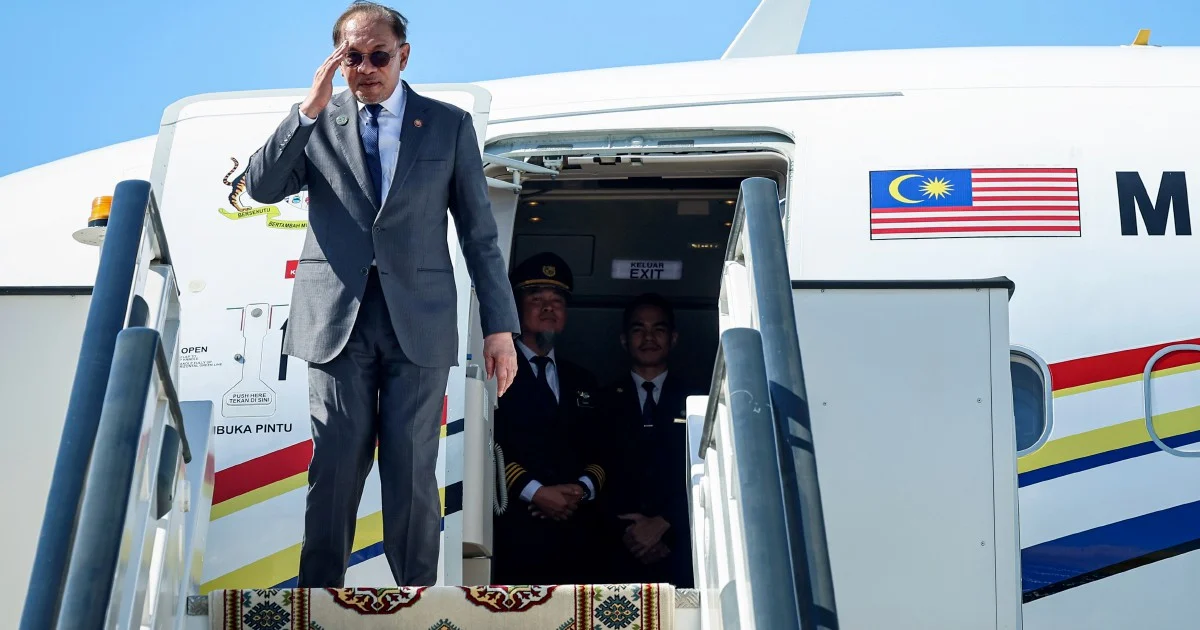
Prime Minister Datuk Seri Anwar Ibrahim arrived in Penang today following the conclusion of his official visit to Turkmenistan, where he is expected to participate in the grand finale of National Journalists' Day 2026, alongside a slate of investment-focused events designed to showcase the state's economic potential to both domestic and international stakeholders.
The timing of Anwar's arrival signals the government's commitment to balancing international diplomatic engagements with domestic priorities. His Turkmenistan visit, a Central Asian nation with significant energy resources and strategic positioning along the Belt and Road Initiative corridor, underscores Malaysia's continued efforts to diversify partnerships beyond traditional regional trading partners. The swift transition to Penang demonstrates the government's multifaceted approach to economic development, combining diplomatic outreach abroad with ground-level investment promotion at home.
Penang has emerged as a crucial economic hub in Malaysia's northern corridor and a key manufacturing and technology cluster in Southeast Asia. The state's role as a host for such high-profile national events reflects its standing as both a political bellwether and an investment destination. National Journalists' Day, celebrated annually, serves as a platform to recognise the media industry's contributions to nation-building while fostering dialogue between press, government, and civil society. The 2026 edition, culminating in Butterworth, signals a shift in geographical focus for these celebrations, bringing national attention and resources to the northern region.
Anwar's participation in Hawana 2026 carries symbolic weight. The media landscape in Malaysia has undergone significant transformation since the government's transition in 2022, with increased emphasis on press freedom and responsible journalism. The Prime Minister's presence at the grand finale reinforces the administration's engagement with the fourth estate and its commitment to open discourse, while also providing an opportunity to address journalists and media professionals about government priorities and expectations regarding media responsibilities in the digital age.
Beyond the media celebrations, the investment events accompanying Anwar's Penang visit reflect the government's broader economic agenda. Northern Corridor economic initiatives have gained traction as part of efforts to decentralise growth away from the Klang Valley and create sustainable development poles throughout Peninsular Malaysia. Penang's established infrastructure, skilled workforce, and proximity to Singapore make it an attractive destination for manufacturing, electronics, semiconductors, and technology investments, sectors that align with Malaysia's aspirations to move up the global value chain.
The sequential nature of Anwar's engagements—concluding diplomatic missions, then immediately attending domestic economic and media forums—illustrates the interconnectedness of Malaysia's international relations and domestic development strategies. Bilateral relationships with Central Asian partners like Turkmenistan increasingly matter for Malaysia's trade diversification goals and energy security considerations. Yet simultaneously, translating these diplomatic gains into tangible investments and economic opportunities for states like Penang requires sustained domestic coordination and public-private partnership frameworks.
Penang's role as a venue for these events also reflects its historical significance as a strategic location. Butterworth, the mainland component of Penang state, has been repositioned in recent years as a growth area complementing the island's established economic base. Events hosted across the broader Penang region help distribute economic benefits and visibility beyond Georgetown, addressing regional development imperatives and ensuring that growth initiatives reach different segments of the state's population.
For Malaysian investors and businesses, Anwar's presence at investment forums signals government attention and potential policy support for ventures aligned with national priorities. Large-scale participation by the Prime Minister at such events typically generates momentum for deal-making and signals openness to specific sectors or regions. Companies operating in Penang's manufacturing, technology, and services sectors may view this as an opportune moment to engage with senior government officials and secure commitments or clarifications on policy direction.
The integration of media celebrations with investment promotion is itself noteworthy. Hawana serves as a platform for journalists to report on economic developments and business opportunities, creating a feedback loop wherein media coverage of investment events amplifies their reach and impact. This symbiotic relationship between press and economic messaging reflects mature governance communications, where the government recognises that business-friendly policies require comprehensive narrative support through credible media channels.
International observers, particularly investors from Turkmenistan and other Central Asian markets, may also view Malaysia's domestic economic machinery through these Penang events. The visibility and scale of national celebrations, combined with tangible investment forums, convey a message of institutional stability and economic dynamism that influences foreign investor confidence and decision-making processes.
The convergence of diplomatic, media, and economic priorities in Anwar's itinerary underscores the complexity of contemporary governance, where a Prime Minister must simultaneously nurture international relationships, maintain domestic institutional narratives through media engagement, and drive economic growth through targeted regional development initiatives. For Penang, the visit represents both validation of its strategic importance to the national economy and an opportunity to attract further investment and international attention to its development trajectory.