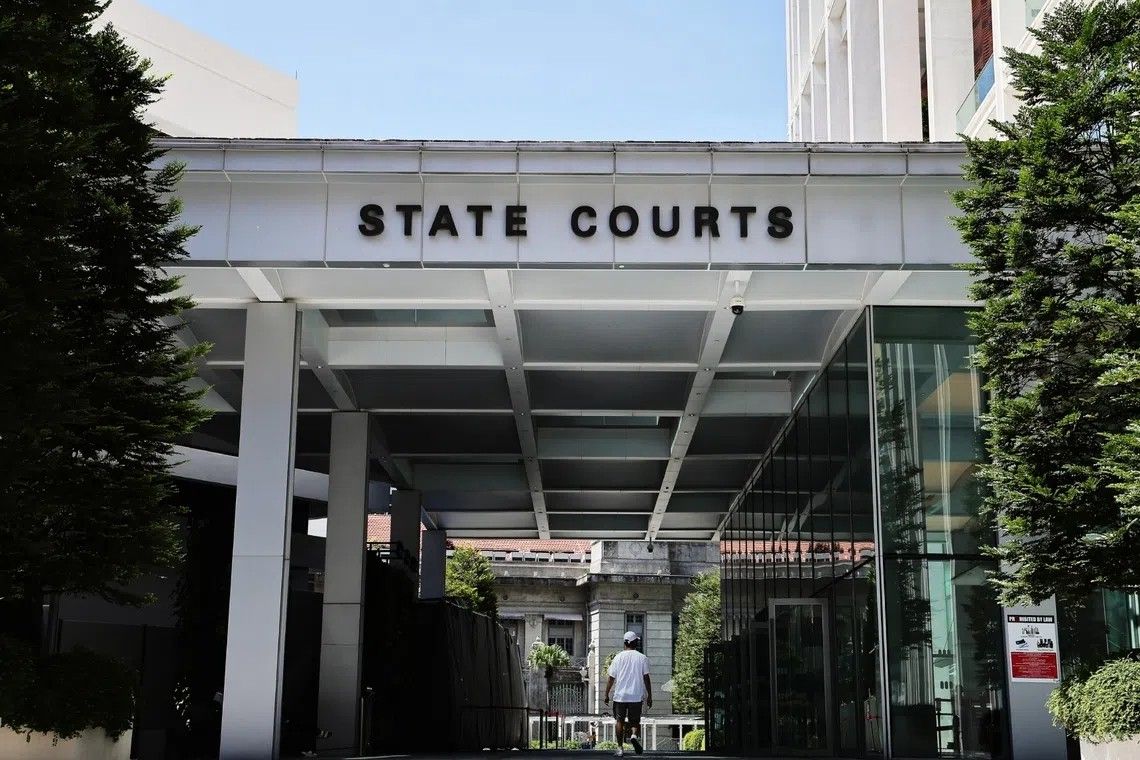
A 22-year-old driver in Singapore has been charged with causing the death of a petrol station attendant in an incident that authorities believe involved drug impairment and the operation of an unregistered vehicle. Ray Png AZ received eight charges in connection with the fatal accident at an Esso petrol station on Upper Changi Road North, including driving without a valid licence, causing death through negligent driving, and operating a motor vehicle while under the influence of drugs.
The tragic incident unfolded in the early hours of August 6 at approximately 3.55 am when the vehicle, according to police accounts, was being positioned for refuelling. The driver abruptly reversed the car as the 69-year-old pump attendant prepared to fill the tank. Because the driver's door remained open during the reversal, it struck the attendant with sufficient force to knock him to the ground. The impact caused the man to hit his head severely on the pavement, and despite being rushed to hospital, he succumbed to his injuries.
Following the collision, the driver and a female passenger fled the scene, abandoning the vehicle at the location. Both individuals were apprehended later that same day. The woman accompanying the driver is now under investigation for her own involvement, with authorities examining allegations that she consumed a controlled substance and abetted the driver in his actions. The presence of a passenger raises questions about whether anyone present attempted to assist the injured attendant or alert emergency services immediately after the incident.
The decision to charge the driver with operating a deregistered vehicle adds a significant dimension to the case and reflects Singapore's intensifying scrutiny of unregistered motor vehicles. Authorities have increasingly highlighted the systemic dangers posed by such vehicles, emphasising that the absence of valid registration typically means the absence of insurance coverage, leaving victims without recourse and removing a critical layer of financial protection. Additionally, deregistered vehicles often fail to meet contemporary safety standards, potentially lacking essential equipment and features designed to prevent or mitigate accidents.
Police statements underscore that these risks escalate dramatically when the person behind the wheel lacks a valid driving licence or is below the legal driving age. The combination of an unlicensed driver, an unregistered vehicle, and alleged drug impairment creates a compounded hazard that extends beyond the individuals directly involved to all other road users and pedestrians. This case exemplifies how a cascade of traffic violations can culminate in fatal consequences within seconds, transforming an ordinary early-morning service station visit into a tragedy.
The alleged drug influence element carries particular weight in Singapore's legal framework, where driving under the influence of controlled substances is treated with considerable severity. The charging decision suggests that investigative findings indicated impairment at the time of the incident, likely supported by toxicology testing or behavioural observations documented by responding officers. Such charges reflect the jurisdiction's commitment to maintaining road safety standards through strict enforcement against substance-impaired driving, a concern that resonates across Southeast Asia where road accidents remain a leading cause of injury and death.
The prescribed penalties for each charge underscore the seriousness with which Singapore's legal system regards these offences. For unlicensed driving alone, an individual faces potential fines reaching $10,000 alongside imprisonment of up to three years, with possible vehicle forfeiture. The charge of causing death through careless driving carries maximum penalties of $10,000 and three years imprisonment, though the seriousness of fatality outcomes often results in sentences approaching the upper limits. Drug-impaired driving convictions can result in fines between $2,000 and $10,000, jail time up to one year, and mandatory disqualification from operating all vehicle classes, effectively removing driving privileges for an extended period.
Operating a deregistered vehicle itself warrants penalties of up to $20,000 and two years imprisonment, reflecting the legislative intent to discourage the practice entirely. The cumulative nature of the eight charges means that if convicted on all counts, the defendant could face substantially longer imprisonment and higher aggregate fines, depending on whether sentences run concurrently or consecutively. For Malaysian readers, this case illustrates the consequences Singapore imposes for serious traffic violations, contrasting with sentencing frameworks in Malaysia and offering insight into how neighbouring jurisdictions approach road safety enforcement.
The incident raises broader questions about early-morning service station safety protocols and whether additional security measures might prevent similar tragedies. The death of a worker performing routine duties highlights the occupational hazards facing petrol station staff, who operate in environments where vehicle movement is constant and potentially dangerous. Service station operators across the region may use this case to reassess safety procedures, positioning pumps and attendants to minimise exposure to reversing vehicles and implementing additional warning systems or barriers.
Png's case is scheduled for a pre-trial conference on August 28, where legal representatives will address procedural matters and discuss evidence before potential trial proceedings. The upcoming court date will offer clarity on how authorities intend to proceed with each charge and whether plea negotiations might result in charge reductions. The case will likely attract significant media attention throughout its progression, serving as a cautionary example within both Singapore and regional contexts regarding the catastrophic outcomes that can result from combining multiple traffic violations with impaired driving.

