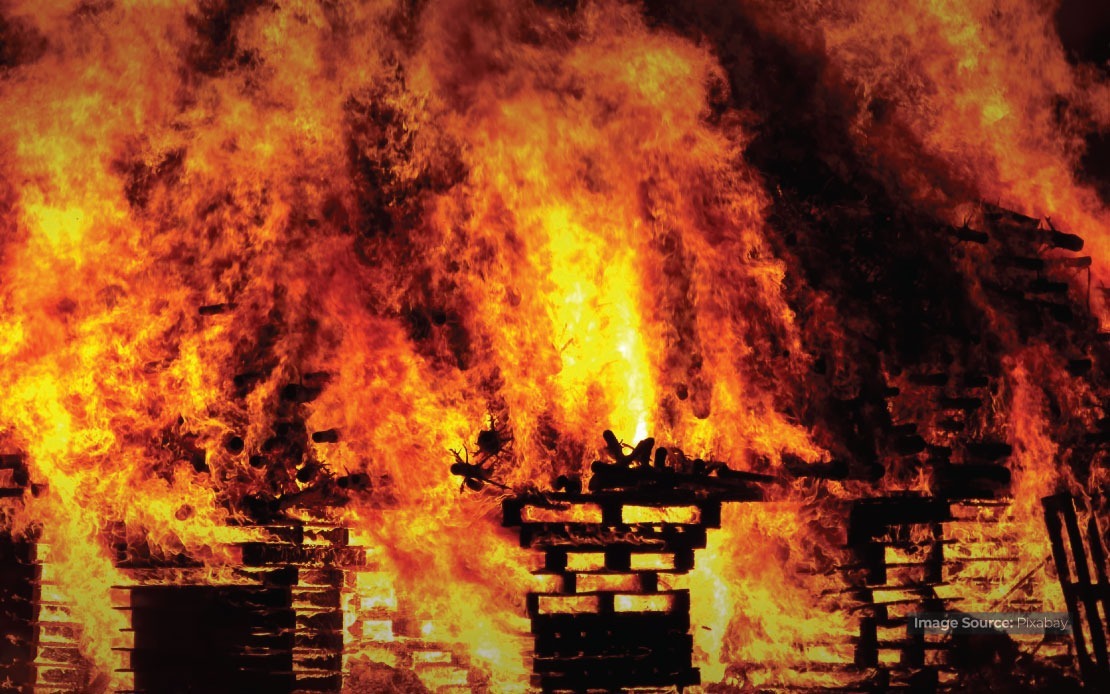
Two members of France's firefighting service have been killed while tackling a blaze that erupted near Bordeaux Airport in the country's southwestern region, French Interior Minister Laurent Nuñez announced to parliament on Tuesday. The fatalities represent a significant loss within France's emergency response community and underscore the dangers faced by first responders during periods of heightened fire risk across the continent.
The fire broke out on land situated adjacent to the airport's long-term parking facilities, according to reporting from regional newspaper Sud Ouest. Firefighters and emergency personnel responded swiftly to the emergency call, with multiple units converging on the scene to contain the spreading flames. Despite their efforts, two members of the fire service lost their lives while attempting to combat the blaze that ultimately engulfed two separate buildings in the vicinity.
The timing of this tragedy is particularly significant given the climate conditions prevailing across southwestern France. The Gironde region, which encompasses the city of Bordeaux as its administrative centre, has been placed under the nation's highest red-level wildfire warning due to exceptionally dangerous conditions for forest fire ignition and spread. These extreme weather patterns, typical of southern European summers, create combustible environments where fires can spread with remarkable speed and intensity, challenging even experienced firefighting teams.
The intensity of the fire became visibly apparent to residents across Bordeaux itself, as enormous plumes of smoke billowed skyward throughout the incident. The scale of the smoke columns visible from the city proper indicated the severity of the blaze and the considerable challenge facing responders. Emergency crews maintained their efforts to bring the fire under control despite the hazardous conditions and the tragedy that claimed their colleagues.
Responding to the emergency required a coordinated effort involving multiple agencies and resources. The local fire service, which bore the primary responsibility for combating the blaze, received critical assistance from Bordeaux Airport's own dedicated firefighting unit. This coordination between civilian and airport-based emergency services demonstrates the comprehensive infrastructure airports maintain to manage incidents on and around their premises. Additionally, authorities deployed a specialised firefighting aircraft to the scene, enabling aerial water and fire suppressant drops to assist ground crews in containing the spreading flames.
The incident necessitated operational changes at Bordeaux Airport, one of France's significant regional aviation hubs. Authorities implemented partial disruptions to flight operations, specifically suspending all departing flights as a precautionary measure while the fire situation remained unresolved. However, to maintain some level of connectivity and allow critical inbound traffic, landings continued to be permitted throughout the emergency response. An evening departure scheduled to reach Munich was anticipated to proceed as planned once conditions stabilised, indicating that the disruption, while significant, remained manageable for airport operations.
From a regional and European perspective, this incident reflects broader challenges facing France and other Mediterranean and continental European nations as climate patterns shift toward drier, hotter conditions. The placement of the Gironde region under red-level wildfire alert indicates systematic vulnerability across large areas, not merely isolated pockets of risk. For travellers, businesses, and communities across the region, such warnings necessitate heightened vigilance and preparedness for fire-related emergencies that extend beyond traditional industrial or transportation sectors.
The tragedy also highlights the occupational hazards inherent in firefighting, particularly during periods of extreme weather stress. Firefighters routinely confront dangers that other professions rarely encounter, and circumstances like those in southwestern France underscore the physical and psychological demands of emergency response work. The loss of two colleagues will likely reverberate through France's firefighting community and may prompt renewed discussions about resource allocation, training protocols, and safety procedures for responding to large fires during high-risk weather periods.
For Malaysian readers and observers across Southeast Asia, this incident carries relevance beyond mere news interest. The region itself faces increasingly severe fire seasons, particularly during dry periods affecting Indonesia, Malaysia, and neighbouring countries. The experience and institutional responses developed by European fire services, including coordination between civil and airport authorities and deployment of aerial firefighting resources, offer valuable lessons for regional emergency management agencies. As climate variability intensifies globally, cross-border exchange of firefighting expertise and technology adoption become increasingly important for Southeast Asian nations preparing for escalating fire emergencies that threaten both natural resources and critical infrastructure.

